
sleepadmin
Calming Pre-Sleep Routine – Relax & Sleep Better
A calming pre-sleep routine can help quiet your mind, relax your body, and prepare you for deeper, more restorative sleep

How to Create a Calming Pre-Sleep Routine for Deeper, Restful Sleep
If you’ve ever laid in bed with your mind racing, struggling to fall asleep, you know how frustrating it can be. Tossing and turning while watching the minutes tick by often makes sleep feel impossible. The good news? Building a calming pre-sleep routine can train your body and mind to wind down, making it easier to fall asleep and stay asleep.
Think of this nightly ritual as your body’s “power-down sequence.” Just like your phone needs to be put on sleep mode, your brain and body need cues to shift from alertness to rest. In this guide, we’ll explore why a pre-sleep routine matters, the science behind it, and practical steps you can take to create one that works for you.
Why a Pre-Sleep Routine Matters
Modern life doesn’t always make it easy to sleep. Between work stress, constant notifications, and endless screen time, our brains are overstimulated late into the evening. This overstimulation makes it harder for your body to produce melatonin –the hormone that signals your body to sleep.
A calming pre-sleep routine acts as a bridge between the busyness of your day and the stillness of sleep. When repeated consistently, it signals to your brain that bedtime is approaching, which helps you:
* Fall asleep faster
* Reduce nighttime awakenings
*Lower stress and anxiety levels
*Improve overall sleep quality
The Science Behind Relaxation Before Bed
Your body operates on a circadian rhythm, a 24-hour clock that regulates sleep, energy, and hormone cycles. At night, melatonin levels rise, heart rate slows, and body temperature drops. However, stress hormones like cortisol can delay this process if you don’t allow yourself to unwind.
By building a calming pre-sleep routine, you lower cortisol and gently activate the parasympathetic nervous system (also called the “rest-and-digest” system). This helps you feel relaxed, safe, and ready for deep, restorative sleep.
Relaxing routines like reading, stretching, or meditation lower stress hormones and prepare the body for rest. Behavioral sleep medicine experts recommend it to reduce insomnia.
🔗 American Academy of Sleep Medicine – Sleep Hygiene
Key Elements of a Calming Pre-Sleep Routine
A good routine doesn’t have to be long or complicated – just consistent. Here are science-backed practices you can mix and match:
1. Set a Consistent Bedtime
Your routine should begin at the same time each evening. Going to bed and waking up at consistent times helps regulate your circadian rhythm and makes sleep come more naturally.
2. Dim the Lights
Bright lights, especially from screens, suppress melatonin. About 60–90 minutes before bed, dim household lights and use softer, warmer tones. Consider a bedside lamp, salt lamp, or even candles to create a relaxing atmosphere.
3. Unplug from Screens
Phones, TVs, and laptops emit blue light that tells your brain it’s still daytime. Try powering down devices an hour before bed. If you must use them, enable “night mode” or use blue light-blocking glasses.
4. Practice Gentle Movement
Light stretching, restorative yoga, or a slow walk can help release tension in muscles built up throughout the day. Gentle movement also signals to your body that it’s time to transition to rest mode.
5. Relax with Breathwork or Meditation
Simple breathing techniques like the 4-7-8 method (inhale 4 seconds, hold 7, exhale 8) can slow heart rate and calm a restless mind. Guided meditations or mindfulness apps are also excellent tools for relaxation.
6. Create a Nightly Self-Care Ritual
Taking a warm shower or bath before bed has been shown to improve sleep. The post-bath drop in body temperature mimics the natural cooling process your body undergoes before sleep. Add lavender-scented soap or lotion for an extra calming effect.
7. Sip a Non-Caffeinated Beverage
Herbal teas like chamomile, peppermint, or valerian root can be soothing. Alternatively, warm milk with a sprinkle of cinnamon can provide both comfort and relaxation. Avoid caffeine or alcohol before bed, as both interfere with sleep.
8. Journal to Clear the Mind
Many people struggle with racing thoughts at night. Writing down your worries, gratitude, or to-do list for tomorrow helps your brain “offload” tasks, reducing anxiety and mental clutter.
9. Read a Physical Book
Opt for a calming book – not a suspenseful thriller. Reading in dim light relaxes the mind and signals that it’s time to slow down. Physical books are better than e-books to avoid blue light exposure.

10. Prepare Your Environment
A clean, clutter-free bedroom enhances relaxation. Keep your room cool (60–67°F / 15–19°C), dark, and quiet. Use blackout curtains, a white noise machine, or earplugs if needed. Your sleep environment should feel like a sanctuary.
A Sample 30-Minute Pre-Sleep Routine
To put it all together, here’s an example you can try tonight:
* 9:30 p.m. – Shut off electronics and dim lights.
*9:35 p.m. – Take a warm shower and apply lavender lotion.
*9:50 p.m. – Sip chamomile tea while journaling thoughts of gratitude.
*10:00 p.m. – Read a light book in bed with a soft bedside lamp.
*10:15 p.m. – Practice 5 minutes of deep breathing.
*10:20 p.m. – Lights out.
Common Mistakes to Avoid
Even if you follow a routine, a few habits can undo your efforts:
* Scrolling on your phone in bed – Sends wake-up signals to your brain.
*Heavy meals too close to bedtime – Can cause indigestion and restless sleep.
*Relying on alcohol to fall asleep – It may make you drowsy but disrupts deep sleep stages.
*Excessive caffeine after midday – Can stay in your system for 6–8 hours.
Tailoring Your Routine to You
There’s no one-size-fits-all routine. Some people relax best with meditation, while others prefer a warm bath or journaling. The key is consistency –doing the same set of activities each night trains your body and mind for sleep.
You might start small with just one or two calming activities, then build from there. For example:
*If you’re stressed → Try journaling + breathwork.
*If you’re tense → Try light stretching + a warm bath.
*If you’re overstimulated → Try unplugging early + reading a book.
The Long-Term Benefits
Making a calming pre-sleep routine part of your life leads to more than just falling asleep faster. Over time, it can:
*Improve sleep efficiency (more time asleep vs. tossing and turning)
*Enhance mood and reduce risk of anxiety/depression
*Support healthy weight management through better metabolic function
*Strengthen memory and cognitive performance
*Boost immune health by allowing deeper restorative sleep
Think of your routine as a nightly investment in your future health.

Final Thoughts
A calming pre-sleep routine isn’t about perfection—it’s about creating consistency and sending your body the message: It’s safe to rest now. Whether you spend 15 minutes journaling or a full hour with tea, stretching, and meditation, the key is to do it every night.
Start small, experiment with what feels most relaxing, and make it a non-negotiable part of your evening. Within a few weeks, you’ll likely notice you’re falling asleep faster, waking up more refreshed, and enjoying a deeper, more restorative sleep.
Sweet dreams start long before your head hits the pillow – and it all begins with a calming pre-sleep routine.
Recommended Reading
Weighted Blankets – Do They Really Help You Sleep Better?
Weighted blankets often provide a significant boost to sleep quality for many individuals by utilizing deep pressure stimulation, a therapeutic technique that calms the nervous system. This gentle, consistent pressure can mimic a comforting hug, reducing anxiety, promoting relaxation, and helping users fall asleep faster and stay asleep longer, though individual experiences can vary. Understanding […]
The Ultimate Guide To The Best Pillow For Side Sleepers When it comes to getting a good night’s sleep, your pillow matters just as much as your mattress. For the millions of people who sleep on their sides, finding the best pillow for side sleepers can mean the difference between waking up refreshed or waking […]
Why Coffee Makes Some People Sleepy and Others Wide Awake
Discover why coffee makes some people sleepy while others stay awake. Learn how caffeine, genetics, and metabolism affect your sleep. Coffee Makes Some People Sleepy — Here’s Why Caffeine Doesn’t Affect Everyone The Same Most of us think of coffee as a quick pick-me-up—the drink we reach for when we want to stay alert, power […]
Relaxation And Stress Management for Better Sleep
Relaxation and stress management are essential practices for calming the mind, easing tension, and creating the foundation for better sleep and overall health. Relaxation and Stress Management: The Key to Better Sleep and Health In today’s fast-paced world, stress seems to follow us everywhere, through work, finances, family responsibilities, and even our phones. While some […]
Reading Before Bed: Does It Help or Hinder Your Sleep?


Consistent Sleep Schedule Benefits
A consistent sleep schedule is one of the most effective ways to improve your rest, boost your energy, and support long-term health.
Why Going to Bed and Waking Up at the Same Time Every Day Is the Key to Better Sleep
When it comes to improving your sleep, most people immediately think about buying a new mattress, cutting back on caffeine, or meditating before bed. While these strategies can help, one of the most powerful (and often overlooked) habits is keeping a consistent sleep and wake schedule –even on weekends.
This simple adjustment can transform your sleep quality, boost energy, and improve your overall health. Let’s dive into why maintaining a consistent sleep schedule matters, the science behind it, and how you can start implementing it in your own life.
The Science of Sleep Consistency
Your body runs on an internal 24-hour clock called the circadian rhythm. This clock regulates when you feel awake and when you feel sleepy, controlling the release of hormones like melatonin (which makes you drowsy at night) and cortisol (which wakes you up in the morning).
When you go to bed and wake up at the same time every day, you strengthen this circadian rhythm. Over time, your body learns when to expect sleep, making it easier to fall asleep, stay asleep, and wake up feeling refreshed.
But when your sleep schedule is irregular – staying up late on weekends or sleeping in too long – your circadian rhythm gets disrupted. This phenomenon is often referred to as “social jet lag.” Even if you get the same total number of hours of sleep, the inconsistency can leave you groggy, unfocused, and less healthy.
Going to bed and waking up at the same time each day strengthens your body’s internal clock (circadian rhythm). People with consistent schedules fall asleep faster and sleep better overall.
🔗 Harvard Medical School – Healthy Sleep Tips
Benefits of a Consistent Sleep/Wake Schedule
1. Fall Asleep Faster
When your body knows it’s bedtime, it naturally winds down, releasing melatonin at the right time. People with consistent sleep schedules often find they fall asleep in minutes, compared to tossing and turning for hours.
2. Wake Up Refreshed
Instead of waking up in the middle of a deep sleep stage, your body synchronizes with your schedule. This means you wake up at the right point in your sleep cycle, leaving you energized rather than groggy.
3. Better Mood and Mental Health
Studies show that irregular sleep patterns are linked to higher risks of depression, anxiety, and mood swings. A regular schedule stabilizes neurotransmitters and hormones, improving emotional balance.
4. Improved Focus and Productivity
When you consistently sleep and wake at the same times, your brain functions better during the day. You’ll notice sharper focus, quicker reaction times, and better memory retention.
5. Physical Health Benefits
Consistent sleep supports immune function, heart health, and metabolic regulation. In fact, irregular sleep has been linked to obesity, diabetes, and cardiovascular disease. Sticking to a schedule is a simple yet powerful way to protect your long-term health.
How Much Consistency Matters?
You might wonder: Do I have to go to bed and wake up at the exact same minute every day? Not necessarily. A general range of about 30 minutes on either side is usually enough to keep your circadian rhythm stable.
What you should avoid is wide swings—like going to bed at 10 p.m. on weekdays but staying up until 2 a.m. on weekends. That four-hour difference is like flying across multiple time zones, and your body feels it.

Common Challenges (and How to Overcome Them)
Challenge 1: Staying Up Too Late on Weekends
It’s tempting to binge a show, go out with friends, or scroll on your phone late into the night. While the occasional late night won’t ruin everything, making it a habit creates a cycle of “catch-up sleep.”
Solution: Try setting a latest bedtime rule for weekends—no later than an hour past your weekday bedtime.
Challenge 2: Sleeping In to “Recover” Sleep Debt
Many people think they can make up for poor sleep during the week by sleeping in on weekends. Unfortunately, this backfires and makes Sunday night sleep harder.
Solution: Instead of sleeping in, take a 20–30 minute nap during the day if you’re really tired. This restores alertness without throwing off your rhythm.
Challenge 3: Nighttime Stress and Racing Thoughts
Even with a consistent bedtime, some people struggle to switch off their minds.
Solution: Build a calming pre-sleep routinesuch as reading a book, journaling, stretching, or listening to relaxing sounds. Consistency in your wind-down routine also cues your body that it’s time to sleep.
Challenge 4: Work or Lifestyle Constraints
Shift work, parenting, and busy schedules make consistency harder.
Solution: Aim for regularity within your circumstances. For example, if you work rotating shifts, keep your bedtime/wake time consistent within each block of shifts. Consistency, even in smaller windows, is better than randomness.
Practical Steps to Set a Consistent Sleep Schedule
1. Choose Your Ideal Wake Time
Start by picking a wake-up time that works for your lifestyle and commitments. Your bedtime will then adjust based on your needed sleep hours (typically 7–9 for adults).
2. Work Backwards to Find Bedtime
If you need 8 hours of sleep and want to wake at 7 a.m., aim for a 11 p.m. bedtime.
3. Set a Pre-Sleep Alarm
About 30–60 minutes before bed, set an alarm to remind you to start winding down. This prevents you from accidentally staying up late.
4. Be Consistent on Weekends
Limit variations in bedtime/wake time to no more than 1 hour.
5. Create a Sleep-Friendly Environment
Keep your bedroom cool, dark, and quiet. A consistent environment helps reinforce consistent sleep.
6. Morning Sunlight Exposure
Getting sunlight within the first hour of waking helps reset your circadian rhythm, making it easier to fall asleep at night.
7. Track Your Progress
Use a sleep diary or app to monitor how consistent your schedule is and how your energy levels improve.
Real-Life Example: The “Weekend Shift”
Consider someone who goes to bed at 11 p.m. and wakes at 7 a.m. on weekdays, but on weekends, they stay up until 2 a.m. and sleep until 10 a.m.
On Monday, their body is still adjusted to the “late” schedule, making it difficult to fall asleep Sunday night. They start the week with a sleep deficit, leading to brain fog and fatigue. By Friday, they’re even more exhausted, and the cycle repeats.
Now compare that with someone who keeps their bedtime within a 30–60 minute range all week. They start Monday refreshed, their productivity is higher, and they don’t need “catch-up” sleep.
The difference? Consistency.
The Long-Term Payoff
Consistency isn’t just about feeling better the next day – it’s about setting up your body for long-term success. Over months and years, sticking to a regular schedule:
* Reduces risk of chronic illnesses
* Helps maintain a healthy weight
* Improves skin, mood, and energy levels
* Strengthens memory and cognitive performance
Think of it like brushing your teeth: one missed night won’t hurt, but making it a lifelong habit keeps everything in good condition.
Final Thoughts
If you’re searching for the single most impactful change you can make for better sleep, look no further than creating a consistent sleep schedule – going to bed and waking up at the same time every day.
It doesn’t cost anything, it doesn’t require fancy gadgets, and the benefits touch every part of your life, from mental health and productivity to physical well-being.
Start small: pick a wake-up time, adjust your bedtime accordingly, and stick to it, even on weekends. Within a few weeks, you’ll likely notice you’re falling asleep faster, waking up refreshed, and enjoying more energy throughout the day.
Sleep isn’t just about quantity, it’s about rhythm. And nothing strengthens your rhythm like consistency.
Zinus Green Tea Memory Foam Mattress Review

Zinus 10-Inch Green Tea Cooling Memory Foam Mattress Review – Best Budget Memory Foam Pick on Amazon
Sleep feeling overheated or sore? The Zinus 10‑Inch Green Tea Cooling Memory Foam Mattress (New Version) could be your affordable solution for cooling comfort and pressure relief. This budget-friendly memory foam favorite on Amazon packs green tea and cooling gel into its layers, offering a refreshing feel with solid support
Table of Contents
- Quick Overview
- Mattress Specs
- Unboxing & First Impressions
- Performance Review with Scoring
- Pros & Cons
- Who Is This Mattress Best For?
- Price & Value
- Customer Feedback Summary
- Comparison to Similar Mattresses
- Final Verdict
- FAQ Section
Quick Overview

| Feature | Details |
|---|---|
| Brand & Model | Zinus 10-Inch Green Tea Cooling Memory Foam Mattress |
| Type | Memory Foam |
| Firmness | Medium (approx. 5–6/10) |
| Thickness | 10 inches |
| Sizes | Twin, Full, Queen, King |
| Price Range | Queen around USD $299 |
| Trial Period | 100-night trial (US) |
| Warranty | 10-year limited warranty |
| Shipping | Free standard (compressed in a box), no white-glove delivery |
Mattress Specs
| Layer/Material | Description |
|---|---|
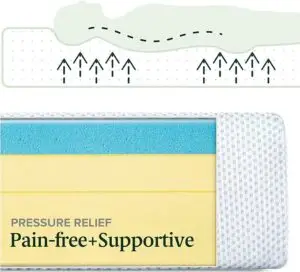
| Top Layer | Cooling gel and green tea-infused memory foam – designed for soothing contouring comfort |
| Middle Layer | Transition foam—adds gradual support and helps reduce sink-in feel |
| Base Layer | Dense support foam—ensures structural durability and foundation |
| Cover | Breathable polyester cover; newer versions use a carbon-rayon sleeve for fire safety instead of fiberglass |
Unboxing & First Impressions
Delivered in a compact, vacuum‑sealed box that’s easy to carry, setup takes just a few minutes (unboxing alone 6–7 minutes, more with expansion). The mattress takes up to 72 hours to fully expand. Initial off‑gassing odor is mild to moderate; it usually fades within a day. The memory foam feels firm yet cushioned, supportive, with light contouring on contact.

Performance Review with Scoring
| Category | Score (1–10) | Notes |
|---|---|---|
| Comfort & Firmness | 7 | Balanced medium feel, plush top with supportive base – ideal for side/back sleepers |
| Pressure Relief | 8 | Gel-infused top foam contours well, easing hip and shoulder pressure |
| Motion Isolation | 9 | Excellent at reducing motion transfer -great for couples |
| Edge Support | 3 | Weak edges—noticeable sag when sitting/lying near the perimeter |
| Temperature Control | 4 | Green-tea infusion helps freshness, but foam retains heat – somewhat stuffy |
| Durability | 5 | Mixed feedback – some report solid performance after years, others note sagging sooner |
| Noise | 10 | Completely silent – no springs to creak. |
| Off-Gassing | 6 | Moderate initial smell; dissipates within a day or two. |
Pros & Cons
Pros:
*Excellent value – comfort and features at a low price point
*Great pressure relief and motion isolation
*Convenient boxed delivery and straightforward setup
*Safe, fiberglass‑free fire safety construction in new models
Cons:
*Poor edge support – sinks at sides
*May sleep hot for some heat‑sensitive sleepers
*Durability varies – some users report early sagging
*Not ideal for stomach or heavier back sleepers needing firmer support
Who Is This Mattress Best For?
* Side & back sleepers who enjoy a medium‑soft, contouring feel.
* Couples or light sleepers appreciate the motion isolation.
*Budget-conscious buyers seeking a value-driven memory foam.
*Guest rooms or college dorms where affordability and comfort matter more than premium features.
Less ideal for:
* Stomach sleepers or heavy individuals who require firmer support.
* Hot sleepers –consider upgrading to the cooling version or a hybrid.
*People needing strong edge support for sitting or frequent edge usage.
Price & Value
With regular sale pricing like Queen under $300, the Zinus offers incredible value for a three-layer memory foam mattress.Add in a 100-night trial and 10-year warranty, and you’re getting premium features at a budget-friendly cost
Customer Feedback Summary
The 10‑inch Green Tea model averages around 4.3 stars on Amazon from over 160,000 reviews. Common praise includes pressure relief, comfort for side sleepers, and supportive cushioning. Criticism focuses on poor edge support and heat retention.
“I had a very good experience with another 14 inch mattress from Zinus before (I had to give it up because of moving), so when I needed a thinner guest mattress I thought I should give this one a try.
I have been sleeping on it every night for the past 2 weeks and I haven’t had any back pain issues so far….” Sam – Amazon.ca
“I kept seeing reviews about people saying “wow, what a sleep” or “I don’t know how I slept on my old bed” or “BEST SLEEP OF MY LIFE!” and I was like “yeah yeah… ok paid reviewer… sure sure!”
Folks, I am here to tell you that they are in fact… 100 % correct!….” Benn Birch – Amazon.ca
Comparison to Similar Mattresses
* Siena Memory Foam Mattress: Firmer feel, better edge support, improved cooling, but higher price and longer trial.
*Cocoon by Sealy Chill: Superior cooling, responsive feel; great for hot sleepers, more expensive than Zinus.
Final Verdict
The Zinus 10‑Inch Green Tea Cooling Memory Foam Mattress review shows it’s a top budget pick on Amazon. It delivers comfort, motion isolation, and a safe, fiberglass‑free build, all at a great price. If you’re a side/back sleeper looking for affordability and don’t mind a little heat or edge sag, it’s a smart choice. Just room for improvement in cooling and edges.
FAQ Section
Q1: Does the “Green Tea” actually cool the mattress?
A: It adds freshness and moisture-wicking, but doesn’t significantly cool – heat retention remains due to all-foam construction.
Q2: Is this mattress fiberglass-free?
A: Yes—newer models use a carbon‑rayon sleeve instead of fiberglass for flame resistance.
Q3: How long should I wait to sleep on it after unboxing?
A: Full expansion takes about 72 hours, though you can typically start using it within a few hours with minimal sag
Q4: Can heavy people sleep on it?
A: Heavier sleepers or those preferring firm support may find it too soft – consider hybrid or firmer foam alternatives.
Q5: Should I be concerned about durability?
A: Experiences vary – some owners report great longevity, while others see sag within a couple of years.

Recommended Reading
Melatonin: What You Need to Know Before You Try It
Considering melatonin for a better night’s sleep? You’re not alone. Millions of people worldwide reach for melatonin as their first step toward fixing sleep struggles. It’s widely available over the counter, often marketed as a “natural” solution, and many swear by its effects. But here’s the truth: while melatonin can be a valuable sleep tool, […]
Best Sleep Masks For Total Darkness and Deeper Sleep
In a world brimming with light pollution, achieving the profound darkness essential for truly restorative sleep can feel like an impossible dream. Streetlights creep through blinds, digital clocks glow across the room, and the early morning sun often breaks through before we’re ready to wake. But what if a simple, comfortable solution could transform your […]
How To Choose The Right Pillow For Your Sleep Style
Tired of waking up with a stiff neck or restless nights? Your pillow might be the problem, but finding the right one doesn’t have to be a nightmare. This guide cuts through the confusion and shows you how to match the perfect pillow to your sleep style, whether you’re a side, back, or stomach sleeper. With […]
Melatonin: What You Need to Know Before You Try It
Considering melatonin for a better night’s sleep? You’re not alone. Millions of people worldwide reach for melatonin as their first step toward fixing sleep struggles. It’s widely available over the counter, often marketed as a “natural” solution, and many swear by its effects.
But here’s the truth: while melatonin can be a valuable sleep tool, it’s not a cure-all, and it’s certainly not risk-free. Understanding the science, correct usage, and potential pitfalls is crucial before you decide to try it.
This comprehensive guide explores:
* What melatonin actually is and how it works in your body
* Common reasons people take it
* The science on whether it’s effective
* Dosage, timing, and formulations (immediate vs extended release)
* Potential side effects and drug interactions
* Who should avoid melatonin
* Safer alternatives and complementary strategies
By the end, you’ll know exactly whether melatonin might be right for you — and how to use it wisely.

What Exactly Is Melatonin?
Melatonin isn’t a sleeping pill that “knocks you out.” Instead, it’s a naturally occurring hormone produced by your pineal gland, a pea-sized structure deep in the brain.
Often called the “hormone of darkness”, melatonin’s job is to regulate your circadian rhythm — your 24-hour sleep-wake cycle.
* As the sun sets and light fades, melatonin levels rise, sending a powerful biological signal: “It’s dark — time to prepare for sleep.”
* In the morning, when light enters your eyes, melatonin levels drop, signaling your body to wake up.
In this way, melatonin acts as your body’s internal clockkeeper. It doesn’t force sleep — it sets the stage for sleep by aligning your biology with the environment.
A Brief History: From Hormone Discovery to Sleep Aid
* 1958: Melatonin was first isolated from a cow’s pineal gland.
* 1970s–1980s: Research began linking melatonin to circadian rhythm regulation.
* 1990s: Supplement companies started selling synthetic melatonin, especially in the U.S.
* Today: Melatonin is one of the most popular over-the-counter sleep supplements worldwide, though its regulation varies:
In the U.S. and Canada, it’s sold as a dietary supplement.
In the U.K., Australia, and parts of the EU, it’s regulated as a prescription-only medication.
This difference in regulation underscores a key point: melatonin is a hormone, not just a vitamin, and deserves careful handling.
How Melatonin Works in the Body
Melatonin production begins in response to darkness. Specialized light-sensitive cells in your eyes detect fading daylight and send signals to the suprachiasmatic nucleus (SCN) — your brain’s “master clock.” The SCN then instructs the pineal gland to release melatonin.
What Happens When Melatonin Circulates?
Melatonin travels through your bloodstream and binds to MT1 and MT2 receptors in your brain and body. This sets off changes such as:
* Lowering core body temperature (essential for sleep onset)
* Reducing alertness (quieting wake-promoting signals)
* Promoting drowsiness (helping you feel ready for rest)
* Synchronizing rhythms (coordinating digestion, metabolism, and hormone release with your sleep cycle)
👉 Importantly, melatonin is not sedative like sleeping pills (e.g., zolpidem/Ambien). It nudges your body toward sleep readiness — it doesn’t override wakefulness.
Common Reasons People Turn to Melatonin
Melatonin is most effective for circadian rhythm-related issues, rather than general insomnia.
1. Jet Lag
Crossing multiple time zones throws your body’s clock out of sync. Melatonin, taken at the right time in your new destination, can help reset your rhythm.
2. Shift Work Disorder
Night-shift workers often battle misaligned sleep-wake cycles. Melatonin can help signal “bedtime” during daylight hours, though results vary.
3. Delayed Sleep-Wake Phase Disorder (DSWPD)
“Night owls” with DSWPD struggle to fall asleep before 2–3 AM. Low-dose melatonin taken several hours before desired bedtime can shift the internal clock earlier.
4. Sleep-Onset Insomnia
For those who lie awake struggling to fall asleep (not stay asleep), melatonin may provide a useful sleep cue.
5. Age-Related Decline
Melatonin production decreases naturally with age. Supplementing may help older adults regain sleep quality.
6. Modern Lifestyle Factors
Blue light from screens at night suppresses natural melatonin. While reducing screen time is best, some people turn to supplements as a backup.
What the Science Says: Is Melatonin Effective?
The research paints a nuanced picture.
* Jet Lag: Strong evidence — melatonin consistently reduces symptoms when timed correctly.
* DSWPD: Strong evidence — helps shift sleep phase earlier.
* Shift Work Disorder: Mixed — some benefit, but environment (light exposure) often outweighs melatonin.
* Sleep-Onset Insomnia: Moderate — helps some, especially older adults or those with delayed natural melatonin release.
* General Insomnia: Weak — not very effective for chronic insomnia unrelated to circadian rhythm.
👉 Conclusion: Melatonin is a targeted tool, not a universal cure. It shines in circadian misalignment, less so in generalized insomnia.
Potential Side Effects of Melatonin
Most side effects are mild, but they can still affect quality of life.
* Daytime grogginess (“melatonin hangover”)
* Headaches or dizziness
*Nausea or digestive upset
*Vivid dreams or nightmares
*Mood changes (irritability, mild anxiety, depression)
*Blood pressure changes (slight lowering)
Rare but serious risks involve drug interactions.
Drug Interactions to Be Aware Of
Melatonin may interact with:
* Blood thinners (warfarin, aspirin) → increased bleeding risk
* Immunosuppressants (cyclosporine) → reduced effectiveness
* Diabetes medications → altered blood sugar control
* Oral contraceptives → possible reduced effectiveness
* Sedatives/alcohol → additive drowsiness
* Blood pressure meds → unsafe drops in blood pressure
👉 If you’re on any medication, consult your doctor before trying melatonin.
The Problem with Supplements: Quality, Purity, Dosage
Unlike prescription drugs, supplements are poorly regulated. Independent tests show:
* Some melatonin bottles contain 10x more or less than labeled.
* Contamination with heavy metals, impurities, or undeclared drugs sometimes occurs.
Tips for safer use:
* Look for USP, NSF, or ConsumerLab-certified brands.
* Start with lowest dose possible (0.3–1 mg).
* Avoid high-dose products (5–10 mg+) unless medically advised.
Finding the Right Dosage
Your body makes melatonin in micrograms. Supplements are often in milligrams — 10x higher than necessary.
* Jet Lag: 0.5–5 mg at local bedtime
* DSWPD: 0.5–1 mg, 2–5 hrs before desired bedtime
* Insomnia/Older Adults: 0.5–3 mg, 30–60 mins before bed
* Shift Work: 1–5 mg before daytime sleep
👉 High doses don’t equal better sleep — they increase side effects.
Immediate-Release vs Extended-Release Melatonin
| Feature | Immediate Release | Extended Release |
|---|---|---|
| Onset | 30–60 mins | Gradual (over hours) |
| Duration | 2–4 hrs | 4–8 hrs |
| Best For | Falling asleep quickly, jet lag | Staying asleep, older adults with fragmented sleep |
Long-Term Use: Is It Safe?
Short-term melatonin use is widely considered safe. Long-term use is less clear. Concerns include:
* Suppression of natural production (not proven, but possible)
* Receptor desensitization (may reduce effectiveness over time)
* Unknown impacts on immune, reproductive, or hormonal systems
*Masking underlying issues (like sleep apnea or anxiety)
👉 If using beyond a few months, do so only under medical supervision.
Who Should Avoid Melatonin
Avoid or consult a doctor if you:
* Take interacting medications
* Have autoimmune disease
* Have depression
* Have low blood pressure or take BP meds
* Have liver or kidney disease
* Are pregnant, breastfeeding, or under 18
Beyond Melatonin: Better Sleep Without Supplements
Even if melatonin is helpful, it should be part of a bigger sleep strategy:
* Stick to a consistent sleep schedule
* Create a dark, cool, quiet sleep environment
*Limitscreen time and blue light exposure
*Avoid caffeine and alcohol close to bed
* Develop a calming bedtime routine (stretching, journaling, meditation)
* Consider CBT-I (Cognitive Behavioral Therapy for Insomnia) for chronic sleep issues
FAQs About Melatonin
Q: Can I take melatonin every night?
A: Short-term, usually safe. Long-term, unknown. Consult your doctor.
Q: Will melatonin make me groggy the next day?
A: Possibly, especially if taken too late or at high doses.
Q: Can children take melatonin?
A: Only under strict medical guidance. Long-term effects on development are not known.
Q: What’s better — melatonin or prescription sleeping pills?
A: Melatonin is gentler and non-addictive, but less potent. Sleeping pills are stronger but risk dependence.
Final Thoughts: Making an Informed Choice
Melatonin can be an effective, safe tool for certain sleep challenges — particularly jet lag, delayed sleep phase, and age-related decline. But it’s not a cure-all for insomnia, and it carries risks if misused.
If you’re considering melatonin:
* Start low and slow
* Time it carefully based on your sleep issue
* Choose a reputable, third-party-tested brand
*Combine with good sleep hygiene
*Consult your doctor for safety and guidance
Used wisely, melatonin can help realign your internal clock, ease travel transitions, and support healthier sleep — but it should always be part of a holistic sleep plan, not the whole plan.
Recommended Reading
Best Sleep Masks For Total Darkness and Deeper Sleep
In a world brimming with light pollution, achieving the profound darkness essential for truly restorative sleep can feel like an impossible dream. Streetlights creep through blinds, digital clocks glow across the room, and the early morning sun often breaks through before we’re ready to wake. But what if a simple, comfortable solution could transform your […]
Morning Habits That Can Improve Your Sleep At Night
While many focus on pre-bed rituals for better sleep, the truth is this: your morning habits hold the key to restorative nights. Small adjustments in how you start your day — from light exposure to hydration and movement — regulate your internal clock, reduce stress, and prepare your body for deep, uninterrupted sleep when evening […]