
sleepadmin
Best Sleep Masks For Total Darkness and Deeper Sleep
In a world brimming with light pollution, achieving the profound darkness essential for truly restorative sleep can feel like an impossible dream. Streetlights creep through blinds, digital clocks glow across the room, and the early morning sun often breaks through before we’re ready to wake.
But what if a simple, comfortable solution could transform your nights?
Enter the sleep mask, a deceptively small accessory with the power to create a sanctuary of darkness anytime, anywhere. This guide dives deep into the science of why darkness is critical, how light disrupts your sleep, what makes a high-quality mask effective, and how to integrate one into your nightly routine for maximum impact.
By the end, you’ll know exactly how to choose, use, and benefit from this underrated sleep tool — so you can wake up refreshed, recharged, and ready to thrive.

Why Total Darkness Is Essential for Restorative Sleep
It’s tempting to dismiss darkness as “nice to have” rather than “necessary.” But research shows even a tiny sliver of light — a streetlamp outside, the glow of a phone charging, or an illuminated alarm clock — can significantly disrupt your sleep quality.
Here’s why total darkness is non-negotiable:
1. Melatonin Production
* Darkness is the trigger for melatonin, your body’s sleep hormone.
* Even minimal light exposure can suppress melatonin, delaying sleep onset and reducing sleep quality.
* Think of melatonin as your body’s “power down” signal: without it, you remain stuck in alert mode.
2. Circadian Rhythm Regulation
* Your circadian rhythm is the 24-hour internal clock that dictates sleep-wake cycles, hormone release, and body temperature.
* Light at night sends confusing signals to this rhythm, essentially “resetting” your body to believe it’s still daytime.
* Consistent darkness strengthens circadian timing, making it easier to fall asleep at night and wake naturally in the morning.
3. Accessing Deeper Sleep Stages
* Quality sleep isn’t about hours in bed; it’s about time spent in NREM deep sleep and REM cycles.
* Light interruptions, even brief, can pull you into lighter stages of sleep, preventing you from reaching the restorative depths where true healing, memory consolidation, and emotional regulation occur.
4. Health Benefits Beyond Sleep
Total darkness supports:
* A stronger immune system
* More stable blood sugar levels
* Better mood regulation
* Healthier skin and cellular repair
👉 In short: darkness isn’t optional. It’s foundational to restorative sleep and long-term well-being.
The Science: How Light Disrupts Sleep
Most people know light affects vision, but few realize the hidden system in your eyes designed specifically for regulating sleep.
Inside your retina live specialized light sensors called ipRGCs (intrinsically photosensitive Retinal Ganglion Cells). These don’t help you see images — instead, they detect light intensity and send signals to your brain’s suprachiasmatic nucleus (SCN), your body’s master clock.
Here’s what happens:
1. Light, especially blue light (from phones, LEDs, laptops), hits ipRGCs.
2. They signal the SCN: “It’s daytime!”
3. The SCN instructs the pineal gland to stop producing melatonin.
The result: your body’s entire rhythm is delayed. Instead of winding down for sleep, your system remains alert, often hours past bedtime.
Why Blue Light Is the Worst Offender
* Smartphones, tablets, TVs, and LED bulbs all emit strong blue wavelengths, which most powerfully suppress melatonin.
* Your eyelids don’t block this well — even with eyes closed, blue light penetrates.
* That’s why digital detox before bed is so critical, and why a sleep mask offers essential backup.
Over time, exposure leads to circadian misalignment: difficulty falling asleep, shallow rest, and groggy mornings.
What Makes a Sleep Mask Truly Effective?
Not all masks are equal. A $2 airline freebie won’t deliver the same results as a carefully designed, ergonomic sleep mask. Here are the key features to look for:
1. Total Light Blockage
* Contoured Design: Shaped masks seal around the nose and cheeks to prevent leaks.
* Thick, Opaque Fabric: Multi-layered or dense fabrics ensure no light penetrates.
2. Pressure-Free Comfort
* 3D Eye Cavities: Allow free eye movement during REM sleep, prevent lash damage, and avoid eyeball pressure.
* Soft, Breathable Materials: Look for silk, bamboo, cotton, or ventilated memory foam to reduce overheating.
3. Adjustable, Secure Fit
* Customizable Straps: Velcro, buckles, or sliders allow the right tension without headaches.
* Even Pressure Distribution: Straps shouldn’t dig into ears or temples.
4. Durability & Easy Care
* Washable fabrics = better hygiene.
* Reinforced stitching = long lifespan.
👉 Think of your sleep mask as equipment, not just fabric. Choose one designed for nightly use.
The Best Sleep Mask for Total Blackout
Now that you know what makes a sleep mask truly effective, here is our top recommendation. We’ve scoured the market for masks that consistently deliver on total light blockage, supreme comfort, and lasting quality, ensuring you get the restorative sleep you deserve.
Manta Sleep Mask — The Customizable Blackout King
If absolute darkness and zero eye pressure are your non-negotiables, the Manta Sleep Mask is engineered for perfection. It consistently tops “best of” lists for a reason.
* Modular, C-shaped eye cups = 100% darkness.
* Deep eye cavities = zero pressure during REM.
* Micro-velcro strap ensures secure, comfortable fit.
* Built to last, easy to wash.
Uncompromising Light Blockage – Modular, C-shaped eye cups are fully adjustable and detachable, allowing you to position them perfectly to mold to the unique contours of your face ensuring 100% light elimination.
Pressure-Free Comfort –Deep, spacious eye cups create a true “blackout cave” for your eyes, meaning absolutely no pressure on your eyelids or eyelashes. This is crucial for allowing your eyes to move freely during REM sleep and preventing any smudging of makeup or irritation for lash extension wearers.
Adjustable, Secure Fit: A wide, soft elastic strap with micro-velcro provides infinite adjustability, ensuring a snug yet comfortable fit that won’t dig in or slip off, even for active sleepers.
Durability & Easy Care: Constructed from high-quality, breathable materials, the Manta mask is built to last through countless nights. It’s also easy to hand wash.
Best for: Side sleepers, shift workers, anyone who demands perfect blackout.
Beyond Darkness: Comfort, Fit, and Breathability
You’re going to be wearing this mask for hours on end, so it needs to feel like a second skin, not a restrictive garment. True comfort goes beyond just soft fabric; it involves intelligent design that respects your delicate facial contours and allows for natural bodily functions, even during sleep.
Blocking light is priority #1, but a mask also needs to be:
* Comfortable → Zero pressure points, soft fabric.
* Secure → Stays in place without slipping.
* Breathable → Prevents sweating and skin irritation.
If a mask isn’t pleasant to wear, you won’t stick with it, and consistency is where the real benefits come in.
By considering these critical aspects beyond just light blockage, you’re not just choosing a mask; you’re selecting a sleep companion designed to enhance your comfort, promote uninterrupted rest, and ultimately, elevate the quality of your nightly rejuvenation.
Maximizing Your Mask: Tips for Better Sleep
A mask alone won’t guarantee perfect sleep — it needs to be part of your bedtime ecosystem.
1. Make It Routine
* Use it every night, not just “bad light” nights.
* Train your brain to associate the mask with sleep onset.
2. Optimize Your Sleep Sanctuary
* Keep your bedroom cool (60–67°F).
* Minimize noise (white noise machines help).
* Remove screens at least 1 hour before bed.
3. Use It in Your Wind-Down Routine
* Put on your mask during meditation, light reading, or calming audio.
* This signals your brain that sleep is approaching.
4. Clean It Regularly
* Wash weekly to prevent oil, sweat, or makeup build-up.
* A clean mask = more comfort, fewer skin issues.
5. Travel With It
* Essential on planes, trains, or in hotels.
* Portable blackout anywhere you go.
By thoughtfully incorporating your sleep mask into your routine and understanding its supporting role in overall sleep hygiene, you’ll unlock its full potential. It’s not just about blocking light; it’s about signaling to your body that it’s time for profound, restorative sleep, night after night.
Complementary Habits for Deeper Sleep
While your sleep mask is an indispensable tool for achieving the total darkness crucial for deep sleep, it’s just one piece of the puzzle. Think of it as the ultimate seal on a perfectly optimized sleep environment.
To truly unlock the full spectrum of restorative rest, your mask needs to work in harmony with a suite of complementary habits that prepare your mind and body for slumber. These practices amplify your mask’s effectiveness, creating a powerful synergy for unparalleled sleep quality.
Pair your mask with these practices:
* Consistent sleep schedule → go to bed and wake up at the same time daily.
* Wind-down ritual → dim lights, stretch, read, or journal before bed.
* Mind your diet → avoid caffeine late in the day, limit alcohol, finish dinner 2–3 hrs before sleep, stay hydrated through out the day and reduce fluid intake 1-2 hours before bed
* Optimize your sleep environment → keep your bedroom cool, avoid noise disruptions, soothing background noise, comfortable mattress, pillows & bedding
* Daily exercise → morning or afternoon activity supports deeper sleep at night.
Consistent exercise during the day can profoundly improve sleep quality, helping you fall asleep faster and enjoy deeper sleep. However, timing is crucial:
Morning or Afternoon Best – Aim to exercise earlier in the day. Intense workouts too close to bedtime can elevate your core body temperature and stimulate your nervous system, making it harder to wind down.
Consistency Over Intensity – Even moderate daily activity, like a brisk walk, can make a positive impact.
Together, these amplify the mask’s benefits into true sleep transformation.
Embrace the Darkness, Embrace Better Sleep
In today’s artificially lit world, total darkness is a rare gift, but one that’s essential for health. A well-chosen sleep mask is more than a fabric accessory; it’s a gateway to restorative rest.
By blocking stray light, supporting melatonin, and reinforcing your circadian rhythm, a mask allows you to reach the deepest stages of healing sleep. Combined with consistent sleep hygiene, it can improve mood, sharpen focus, boost immunity, and leave you feeling refreshed every morning.
So don’t underestimate this simple tool. Choose a mask that balances light blockage, comfort, and fit. Make it part of your nightly ritual. And experience what it feels like to wake up truly restored — ready to embrace each day with energy and clarity.
👉 Invest in your darkness. Invest in your sleep. Invest in yourself.
How To Choose The Right Pillow For Your Sleep Style
Tired of waking up with a stiff neck or restless nights? Your pillow might be the problem, but finding the right one doesn’t have to be a nightmare.
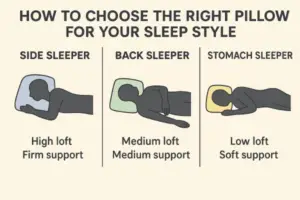
This guide cuts through the confusion and shows you how to match the perfect pillow to your sleep style, whether you’re a side, back, or stomach sleeper. With the right choice, you’ll support spinal alignment, maximize comfort, and unlock deep, restorative rest.

Why Your Pillow Is More Than Just a Headrest
Most people see a pillow as little more than a soft landing pad. But here’s the truth: your pillow is the unsung hero of healthy sleep.
* Your spine follows a natural “S” curve.
* A pillow’s job is to fill the gap between your head and shoulders so your neck stays in a neutral position.
* When your pillow is too high, flat, or the wrong shape, it forces your neck into awkward angles.
The Consequences of a Bad Pillow
* Neck stiffness
* Tension headaches
* Shoulder and upper back pain
* Poor sleep quality and frequent wake-ups
A well-chosen pillow isn’t just about short-term comfort. It’s an investment in long-term spinal health and deeper, more restorative sleep.
Step 1: Identify Your Primary Sleep Position
Your sleep position is the #1 factor in pillow choice. Even though most people shift around at night, you likely have a dominant style.
How to Identify Yours
* Observe yourself → How do you wake up?
* Ask your partner → They’ll notice patterns you miss
* Check comfort zone → The position you naturally fall asleep in often dominates
Pillow Guidelines by Position
| Sleep Position | Pillow Needs | Why It Works |
|---|---|---|
| Back Sleepers | Medium loft, medium firmness | Supports neck curve without pushing head forward |
| Side Sleepers | High loft, firmer pillow | Fills gap between head and shoulders for straight alignment |
| Stomach Sleepers | Thin, soft pillow (or none) | Minimizes neck twist and strain |
Step 2: Understand Pillow Loft
Loft = pillow height when lying flat. It directly determines whether your spine stays aligned.
* Back Sleepers → Medium loft to keep chin level
* Side Sleepers → High loft to fill the shoulder gap
* Stomach Sleepers → Low loft or no pillow to reduce strain
👉 Tip: Mattress firmness changes the loft you need. Softer mattresses allow you to sink in more (so you may need less loft), while firmer ones often require slightly more.
Step 3: Match Firmness to Your Needs
Firmness = how much resistance a pillow gives under weight.
* Back Sleepers → Medium firmness (gentle support)
* Side Sleepers → Firmer pillows that don’t collapse under head pressure
* Stomach Sleepers → Very soft, compressible pillows
⚖️ Think of loft + firmness as a team: if one fails, the other can’t keep your spine aligned.
Step 4: Choose the Right Fill Material
Different fills change loft, firmness, breathability, and durability.
Here’s a comparison table you can drop directly into your article:
| Fill Material | Pros | Cons | Best For |
|---|---|---|---|
| Down & Feather | Soft, moldable, breathable, luxury feel | Lacks support, expensive, not hypoallergenic | Stomach & back sleepers who like softness |
| Memory Foam (Solid) | Pressure relief, contours well, durable | Retains heat, can feel too firm, off-gassing | Side & back sleepers needing consistent support |
| Memory Foam (Shredded) | Adjustable loft, moldable, more breathable | Can clump, still retains heat | All sleepers who want adjustability |
| Latex (Solid) | Durable, hypoallergenic, buoyant support | Expensive, heavy, less contouring | Side & back sleepers, allergy-sensitive |
| Latex (Shredded) | Adjustable, breathable, supportive | Heavy, needs fluffing | All positions, eco-friendly buyers |
| Polyester (Fiberfill) | Cheap, lightweight, hypoallergenic | Flattens fast, traps heat | Budget use, guest pillows |
| Buckwheat Hulls | Very firm, adjustable, breathable | Heavy, noisy, not soft | Side sleepers needing firm support |
| Kapok | Soft, moldable, natural, vegan | Less supportive, compresses | Stomach & back sleepers seeking natural down alternative |
Step 5: Address Specific Needs
Now, let’s consider those unique factors that might influence your pillow choice beyond just your sleep position, whether you’re battling chronic pain, sensitive to allergens, or constantly flipping to the “cool side” of the pillow. Your pillow can be a powerful tool in addressing these specific challenges.
Neck, Shoulder, or Upper Back Pain
If you’re waking up with a stiff neck, a dull ache in your shoulders, or even radiating upper back pain, your pillow might be more than just an accessory – it could be a key player in your discomfort. A pillow that fails to support your spinal alignment can exacerbate existing pain or even create new issues.
* Neck pain → Medium loft/firmness with contouring (memory foam/latex)
* Shoulder pain (side sleepers) → Higher loft + firm support
* Upper back pain → Ensure neutral neck support to relax back muscles
Allergies or Sensitivities
Your pillow can become a breeding ground for common allergens like dust mites, mold, and pet dander, leading to nighttime sniffles, itchy eyes, and exacerbated asthma symptoms. Choosing the right material and maintaining good pillow hygiene can make a significant difference.
* Best materials → Latex, memory foam, buckwheat
* Use allergen-proof pillow protectors
* Wash pillowcases weekly in hot water
Sleeping Hot
Waking up in a sweat is a sure-fire way to disrupt restorative sleep. Some pillow materials are notorious for trapping heat, while others excel at promoting airflow and dissipating warmth.
* Best materials → Latex, buckwheat, shredded foam
* Look for gel-infused foams or breathable covers (cotton, bamboo)
Materials for Cooler Sleep:
* Latex: Its open-cell structure (especially Talalay latex or those with pin-cores for ventilation) allows for excellent airflow, making it one of the coolest foam options.
* Buckwheat Hulls: The loose, irregular shape of the hulls creates natural air channels throughout the pillow, providing exceptional breathability and heat dissipation. They are often considered one of the coolest pillow fills.
* Shredded Foams (Memory Foam, Latex): Compared to solid blocks, shredded versions allow for more air circulation between the pieces, reducing heat retention.
* Down/Feather: High-quality down and feather can be quite breathable due to their natural loft and lightweight structure, though some blends can still feel warm.
* Gel-Infused Memory Foam: Many memory foam pillows now incorporate gel particles or layers designed to draw heat away from the body.
* Open-Cell Memory Foam: Some newer memory foams are engineered with a more open cell structure to improve airflow and reduce heat retention.
* Breathable Covers: The pillowcase and outer cover material also play a role. Look for natural, breathable fabrics like cotton, bamboo, or Tencel, which wick away moisture and allow for better airflow than synthetic blends.
By considering these specific needs, you can further refine your pillow choice, transforming your sleep environment into one that truly supports your overall health and comfort, night after night.
Step 6: Test Before You Buy
The Golden Rule: Don’t Just Squeeze It – Lie On It!
1. Replicate your sleep position on a mattress
2. Check alignment (chin level for back, straight line head-to-tailbone for side)
3. Ask for feedback or check in a mirror
Also check:
* Pressure points (ears, back of head)
* Moldability (does it cradle or push back?)
* Breathability (warm vs. cool touch)
👉 Many brands offer 30–100 night sleep trials. Use them!
Step 7: Know When It’s Time to Upgrade
Even the best pillows wear out. Signs it’s time:
* Lumps or Flat Spots: If it has noticeable lumps, or a permanent crater where your head rests, it’s lost its structural integrity. Even vigorous fluffing won’t restore its original shape or support.
* Persistent Flatness: If your pillow struggles to regain any loft, even after a good shake, it’s a clear sign its filling has broken down. A flat pillow offers no support, leaving your neck in an unsupported or awkward position.
* Discoloration and Stains: Yellowing from sweat, body oils, and saliva is common over time. While a pillow protector can mitigate this, deep-set stains that persist even after washing (if washable) indicate a buildup of unsanitary elements and a material breakdown.
* Tears or Thinning Fabric: If the outer fabric is ripped, worn thin, or the stuffing is starting to peek through, it’s definitely past its prime.
Performance Problems & Pain Signals
* Waking Up with Pain: This is perhaps the most critical sign. If you consistently wake up with neck stiffness, shoulder pain, upper back aches, or tension headaches, your pillow is likely failing to provide adequate support and alignment.
* Constant Fluffing: Do you find yourself constantly punching, folding, or fluffing your pillow throughout the night just to get a modicum of comfort or height? This means it’s no longer doing its job independently.
* Sleeping Hot: Over time, some pillow fills can compress and lose their breathability, leading to increased heat retention. If you find yourself consistently overheating at night, your old pillow might be contributing.
* Allergies Worsening: As pillows age, they accumulate dust mites, dead skin cells, mold, and other allergens. If your nighttime sniffles, itchy eyes, or asthma symptoms are flaring up, an old, allergen-laden pillow could be a major culprit.
Quick Fold Test
* Fold in half → If it doesn’t spring back, replace it
* Down pillow sagging over your arm = time to upgrade
General Lifespan
* Polyester → 6 months–2 years
* Down & Feather → 1–3 years
* Memory Foam → 2–3 years (up to 5)
* Latex → 2–4 years (sometimes 5+)
* Buckwheat → 3–5 years
Don’t underestimate the power of a fresh, supportive pillow. Replacing an old, worn-out one is a simple yet incredibly effective step towards improving your sleep quality, alleviating pain, and safeguarding your long-term spinal health. If your current pillow is exhibiting any of these symptoms, it’s time to revisit the steps for choosing your perfect sleep partner.
Your Perfect Pillow: The Path to Restful Sleep
You’ve journeyed through the intricate world of pillows, uncovering the hidden power they hold over your sleep quality and overall well-being. What started as a simple “cozy landing pad” has revealed itself to be a critical component of your spinal alignment, a guardian against pain, and a key to unlocking truly restorative sleep.
Remember, the quest for your perfect pillow isn’t about finding the most expensive or trendiest option; it’s about finding the one that perfectly complements your unique body and sleep style. We’ve armed you with the essential knowledge:
Your Sleep Position is Paramount: Whether you’re a back, side, or stomach sleeper, your dominant position dictates the fundamental requirements for your pillow.
Loft and Firmness are Your Guides: These two factors work in tandem to ensure your head and neck are kept in neutral alignment with your spine, preventing uncomfortable angles and strain.
Material Matters: From the plush comfort of down to the robust support of memory foam or latex, and the customizable nature of buckwheat, the fill material determines how a pillow performs, breathes, and lasts.
Personal Needs Count: Allergies, pain points, and temperature preferences are not minor details; they’re crucial considerations that can significantly impact your comfort and health.
Testing is Key: Don’t just squeeze – lie down and observe! And whenever possible, take advantage of home sleep trials to ensure a perfect match.
Know When to Let Go: An old, worn-out pillow is a detriment, not a friend. Recognizing the signs it’s time for a replacement is just as important as choosing a new one.
* Sleep position first (back, side, stomach)
* Loft + firmness together for spinal alignment
* Fill material matters for durability, cooling, and feel
* Account for pain, allergies, and heat
*Test thoroughly and replace when worn out
Investing in the right pillow is one of the simplest but most effective steps toward better sleep. The right one supports your spine, reduces pain, and helps you wake up refreshed instead of sore.
✅ Takeaway: Your pillow isn’t just comfort — it’s a tool for spinal health, pain prevention, and deep rest. By finding the right balance of loft, firmness, and fill, you’ll set yourself up for the healthiest, most restorative sleep possible.

Recommended Reading
Cool & Comfortable: Long Hair Sleeping Tips for Hot Weather
Sleeping with long hair in the summer can be tricky, and long hair sleeping in hot weather often leads to sweaty strands, tangles, and restless nights. The heat and humidity can make it difficult to get comfortable, but the right bedtime routine can make all the difference. With a few smart adjustments, you can keep […]
Should You Shower Before Bed? Science Says Yes (or No)
Is a Shower Before Bed Good for You? Unpacking the Science & Benefits Ever wondered if your nightly shower ritual is truly beneficial? This post cuts through the myths to reveal the science behind showering before bed, exploring its surprising advantages for sleep quality, skin health, and overall well-being. Discover how a well-timed shower can […]
Cool & Comfortable: Long Hair Sleeping Tips for Hot Weather

Sleeping with long hair in the summer can be tricky, and long hair sleeping in hot weather often leads to sweaty strands, tangles, and restless nights. The heat and humidity can make it difficult to get comfortable, but the right bedtime routine can make all the difference. With a few smart adjustments, you can keep your hair off your skin, reduce frizz, and enjoy a cooler, more restful night’s sleep—even when temperatures are high. This guide covers practical tips to help you protect your hair and improve your comfort in hot weather.
Here are some practical tips for women with long hair sleeping in hot weather so you can stay cooler and avoid waking up in a tangle:
1. Choose a Cooler Hairstyle
Your hairstyle can have a big impact on how comfortable you feel overnight. Keeping hair lifted or loosely contained reduces heat buildup and prevents tangles. Here are a few popular options:
* Loose braid or plait – Keeps hair neatly together without pulling too tightly, while still allowing airflow to your scalp.
* High loose bun or top knot – Lifts hair off your neck and shoulders, ideal for very warm nights.
* Pineapple style – Perfect for curly or wavy hair, this style involves loosely gathering hair on top of your head to protect curl shape.
* Low loose ponytail – Good for those who prefer their hair lower but still want it secured.
If you have extra thick hair, you might try section braiding (two or more loose braids) to spread out the bulk and help your scalp stay cooler.
2. Use Cooling Accessories
The right accessories make a big difference for long hair sleeping in warm weather.
* Silk or satin scrunchies – Gentle on hair, prevent creases, and won’t snag strands like elastic bands.
* Breathable headbands – Hold hair away from your face while allowing air circulation.
* Cooling pillowcases – Made from bamboo, silk, or specialized cooling fabrics, these help keep your head cooler through the night.
These small swaps can add up to more comfortable and healthier hair by morning.
3. Prep Your Hair for Heat
Your nighttime hair care routine should change during hot weather.
* Wash and air dry before bed – Avoid going to bed with wet hair in humid conditions, as it can lead to frizz and scalp discomfort.
* Lightweight leave-in conditioner or aloe vera gel – Hydrates and smooths hair without adding heat-trapping heaviness.
* Skip heavy oils or thick creams – These can cause your scalp to feel hotter and may weigh down your hair.
A simple, lighter hair care approach helps keep you cooler and more comfortable while sleeping.
4. Keep Your Sleeping Environment Cool
Your bedroom plays a major role in your overall comfort.
* Position a fan near your bed – Encourages air movement through your hair and across your skin.
* Switch to breathable bedding – Cotton and linen sheets allow for better air circulation than synthetic fabrics.
* Use a cooling gel pillow pad – This can keep your head cool for hours and help reduce sweating.
Even small changes in your sleep environment can improve how you feel in the morning.
5. Protect from Frizz & Tangles
Hot nights often mean tossing and turning, which can cause friction and damage to your hair.
* Sleep on a silk or satin pillowcase – These reduce friction, helping to prevent frizz, breakage, and split ends.
* Braid in sections – If you have thick or heavy hair, two or more loose braids keep it off your skin and help it dry evenly if freshly washed.
* Use a light scarf or wrap – Keeps hair clean, especially if you sweat at night, and helps maintain styles longer.
These small protective steps help you wake up with smoother, more manageable hair.
Extra Hot-Weather Tips for Long Hair Sleeping
If you live in an area with high humidity, you might also:
* Sleep with your hair slightly damp and braided – Can create gentle waves while keeping hair cooler.
* Mist your hair with rose water or aloe spray before bed – Adds light hydration and a refreshing scent.
* Try an overnight hair mask once a week – Use a lightweight formula to nourish hair without making you feel hot.
Long hair sleeping in hot weather doesn’t have to mean waking up sweaty, tangled, or frizzy. By choosing cooler hairstyles, using gentle and breathable accessories, adjusting your nighttime hair care routine, and keeping your sleep environment comfortable, you can protect your hair while improving your overall rest.
Small adjustments—like switching to a silk pillowcase, braiding your hair loosely, or using a bamboo pillow cover—can make a noticeable difference. Over time, these habits not only help you sleep better but also keep your hair healthier and easier to manage, no matter how high the temperature climbs.
Recommended Reading
Should You Shower Before Bed? Science Says Yes (or No)
Is a Shower Before Bed Good for You? Unpacking the Science & Benefits Ever wondered if your nightly shower ritual is truly beneficial? This post cuts through the myths to reveal the science behind showering before bed, exploring its surprising advantages for sleep quality, skin health, and overall well-being. Discover how a well-timed shower can […]
Morning Habits That Can Improve Your Sleep at Night
While many focus on pre-bed rituals for better sleep, the truth is, your morning habits hold the key to unlocking truly restorative nights. This post reveals how simple yet powerful adjustments to your early hours from when you expose yourself to light to what you consume can profoundly regulate your body’s internal clock, reduce stress, […]
Should You Shower Before Bed? Science Says Yes (or No)

Ever wondered if your nightly shower ritual is truly beneficial? This post cuts through the myths to reveal the science behind showering before bed, exploring its surprising advantages for sleep quality, skin health, and overall well-being. Discover how a well-timed shower can optimize your bedtime routine and contribute to a healthier you.
Understanding Body Temperature & Sleep Cycles
Ever noticed how a cool room just feels right when you’re trying to drift off? That’s because your core body temperature plays a surprisingly significant role in your sleep cycle, working hand-in-hand with your body’s natural internal clock, the circadian rhythm.
Here’s the lowdown: As evening approaches, your body naturally begins to cool down. This isn’t just a casual chill; it’s a deliberate physiological signal that tells your brain, “Hey, it’s almost time to wind down and prepare for sleep!” This drop in core body temperature is a crucial cue for initiating sleep and transitioning into deeper, more restorative stages. Conversely, your temperature starts to rise as morning nears, helping you wake up feeling refreshed.
Now, where does a shower fit into this intricate dance? While it might seem counterintuitive to take a warm shower to cool down, the science is quite clever. A warm shower (not scalding hot!) initially raises your skin temperature.
However, once you step out, the rapid evaporation of water from your skin, combined with the cooler ambient air, causes your body to cool down much more quickly and efficiently than it would naturally. This accelerated cooling mimics and enhances your body’s natural temperature dip, signaling to your brain that it’s prime time for sleep. Think of it as giving your body a gentle, yet effective, nudge towards dreamland.
The Science-Backed Benefits of a Warm Pre-Bed Shower
So, what does all this sophisticated temperature regulation mean for your nightly routine? Beyond just feeling good, a warm pre-bed shower offers a suite of science-backed advantages designed to optimize your sleep.
* Accelerated Sleep Onset: That enhanced cooling effect we just discussed? It’s your express ticket to dreamland. By amplifying your body’s natural sleep signals, you’re essentially telling your brain, “Okay, showtime’s over, let’s hit the hay!” Research, including studies published in the Journal of Sleep Research, indicates that taking a warm shower or bath about 90 minutes before bed can significantly shorten the time it takes to fall asleep.
* Deeper, More Restorative Sleep: It’s not just about falling asleep faster; it’s about the quality of your sleep. Studies suggest that individuals who incorporate a warm pre-bed shower experience improved sleep efficiency and spend more time in the crucial non-REM sleep stages, which are vital for physical restoration and memory consolidation. This means waking up feeling truly refreshed, not just “less tired.”
* Soothing Stress & Muscle Tension: Beyond the thermal benefits, there’s the undeniable power of warm water itself. The gentle warmth helps to relax tense muscles, ease joint stiffness, and promote a general sense of calm. This physical relaxation, combined with the psychological comfort of a warm shower, acts as a powerful antidote to daily stress, making it easier for your mind to quiet down and prepare for rest.
* Clearer Breathing (A Welcome Bonus): While not its primary function for sleep, the steam from a warm shower can also work wonders for your respiratory system. It helps to open up nasal passages and clear congestion, which can be a game-changer for anyone prone to stuffiness, allowing for smoother, uninterrupted breathing throughout the night.
Potential Drawbacks & Important Considerations
While a pre-bed shower offers a wealth of benefits for sleep, it’s not a one-size-fits-all solution, and there are a few important nuances to consider to ensure you’re getting the most out of this nightly ritual.
* Timing is Everything (Revisited): Remember that 90-minute sweet spot we mentioned for maximizing the cooling effect? It’s crucial. Taking a shower *immediately* before bed might actually work against you. If you step out of a warm shower and immediately hop under the covers, your core body temperature might still be elevated from the initial warming, making it harder to fall asleep rather than easier. Give your body ample time (ideally 60-90 minutes) to go through that crucial cooling process after your shower.
* Temperature Matters: We’ve emphasized “warm,” not “scalding hot,” for a reason. Excessive heat can be overstimulating and might even cause your body to work harder to cool down, potentially leading to discomfort and hindering the desired effect. Aim for comfortably warm, think bathwater, not boiling water.
* Skin Sensitivity: For some, frequent warm showers, especially if prolonged, can strip the skin of its natural oils, leading to dryness, itching, or exacerbating conditions like eczema. If you have sensitive skin, consider a slightly shorter shower, use gentle, moisturizing cleansers, and always follow up with a good moisturizer to lock in hydration.
* The Wet Hair Dilemma: Going to bed with dripping wet hair isn’t just uncomfortable; it can also be a breeding ground for scalp issues (like fungal infections) and might make you feel unpleasantly cold if your room isn’t warm enough. If you shower closer to bedtime, ensure your hair is at least towel-dry, or consider a quick blow-dry on a cool setting.
* Listen to Your Body: Ultimately, sleep is incredibly personal. While the science supports the benefits for many, some individuals might find a pre-bed shower too stimulating, or simply prefer another wind-down routine. Experiment with the timing and temperature, and pay attention to how your body responds. The goal is relaxation and better sleep, so tailor the routine to what genuinely works for you.
Crafting Your Ideal Pre-Sleep Shower Routine
Ready to turn that scientific insight into a soothing nightly ritual? Here’s how to craft your perfect pre-sleep shower routine, designed to guide you gently into dreamland:
1. Timing is Your Sleep’s Best Friend
As we’ve explored, the sweet spot is 60-90 minutes before you plan to hit the hay. This gives your body ample time to go through that crucial cooling phase after the initial warmth of the shower. Set an alarm, or simply make it the first step in your evening wind-down.
2. Set the Scene for Serenity
Before you even step in, create a calming atmosphere. Dim the bathroom lights, perhaps light a lavender or chamomile-scented candle (ensure it’s in a safe spot!), or diffuse some calming essential oils. This cues your brain that it’s time to shift gears from active day to restful night.
3. The Goldilocks Temperature: Just Right
Remember, we’re aiming for “comfortably warm,” not “hot.” Test the water to ensure it’s pleasant and soothing, around 98-105°F (37-41°C) if you’re measuring. It should feel relaxing, not stimulating.
4. Mindful Moments in the Water
This isn’t just about getting clean; it’s about unwinding. As the warm water cascades over you, take deep, slow breaths. Focus on the sensation of the water, letting go of the day’s stresses with each exhale. You might even try a few gentle stretches in the shower to release any lingering muscle tension.
5. Post-Shower Pampering
Once you step out, the cooling process begins!
* Towel Dry Thoroughly: Especially important for your hair. Aim for at least towel-dry, or use a cool setting on your hairdryer if you’re showering closer to bedtime.
* Moisturize: Apply a rich, soothing body lotion, perhaps one with calming scents like lavender or vanilla. This not only keeps your skin hydrated but also extends that feeling of warmth and comfort.
* Slip into Comfy PJs: Choose soft, breathable sleepwear that won’t trap heat or restrict your movement.
6. The Transition to True Rest
After your shower, resist the urge to jump back into stimulating activities. This is your prime wind-down window.
* Dim the Lights (Again): Keep the lighting low in your bedroom to continue signaling to your brain that it’s time for sleep.
* Avoid Screens: Put away phones, tablets, and laptops. The blue light can interfere with melatonin production.
* Gentle Activities: Read a physical book, listen to calming music or a podcast, practice some gentle yoga or meditation, or simply sit quietly and reflect.

7. Consistency is Key
Like any good habit, the benefits of a pre-sleep shower multiply with consistency. Try to incorporate it into your nightly routine as often as possible. Your body and mind will begin to associate this ritual with relaxation and sleep, making it an even more powerful sleep cue.By thoughtfully integrating these steps, your warm pre-bed shower transforms from a simple hygiene act into a powerful, science-backed tool for achieving the deep, restorative sleep you deserve.
When a Cold Shower Might Be Considered (and When Not)
While the focus of this post has been on the sleep-enhancing magic of warm pre-bed showers, you might have heard about the growing trend of cold showers or “cold plunges.” So, where do they fit into the picture, and could they ever be a secret weapon for sleep?
Let’s be clear: for the purpose of promoting sleep and relaxation before bed, a cold shower is generally not your best friend. Here’s why:
* The Opposite Effect on Core Temperature: Remember how a warm shower works by initially raising skin temperature and then facilitating a rapid cooling of your core? A cold shower does the opposite. While it might feel refreshing initially, your body’s natural response to cold is to generate heat to maintain its core temperature. This can actually elevate your core temperature or, at the very least, prevent the natural cooling necessary for sleep onset.
* Stimulation, Not Relaxation: Cold water is a jolt to the system. It triggers a “fight or flight” response, releasing adrenaline and increasing your heart rate. This is fantastic if you’re trying to wake up in the morning or boost alertness, but it’s the antithesis of what you want when preparing for sleep. Your goal before bed is to wind down, not rev up.
* Increased Alertness: That rush of energy and focus you get from a cold shower is precisely why it’s counterproductive for sleep. It’s designed to make you feel wide awake and ready to tackle the day, not drift off into dreamland.
When a Cold Shower *Might* Be Considered (and When Not for Sleep)
So, if not for sleep, when are cold showers beneficial?
* Morning Wake-Up Call: Many people swear by a cold shower first thing in the morning to banish grogginess, boost energy, and improve focus. It’s an invigorating way to kickstart your day.
* Post-Workout Recovery: Cold water immersion (or a cold shower) is a popular technique for athletes to reduce muscle soreness, inflammation, and aid in recovery after intense exercise.
* Mood & Resilience Boost: Regular exposure to cold can potentially enhance mood, reduce stress, and improve mental resilience over time due to its impact on neurotransmitters and the nervous system.
* During Extreme Heat (with caution): If you’re struggling with overheating during a heatwave, a quick, cool (not ice-cold) shower can provide temporary relief. However, avoid extreme cold if you’re experiencing heatstroke, as it can be too much of a shock.
The Verdict for Sleep: Unless you’re an extreme biohacker experimenting with very specific protocols (and even then, it’s not universally recommended for sleep onset), stick to the warm shower for your pre-bed ritual. The science strongly supports the warm-to-cool transition for optimizing sleep. Save the invigorating cold blasts for your morning routine or post-exercise recovery. Your sleepy brain will thank you for the gentle warmth and gradual cool-down.
Beyond the Shower: Holistic Sleep Hygiene
While a warm pre-bed shower is a fantastic tool in your sleep arsenal, it’s just one piece of the larger puzzle when it comes to achieving truly restorative rest. Think of it as a star player on a winning team, it performs best when surrounded by other strong contributors. To truly optimize your sleep, it’s essential to embrace a holistic approach to sleep hygiene.
Here are other critical elements that work synergistically with your shower ritual to create the perfect conditions for a good night’s sleep:
* Consistency is Your Circadian Rhythm’s Best Friend: Your body thrives on routine. Going to bed and waking up at roughly the same time every day, even on weekends, helps to regulate your internal clock (your circadian rhythm). This consistent schedule reinforces your body’s natural sleep-wake cycle, making it easier to fall asleep and wake up refreshed. Irregular sleep patterns, often referred to as “social jet lag,” can throw your system off balance, making it harder to drift off, even after a perfectly timed shower.
* Craft Your Sleep Sanctuary: Your bedroom should be a haven for rest, free from distractions and conducive to sleep.
* Darkness: Block out all light. Even small amounts of light can interfere with melatonin production. Use blackout curtains or an eye mask.
* Quiet: Minimize noise. Earplugs or a white noise machine can be incredibly helpful if you live in a noisy environment.
* Cool Temperature: Aim for a bedroom temperature between 60-67°F (15-19°C). This aligns perfectly with your body’s natural cooling process for sleep.
* Comfort: Invest in a comfortable mattress, pillows, and breathable bedding.
* Mind Your Intake (Especially in the Evening): What you consume, and when, significantly impacts your sleep quality.
* Caffeine: Avoid caffeine (coffee, tea, energy drinks, chocolate) at least 6-8 hours before bedtime. Its stimulating effects can linger for hours.
* Alcohol: While it might initially make you feel drowsy, alcohol disrupts sleep architecture, leading to fragmented and less restorative sleep later in the night. It’s best to limit or avoid alcohol close to bedtime.
* Heavy Meals: Eating a large, rich meal too close to sleep can cause indigestion and discomfort, making it difficult for your body to settle down. Aim to finish dinner at least 2-3 hours before bed.
* Move Your Body (But Time It Right): Regular physical activity is a powerful sleep aid, helping to reduce stress and improve sleep quality. However, the timing is crucial. Vigorous exercise too close to bedtime can be stimulating and raise your core body temperature, counteracting your pre-bed shower efforts. Aim to complete intense workouts at least a few hours before you plan to sleep. Gentle activities like stretching or light yoga can be beneficial in the evening.
* Embrace a Digital Detox: The blue light emitted from screens (phones, tablets, computers, TVs) suppresses melatonin production, signaling to your brain that it’s still daytime. Make it a rule to power down all electronic devices at least an hour before bed. This allows your brain to naturally ramp up melatonin and prepare for sleep.
* Manage Stress & Anxiety: A racing mind is one of the biggest impediments to sleep. Incorporating stress-reduction techniques into your daily routine can make a profound difference.
* Journaling: Write down your thoughts and worries before bed to get them out of your head.
* Meditation/Mindfulness: Even 5-10 minutes of guided meditation or focused breathing can calm your nervous system.
* Gentle Stretching: Release physical tension accumulated throughout the day.
By combining the targeted benefits of a warm pre-bed shower with these foundational elements of sleep hygiene, you’re not just hoping for better sleep, you’re actively creating the optimal environment and routine for it. It’s about empowering your body’s natural sleep mechanisms, transforming your nightly rest from a gamble into a consistent, refreshing experience.
Is a Pre-Bed Shower Right for You? Key Takeaway
So, after diving deep into the science behind that seemingly simple pre-bed ritual, what’s the ultimate takeaway for you? Is a shower before bed good for you? Here’s the distilled essence:
* The Core Benefit is Temperature Regulation: A warm shower isn’t just about feeling clean; it’s a clever hack for your body’s natural sleep-wake cycle. By initially warming your skin and then facilitating rapid cooling, it amplifies your core body temperature’s crucial dip, signaling to your brain that it’s prime time for sleep.
* Timing is Non-Negotiable: To truly harness this cooling effect, aim for that 60-90 minute sweet spot before you plan to hit the pillow. Showering too close to bedtime can leave your core temperature elevated, hindering rather than helping.
* Warm, Not Hot: Comfortably warm water (think bathwater, not boiling) is key. Overly hot showers can be overstimulating and counteract the desired effect.
* Cold Showers are for Kicking Off Your Day, Not Ending It: While invigorating for mornings or post-workout recovery, a cold blast before bed will stimulate your system, raise alertness, and actively work against your body’s natural wind-down process. Save the chill for another time!
* It’s a Powerful Tool, But Not a Magic Bullet: A pre-bed shower is a fantastic addition to your sleep arsenal, offering benefits like accelerated sleep onset, deeper sleep, muscle relaxation, and clearer breathing. However, it performs best when integrated into a holistic sleep hygiene routine that includes a consistent sleep schedule, a dark and cool bedroom, mindful eating, and digital detox.
* Listen to Your Unique Body: While the science is strong, sleep is incredibly personal. Experiment with the timing and temperature. If a pre-bed shower leaves you feeling more alert, or if you simply prefer another wind-down method, that’s perfectly fine. The goal is always to find what genuinely helps you achieve restful, restorative sleep.
Ultimately, a thoughtfully timed, warm pre-bed shower can be a delightful and highly effective ritual for nudging your body and mind towards dreamland. Give it a try, fine-tune it to your preferences, and enjoy the benefits of a more profound night’s rest.
Recommended Reading
How To Choose The Right Pillow For Your Sleep Style
Tired of waking up with a stiff neck or restless nights? Your pillow might be the problem, but finding the right one doesn’t have to be a nightmare. This guide cuts through the confusion and shows you how to match the perfect pillow to your sleep style, whether you’re a side, back, or stomach sleeper. With […]
Cool & Comfortable: Long Hair Sleeping Tips for Hot Weather
Sleeping with long hair in the summer can be tricky, and long hair sleeping in hot weather often leads to sweaty strands, tangles, and restless nights. The heat and humidity can make it difficult to get comfortable, but the right bedtime routine can make all the difference. With a few smart adjustments, you can keep […]
Unlock Deeper Sleep: Why You Must Avoid Screens Before Bed
Are restless nights and groggy mornings your norm?
Many people know they should avoid screens before bed, but few realize just how big an impact it can have on their sleep quality. The blue light from phones, tablets, and TVs doesn’t just delay melatonin, it can completely throw off your circadian rhythm, keeping you wired when you should be winding down.
By learning why screen use at night disrupts rest and following a few practical strategies to avoid screens, you can set yourself up for faster sleep, deeper rest, and more energized mornings.
The glowing screens you stare at before bed might be the silent saboteur of your sleep. Blue light and late-night stimulation from devices wreak havoc on your body’s natural sleep cycle.
This guide explains the science behind how screens affect your sleep, and more importantly, gives you practical, screen-free strategies to reclaim restorative rest.
The Hidden Sleep Thief: Why Screens Ruin Your Rest
You might think your late-night scrolling or binge-watching session is a harmless way to unwind, but what if I told you that glowing rectangle in your hand or on your wall is actively sabotaging your sleep? It’s not just about losing track of time; there’s a powerful biological reason screens are the hidden sleep thief. The primary culprit is blue light.
The Science of Blue Light
* Phones, tablets, TVs, and laptops emit blue light that mimics daylight
* Blue light suppresses melatonin, your body’s “sleep hormone”
* Without melatonin, your circadian rhythm is thrown off, delaying sleep onset
Melatonin is the signal that tells your body it’s time to wind down and prepare for sleep. When its production is delayed or reduced by screen exposure, your body’s internal clock (circadian rhythm) gets thrown off.
Mental Overstimulation
Even if you dim brightness, the content itself keeps your brain active:
* Binge-watching → keeps your mind engaged in storylines
* Scrolling social feeds → endless novelty triggers alertness
* Late-night emails → force your brain into “work mode”
This combination of suppressed melatonin and an overactive mind makes falling asleep a struggle, leading to delayed sleep, fragmented rest, and groggy mornings.
The Melatonin Menace: How Blue Light Hijacks Your Sleep
Your pineal gland produces melatonin as darkness falls, signaling to your body it’s time to rest. Normally, melatonin peaks in the middle of the night to help you reach deep, restorative sleep.
But when you stare at a screen:
* Blue light tricks your brain into thinking it’s daytime
* Your master clock (the suprachiasmatic nucleus) sends a “stay awake” signal
* Melatonin production is delayed or suppressed
👉 This isn’t just “feeling awake.” It’s a fundamental hijacking of your sleep biology.
The devastating result? Your crucial melatonin production is suppressed or significantly delayed. Instead of a smooth, natural descent into sleep readiness, your body’s internal clock is actively fighting against its innate biological programming.
Your body is ready for sleep, but the essential chemical signal that initiates the process is being held hostage, making it incredibly difficult to initiate sleep and compromising the depth and restorative power of the sleep you eventually manage to get.
It’s a direct interference with the very core of your sleep mechanism, leaving you feeling less rested and more groggy come morning.
More Than Light: How Screens Keep Your Brain Wired
Blue light is only half the problem. What you consume on screens is just as disruptive.
Think of it this way: sleep requires a state of mental calm, a gradual disengagement from the day’s demands.
The Mental Stimulation Cycle
* Cognitive Overload → Constant information keeps your brain in “problem-solving” mode
* Emotional Rollercoaster → Plot twists, debates, or intense messages spike stress hormones
* Dopamine Hits → Notifications and “likes” keep you hooked, rewarding wakefulness
* Perpetual Alertness → Even if nothing happens, the expectation of notifications keeps your brain on edge
Cognitive Overload: Whether it’s catching up on the latest news headlines, scrolling through endless social media feeds, strategizing in a video game, or even responding to a late-night work email, your brain is actively engaged. It’s processing information, solving problems, reacting to stimuli, and anticipating the next piece of content. This is the opposite of the relaxed, passive state conducive to sleep.
Emotional Rollercoaster: The content isn’t always neutral. A thrilling plot twist in a TV show, a heated debate on social media, or even an exciting message from a friend can trigger a surge of emotions – excitement, anxiety, frustration, or even joy. These strong emotional responses can elevate your heart rate and stimulate the release of stress hormones like cortisol, making it incredibly difficult for your body to transition into a restful state.
The Dopamine Loop: Social media platforms, games, and even streaming services are designed to be addictive. Each like, share, notification, or new episode provides a small hit of dopamine, the brain’s “reward” chemical. This creates a powerful feedback loop that encourages continuous engagement, making it incredibly hard to put the device down and break free from the cycle of constant stimulation. Your brain is literally being rewarded for staying awake and active.
Perpetual Alertness: Even if the content itself isn’t overtly stimulating, the mere presence of your device can keep you in a state of semi-alertness. The urge to check for new notifications, the fear of missing out (FOMO), or the habit of “just one more scroll” keeps your mind from truly disconnecting. You’re constantly on call, ready to react, rather than allowing your thoughts to slow and drift towards slumber.
In essence, while blue light directly interferes with your biology, the content and interaction with screens create a mental treadmill that keeps your brain running at full speed. Instead of downshifting for the night, you’re revving your cognitive engine, making the journey to dreamland an uphill battle.
Beyond Falling Asleep: The Damage to Sleep Quality
Even if you eventually manage to fall asleep after battling the blue light and the mental treadmill, the damage doesn’t stop there. Your sleep isn’t a single, monolithic state; it’s a complex journey through distinct stages, each vital for your physical and mental restoration.
Disrupting your pre-sleep routine with screens doesn’t just delay the start of this journey; it can fundamentally derail its quality, leaving you feeling far from rested.
The Sleep Cycle Breakdown
* NREM (Deep Sleep) → time for body repair and immune boosting
* REM Sleep → time for emotional regulation and memory consolidation
Screens can cause:
* Reduced deep sleep (less physical repair)
* Fragmented sleep (more micro-arousals)
* Compromised REM cycles (poorer emotional health)
👉 You may spend 8 hours in bed but still wake up groggy because your sleep wasn’t restorative.
Over time, consistently poor sleep quality impacts everything from your mood and concentration to your immune system and long-term health. It’s not just about getting *enough* sleep; it’s about getting *good* sleep.
Why Avoiding Screens Feels So Hard
If you’ve ever promised yourself “just one more scroll,” you’re not alone.
Screens are engineered to be addictive:
* Dopamine loops reward every notification or autoplay episode
* Habits are deeply ingrained — screens become the default bedtime ritual
* FOMO (fear of missing out) drives anxiety about disconnecting
* Quiet, screen-free time feels “boring” compared to constant digital input
Recognizing these forces isn’t weakness — it’s the first step to breaking free.
Setting Your Digital Sunset: When to Power Down
The golden rule, backed by sleep science, is to implement a “digital sunset” at least 1-2 hours, before your intended bedtime. This is a crucial window for your body and mind to naturally prepare for sleep.
Why?
* Melatonin Reset: It takes time for your brain to register the absence of blue light and for melatonin production to ramp up effectively. If you’re scrolling until the last minute, your pineal gland is still getting that “daylight” signal, and your crucial sleep hormone won’t be ready when you are. Giving it 2-3 hours allows melatonin to flood your system naturally, guiding you gently into slumber.
* The Mental Decompression Zone: Your brain isn’t an on/off switch. After hours of digital stimulation – processing information, reacting to content, engaging in dopamine loops – it needs a significant period to unwind. This screen-free interval allows your thoughts to slow down, your emotions to settle, and your nervous system to shift from “on-guard” to “rest and digest.” It’s your personal mental cool-down lap before the sleep race.
How to Implement a Digital Sunset
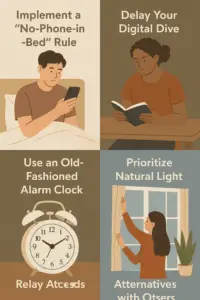
* 30 mins before bed commit to putting your screens away and extend gradually
* Set a “power-down alarm” as a reminder to power down all devices
* Charge devices outside your bedroom, removing temptation, invest in a traditional alarm clock
* Tell family/housemates so they don’t disrupt your routine.
👉 Think of this as your sleep training window — you’re teaching your brain it’s time to rest.
This dedicated screen-free window isn’t about deprivation; it’s about creating a sacred space for relaxation and self-care. It’s an investment in the quality of your sleep, and ultimately, the quality of your waking life.

Simple Evening Activities To Help You Avoid Screens
So what do you do once screens are off? Replace them with soothing activities.
Here are some enriching, sleep-promoting activities to fill your screen-free evening window:
* 📖 Read a physical book → stimulates imagination without blue light
* 🎧 Listen to calming audio → podcasts, guided meditation, or music
* ✍️ Journal or reflect → unload worries, record gratitude, or plan tomorrow
* 🧘 Gentle stretching or yoga → release muscle tension
* 🌿 Meditation or deep breathing → calm your nervous system
* 🛁 Warm bath or shower → body temperature drop signals sleep
* ☕ Herbal tea ritual → chamomile or lavender, caffeine-free
* 🎨 Quiet hobbies → puzzles, knitting, coloring
* 💬 Light conversation → bond with loved ones without digital distractions.
These activities aren’t just placeholders; they are active investments in your sleep health and overall well-being. By purposefully shifting your evening routine away from screens, you empower your body’s natural sleep mechanisms, transforming frantic evenings into peaceful pathways to profound rest.
Crafting Your Ideal Pre-Bed Routine
You’ve learned why screens are sleep saboteurs and discovered a wealth of screen-free alternatives. Now, it’s time to weave these insights into a powerful, personalized strategy: your ideal pre-bed routine.
This isn’t about rigid rules, but about creating a consistent, soothing sequence of actions that signals to your body and mind: “It’s time to wind down.”
Think of your routine as a gentle ramp that smoothly guides you from the demands of your day into the tranquility of sleep.
Consistency is key here; the more regularly you follow your routine, the more effectively your brain will associate these actions with sleep, making the transition easier over time.
Here’s how to structure a nightly ritual that reinforces deep sleep:
1. Digital Sunset → Set your 2–3 hour no-screen window, place devices outside bedroom
2. Decompression Zone → Light reading, journaling, tidying, or calm conversation
3. Body Relaxation → Warm bath, stretching, self massage or herbal tea
4. Quiet Mind Practice → Meditation, deep breathing, or visualization (15-30 min before bed)
5. Optimize Bedroom Environment → cool, dark, quiet, and screen-free
Consistency matters more than perfection — your brain learns to associate these steps with sleep.
You’re not just avoiding screens; you’re actively creating the optimal conditions for your body’s natural sleep mechanisms to flourish. It’s a powerful act of self-care that will unlock deeper, more restorative sleep and transform your waking life.
The Unlocked Benefits: What Deeper Sleep Gives You
The benefits of unlocking deeper, more restorative sleep extend far beyond simply feeling less tired. They touch every aspect of your physical, mental, and emotional well-being, transforming your waking life in profound ways.
Imagine waking up feeling genuinely refreshed, alert, and ready to tackle the day, not dragged out of bed by an insistent alarm. This isn’t a pipe dream; it’s the direct result of giving your body and brain the high-quality sleep they desperately crave.
Here’s what you unlock when you prioritize profound rest:
Mental Clarity
* Better focus & concentration
* Enhanced memory
* Boosted creativity & problem-solving
Physical Health
* Stronger immune system
* Balanced hormones
* More energy & faster recovery
Emotional Well-Being
* Reduced irritability and anxiety
* Better emotional regulation
* Greater resilience to stress
Life Quality
* Stronger relationships
* Higher productivity
* Safer driving & sharper reflexes
* More joy in daily life
Your Screen-Free Promise
You now understand that the glowing screen isn’t just a distraction; it’s a direct interference with your body’s innate ability to achieve the deep, restorative sleep you deserve.
It’s time to make your commitment to better sleep:
* Enforce your digital sunset
* Replace scrolling with calming rituals
* Keep your bedroom a true sleep sanctuary
*Be patient and persistent — habit change takes time
This isn’t about giving up screens forever. It’s about reclaiming your nights so your body and brain can rest, recharge, and thrive.
👉 Imagine waking refreshed, energized, and clear-minded every morning. That’s the power of going screen-free before bed.
Your path to restful nights begins now. Make the promise to yourself. Embrace the quiet. And unlock the incredible power of truly deep, restorative sleep. Your future, well-rested self will thank you.
Recommended Reading
Should You Shower Before Bed? Science Says Yes (or No)
Ever wondered if your nightly shower ritual is truly beneficial? This post cuts through the myths to reveal the science behind showering before bed, exploring its surprising advantages for sleep quality, skin health, and overall well-being. Discover how a well-timed shower can optimize your bedtime routine and contribute to a healthier you. Understanding Body Temperature […]
Tired of Tossing? 7 Simple Hacks for Instantly Better Sleep
If you’ve been lying awake at night staring at the ceiling, you’re not alone. Millions of people struggle with falling asleep or staying asleep, but the good news is that a few small changes can make a big difference. Whether you’re battling a restless mind or an unpredictable sleep schedule, these 7 simple hacks can […]