
sleepadmin
Sleep Debt Explained: What It Is, Why It Matters, And How To Address It
Last updated: February 16, 2026
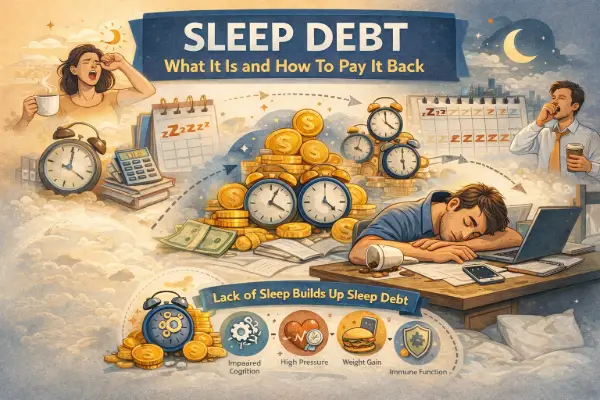
Sleep debt is the gap between the amount of sleep your body tends to function best with and the amount you actually get over time. Like financial debt, it can build quietly. One short night may not feel dramatic, but repeated short nights or inconsistent sleep timing can add up and make sleep feel less restorative.
This guide explains what sleep debt is, how it commonly accumulates, and how to approach it using practical habit-based steps. It also connects you to the core tools on Better Sleep Advisor so you can assess patterns and build more stable routines.
What Is Sleep Debt?
Sleep debt is the cumulative effect of sleeping less than you need across multiple days or weeks. It is not about “perfect” sleep every night. It is about repeated gaps that become a pattern.
- Short-term sleep debt: a few nights of reduced sleep
- Long-term sleep debt: ongoing patterns of insufficient sleep and irregular timing
Sleep debt is often driven by habits and schedules, not a single isolated event. That’s why tools like a 7-day tracker can be so helpful for seeing the pattern clearly.
Why Sleep Debt Matters
When sleep debt accumulates, many people notice changes in how they feel and function during the day. This is not about diagnosing a condition. It is about understanding how patterns can affect energy, mood, and consistency.
| Area | Common Impact of Ongoing Sleep Debt |
|---|---|
| Daytime alertness | Lower energy or increased sleepiness |
| Mood | More irritability or emotional reactivity |
| Focus | Harder to concentrate or retain information |
| Sleep timing | Bedtime drift or inconsistent wind-down |
How Sleep Debt Builds Over Time
Sleep debt is easiest to understand when you see the math. If your body does best with roughly 8 hours, but you repeatedly get less than that, your “gap” adds up.
| Day | Target Sleep | Sleep You Got | Running Debt |
|---|---|---|---|
| Day 1 | 8 hours | 6 hours | 2 hours |
| Day 2 | 8 hours | 5 hours | 5 hours |
| Day 3 | 8 hours | 7 hours | 6 hours |
Even when you “catch up” later, large swings in timing can still create instability. That is why timing consistency matters alongside total hours.
Acute vs. Ongoing Sleep Debt
Not all sleep debt looks the same. Understanding the difference between short-term disruption and ongoing pattern instability helps you respond appropriately.
Acute Sleep Debt
Acute sleep debt usually follows a few nights of reduced sleep. This may happen due to travel, stress, deadlines, or temporary schedule changes.
- Typically lasts a few days
- Often improves with several consistent nights
- Less about long-term rhythm disruption
Ongoing (Chronic) Sleep Debt
Ongoing sleep debt develops when reduced sleep or inconsistent timing becomes a regular pattern over weeks or months.
- Bedtimes vary widely
- Wake times shift significantly between weekdays and weekends
- Short sleep becomes the norm rather than the exception
In many cases, the issue is not just total hours, but inconsistent timing. Stabilizing rhythm often produces more noticeable improvements than simply trying to sleep longer on isolated nights.
| Habit Pattern | How It Contributes to Sleep Debt |
|---|---|
| Short sleep nights | Creates an ongoing sleep shortfall |
| Inconsistent schedule | Disrupts circadian rhythm |
| Late-night screen use | Delays natural sleep signals |
| Weekend catch-up sleep | Can worsen weekday fatigue |
| High stress levels | Reduces sleep quality |
Common Sleep Debt Patterns
Sleep debt often comes from predictable schedule patterns rather than one obvious cause. Here are a few common ones:
- Weekday short sleep + weekend catch-up (sleeping in can shift timing)
- Inconsistent bedtime window (bedtime varies by 1–3 hours)
- Late-night stimulation (screens, work, stress carryover)
- Long naps that reduce sleep drive (harder to fall asleep later)
If you are unsure which pattern applies to you, try tracking your sleep consistency for a week. Seeing the timing on paper often reveals the main issue quickly.
Quick Sleep Debt Self-Check
This quick reflection helps you assess patterns. It is not a medical assessment
Check any statements that apply to you based on the last 7 days.
What this means:
If you checked two or more boxes, your recent sleep habits may be contributing
to short-term fatigue or inconsistency. This does not indicate a diagnosis,
but it can be a helpful signal to pay closer attention to sleep patterns and routines.
Example Sleep Debt Scenarios
| Scenario | What It Looks Like | Best Next Step |
|---|---|---|
| Weekday short sleep | 6–6.5 hours on workdays, longer on weekends | Track timing and narrow wake-time swings |
| Bedtime drift | Sleep and wake times move later each week | Use a gradual reset plan |
| Overstimulation at night | Late screens/work cause delayed wind-down | Build an evening routine and checklist |
How Long Does Sleep Debt Take To Recover?
Sleep recovery is usually gradual. Many people notice improvement when they stabilize timing first and then gently increase sleep opportunity over multiple nights.
- After a few short nights: recovery may take several consistent nights
- After weeks of reduced sleep: recovery may take longer and benefits from consistent timing
The goal is not perfection. The goal is reducing large swings and giving your body a stable pattern to follow.
How To Address Sleep Debt (Practical Steps)
If sleep debt is part of your pattern, here is a simple sequence that works well with the Better Sleep Advisor system:
- Assess your baseline habits using the Sleep Score Self-Check.
- Track timing variability using the Sleep Consistency Tracker.
- Stabilize your morning anchors with the Morning Routine Guide and Morning Routine Checklist.
- Build an evening wind-down structure using the Night Routine Guide and Night Routine Checklist.
- Avoid extreme weekend swings (try keeping wake time within a smaller window when possible).
- Make small changes for 7–14 days before deciding what’s working.
If your sleep schedule has drifted significantly and you want a step-by-step re-alignment approach, use the Sleep Cycle Reset Checklist.
Practical Sleep Pattern Reset Approach
If sleep debt has built gradually, recovery works best the same way: gradually. Rather than trying to fix everything at once, focus on stabilizing core timing habits first.
Step 1: Anchor Your Wake Time
Choose a realistic wake time and keep it consistent, even on weekends when possible. Wake time acts as the strongest timing signal for your internal rhythm.
Step 2: Reduce Large Timing Swings
Avoid shifting bedtime or wake time by multiple hours from one day to the next. Narrow the variability window first.
Step 3: Strengthen Morning Cues
Reinforce wakefulness with light exposure, hydration, and movement. A stable morning improves nighttime consistency.
Step 4: Build a Predictable Wind-Down
Create a simple evening routine that lowers stimulation before bed. Consistency matters more than complexity.
Step 5: Increase Sleep Opportunity Gradually
If you have been consistently sleeping less than you need, extend sleep opportunity slowly rather than dramatically shifting your schedule overnight.
Small, steady adjustments tend to produce more stable long-term improvements than extreme changes.
7-Day Sleep Stabilization Mini Plan
If you suspect ongoing sleep debt, use this simple 7-day structure to reset patterns without drastic changes.
| Day Range | Primary Focus |
|---|---|
| Days 1–2 | Set a consistent wake time and begin tracking sleep timing |
| Days 3–4 | Strengthen morning light and reduce evening stimulation |
| Days 5–6 | Narrow bedtime variability and limit weekend drift |
| Day 7 | Review patterns and adjust gradually |
For deeper insight, combine this mini plan with the Sleep Consistency Tracker and the Sleep Score Self-Check.
Common Mistakes When Trying To “Catch Up”
- Oversleeping on weekends and shifting wake time dramatically
- Trying to fix everything at once instead of making one change
- Changing bedtime by multiple hours overnight
- Relying on caffeine late in the day to compensate for fatigue
If your schedule feels inconsistent, a better approach is to monitor your sleep schedule over 7 days and adjust gradually.
Myths About Sleep Debt
“I function fine on 5 hours.”
Performance tests almost always show impairment, even if you feel okay.
“I can catch up on weekends.”
Weekends help, but they rarely erase long-term debt completely.
“More caffeine solves sleep debt.”
Caffeine masks symptoms without fixing the underlying problem.
“Lying in bed longer counts as sleep.”
Time in bed is not the same as restorative sleep.
Sleep Debt FAQs
1. What is sleep debt?
Sleep debt is the cumulative gap between the amount of sleep your body typically needs and the amount you actually get over time. Even small nightly shortfalls can add up when they occur repeatedly.
2. How quickly does sleep debt build up?
Sleep debt can begin building after just one or two nights of reduced sleep. Losing 1–2 hours per night for several consecutive days may create noticeable fatigue and reduced alertness. The more consistent the short sleep, the faster the debt accumulates.
3. Can you fully catch up on sleep debt?
You can reduce sleep debt, but fully correcting long-standing patterns usually requires consistent, adequate sleep over multiple days or weeks. Sleeping longer for one or two nights may help temporarily, but stable timing and routine habits are typically more effective for long-term improvement.
4. Is sleeping in on weekends enough to fix sleep debt?
Sleeping in on weekends may reduce short-term fatigue, but large shifts in wake time can disrupt your internal rhythm. When weekend sleep schedules differ significantly from weekday schedules, it can make Monday transitions more difficult and reduce overall consistency.
5. How long does recovery from sleep debt take?
Recovery time depends on how long the pattern has been present. A few nights of short sleep may improve within several consistent days. Ongoing sleep debt that has built over weeks may require a longer period of stabilized timing and adequate sleep opportunity.
6. Are naps or caffeine effective ways to fix sleep debt?
Short naps and caffeine can temporarily reduce feelings of sleepiness, but they do not replace consistent nighttime sleep. While they may improve alertness in the moment, long-term recovery usually depends on restoring stable sleep timing and sufficient total sleep.
How This Fits Into Your Full Sleep System
Sleep debt is not only about total hours. Patterns matter. The Better Sleep Advisor system helps you build consistency through:
- Sleep Score Self-Check (awareness)
- Sleep Consistency Tracker (pattern tracking)
- Morning Routine Guide + Checklist (morning anchors)
- Night Routine Guide + Checklist (evening structure)
- Sleep Cycle Reset Checklist (gradual timing reset)
Key Takeaway
Sleep debt builds when sleep duration and timing become consistently misaligned with what your body needs. The most reliable approach is gradual adjustment, stable routines, and tracking patterns over time.
Start small. Focus on consistency. Build gradually.
Important Note
This guide provides educational information for general sleep awareness. It is not intended to diagnose or treat medical sleep conditions. If you experience persistent or severe sleep concerns, consult a qualified healthcare professional.

How Eating Affects Sleep
What To Eat, When To Eat, and What To Avoid For Better Rest
Most people think of sleep problems as an issue of stress, screens, or bad sleep habits. But one of the most overlooked factors is how eating affects sleep. What you eat, how much you eat, and when you eat can all influence how quickly you fall asleep, how deeply you sleep, and how refreshed you feel the next day.
Modern research shows that eating patterns interact directly with your body’s internal clock, digestion, blood sugar levels, and sleep hormones like melatonin. Late heavy meals, excess caffeine, and high-sugar foods can quietly disrupt sleep, while balanced meals and smart timing can support deeper, more restorative rest. Understanding how eating affects sleep gives you another powerful lever to improve sleep quality, often without changing your bedtime or adding supplements.
In this guide, you will learn exactly how eating affects sleep, which foods support better rest, which habits commonly disrupt it, and how simple changes in portion size, meal timing, and cultural eating strategies can make falling asleep and staying asleep easier.
Why Food Can Change Sleep So Much
Sleep is regulated by two major forces:
1. Your circadian rhythm (your body clock): helps decide when you feel alert vs sleepy across the day.
2. Sleep pressure: builds the longer you are awake.
Eating interacts with both.
* Meal timing can act like a “time cue” (a zeitgeber) for peripheral clocks in your liver, gut, and metabolic tissues. Late meals can push those clocks later, which may make it harder to wind down or can increase night awakenings for some people. ScienceDirect
* Digestion and blood sugar affect body temperature, heart rate, and stress hormones. Large meals, high sugar meals, or alcohol close to bed can increase physiological arousal when you want the opposite.
The result: food can help or hurt sleep depending on the pattern.
The Big Picture: Diet Quality and Sleep Quality Are Connected
When researchers look at overall eating patterns (not just one food), a consistent theme shows up:
* Higher diet quality (more whole foods, fiber, fruits and vegetables, and balanced meals) is associated with better sleep quality.
*Diets high in ultra processed foods and added sugars are linked with worse sleep outcomes in many observational studies.
A widely cited clinical review in Sleep Medicine Reviews summarizes this relationship and reports that healthier food intake patterns tend to correlate with better sleep, while processed, free sugar rich foods correlate with poorer sleep. ScienceDirect
Important note: correlation does not prove causation. But the relationship is strong enough that diet quality is now commonly discussed as a sleep hygiene pillar, alongside light, schedule consistency, stress management, and caffeine timing.
Meal Timing: When You Eat Can Matter As Much As What You Eat
Late dinners and late “last meals”
A 2024 study examining meal timing and sleep quality found associations between later timing patterns and poorer sleep quality measures, supporting the idea that timing can influence sleep through circadian and metabolic pathways. PMC
Another 2024 study in university students also explored the timing of main and last meals and found links with sleep quality and related outcomes, highlighting that chronotype (early bird vs night owl tendencies) may modify the relationship. MDPI
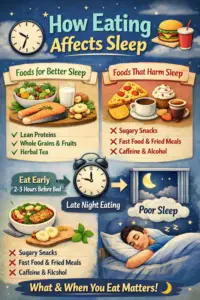
Practical takeaway: For many people, finishing the last substantial meal about 2 to 4 hours before bedtime is a helpful default. It reduces reflux risk, allows digestion to settle, and tends to support a smoother wind down.
“Chrono nutrition” research is expanding fast
A 2024 review of chrono nutrition and sleep literature notes the rapid growth in studies exploring late eating, breakfast skipping, irregular meal timing, and how those patterns relate to sleep and health. ScienceDirect
Practical takeaway: If your schedule allows it, aim for:
*A consistent eating window day to day
*Less “random” late night snacking
*A lighter last meal if you eat close to bed
Carbs At Night: Can They Help You Fall Asleep, or Hurt Sleep Quality?
Carbohydrates are complicated: timing, amount, and type matter.
High glycemic meals and sleep onset
A well known randomized trial found that a high glycemic index (GI) carbohydrate meal shortened sleep onset latency (how long it takes to fall asleep), especially when eaten about 4 hours before bedtime. PubMed
This does not mean “eat sugar to sleep.” The mechanism may involve insulin and amino acid competition that influences tryptophan availability, plus brain glucose sensing pathways. But higher GI meals can also cause blood sugar swings that may increase night waking in some people, especially if eaten very close to bedtime or in very large amounts.
Carbohydrate amount and sleep stages
A 2022 review on carbohydrate and sleep discusses evidence that lower vs higher carbohydrate intake can shift sleep architecture (for example, affecting slow wave sleep and REM patterns), though results vary across studies. PMC
Practical takeaway: If someone struggles with falling asleep (but not staying asleep), one experiment to try is:
*Eat a balanced dinner, then if needed a small snack later that includes complex carbs plus protein (examples below), rather than a high sugar snack right before bed.
Protein, Tryptophan, and “Sleepy Foods”
Tryptophan is an amino acid used to build serotonin and melatonin pathways. Foods that contain tryptophan (and meals that help it reach the brain) are often discussed in sleep nutrition.
A randomized double blind controlled trial studied the effect of altering the tryptophan to large neutral amino acids ratio on sleep and circadian measures (in adolescents) and supports that nutrient composition can influence sleep related physiology. MDPI
Practical takeaway: You do not need supplements to use this idea. Instead, pair:
* Protein (Greek yogurt, milk, turkey, eggs, cottage cheese)
with
* Carbs (oats, fruit, whole grain toast)
in a small evening snack if you tend to go to bed hungry.
Caffeine: One Of The Strongest Diet Related Sleep Disruptors
Caffeine does not just make you feel awake. It blocks adenosine signaling, reducing sleep pressure.
A controlled study published in the Journal of Clinical Sleep Medicine found that caffeine taken even 6 hours before bedtime can significantly disrupt sleep. JCSM
A 2023 systematic review and meta analysis on caffeine’s effects on subsequent sleep found meaningful reductions in total sleep time and sleep efficiency, with increases in sleep onset latency and wake after sleep onset. ScienceDirect
Practical takeaway: A simple rule that works for many people:
* Stop caffeine 8 to 10 hours before bed if you are sensitive
*At minimum, consider a 6 hour cutoff based on research JCSM
This includes coffee, energy drinks, many pre workouts, and some teas and sodas.
Alcohol: May Make You Sleepy, But Usually Worsens Sleep Later
Alcohol often shortens time to fall asleep, but it tends to fragment the second half of the night, reduce REM, and worsen snoring and sleep apnea risk. Many sleep medicine sources recommend avoiding alcohol close to bedtime for this reason.
If you want one clear line for your article: alcohol is a sedative, not a sleep enhancer.
Heavy Meals, Reflux, and Why Some People Wake At 2 to 3 AM
If someone regularly wakes in the middle of the night with a racing heart, hot flashes, or discomfort, food patterns are worth checking. Common triggers:
* Large, high fat meals close to bed: slower gastric emptying and more reflux risk
*Spicy or acidic foods: reflux in sensitive people
*High sugar desserts late: potential blood sugar spike then drop that can increase cortisol and adrenaline in some people
*Alcohol: lighter sleep and more awakenings later
Practical takeaway: If reflux is an issue, try:
*Finish dinner earlier
*Keep the last meal lighter
*Avoid lying flat immediately after eating
*Consider a small, low acid snack if hunger is the problem
The Reverse Direction: Poor Sleep Changes How You Eat
A 2025 narrative review on sleep and eating behavior summarizes evidence that short or poor sleep is associated with:
*Higher energy intake
*Shifts toward more calorie dense foods
*Changes in meal timing, including more late night eating PMC
This is a big reason why “just eat better” can feel hard when sleep is off. Your brain is more likely to chase quick energy.
Practical takeaway: improving sleep can make eating habits easier, and improving eating patterns can make sleep easier. You can tackle both, but start with the lever that feels most doable.
What To Eat For Better Sleep: Practical, Realistic Suggestions
A sleep supportive dinner template
Aim for a dinner that supports stable blood sugar and digestion:
* Protein: chicken, fish, turkey, lean beef, eggs, tofu
*Fiber rich carbs: potatoes, rice, oats, beans, whole grains, fruit
*Color: vegetables or salad
*Fat, but not excessive: olive oil, avocado, nuts
This tends to reduce late night hunger and avoids the crash that can come from a high sugar meal.
If you need a bedtime snack, keep it small and balanced
Good options (about 200 to 350 calories, adjust as needed):
*Greek yogurt + berries
*Oatmeal made with milk
*Whole grain toast + peanut butter
*Cottage cheese + fruit
*Banana + a small handful of nuts
If you work out late, a protein focused snack can also support recovery without being too heavy.
What To Avoid In The Last Few Hours Before Bed
Not everyone reacts the same, but these are the usual culprits:
1. Caffeine late in the day (even 6 hours pre bed can matter) JCSM
2. Alcohol within 3 to 4 hours of bedtime
3. Large, high fat meals right before lying down
4. Very spicy, acidic foods if reflux prone
5. High sugar snacks right before bed if they cause awakenings
References and Studies
* Meal timing and sleep quality (2024) PMC
*Meal timing, last meal timing, sleep quality and related outcomes (2024) MDPI
*Chrono nutrition and sleep review (2024) ScienceDirect
*Diet and sleep quality clinical review (Sleep Medicine Reviews, 2021) ScienceDirect
*High GI meal and shorter time to fall asleep (randomized trial, 2007) PubMed
*Carbohydrate and sleep mechanisms review (2022) PMC
*Caffeine taken 0, 3, or 6 hours before bed disrupts sleep (2013) JCSM
*Systematic review and meta analysis: caffeine reduces total sleep time and sleep efficiency (2023) PubMed
*Tryptophan related clinical trial (2020) MDPI
*Narrative review on sleep and eating behavior (2025) PMC
Foods That Help vs Hurt Sleep
| Category | Foods That May Help Sleep | Why They Help | Foods That May Hurt Sleep | Why They Hurt |
|---|---|---|---|---|
| Proteins | Greek yogurt, milk, cottage cheese, turkey, eggs | Contain tryptophan, support stable blood sugar | Large fatty cuts of meat late at night | Slow digestion, increased reflux risk |
| Carbohydrates | Oatmeal, potatoes, rice, whole grains, fruit | Support serotonin pathways and steady energy | Sugary desserts, candy, pastries | Blood sugar spikes and crashes |
| Fats | Olive oil, nuts, seeds (moderate amounts) | Support satiety without heaviness | Fried foods, greasy fast food | Delayed digestion, heartburn |
| Snacks | Banana + nut butter, yogurt + berries, toast + peanut butter | Balanced carbs + protein | Chips, cookies, ice cream | High sugar and fat combo |
| Drinks | Water, herbal tea (chamomile, peppermint), warm milk | Hydration and relaxation | Coffee, energy drinks, cola | Caffeine blocks sleep pressure |
| Alcohol | None recommended for sleep | — | Wine, beer, spirits close to bedtime | Fragments sleep, reduces REM |
| Spicy / Acidic Foods | Mild, low-acid meals | Less reflux risk | Spicy foods, tomato sauces, citrus late | Heartburn and night waking |
Tip:Not everyone reacts the same. The best approach is to track what you eat in the 3–4 hours before bed and note how it affects your sleep quality.
How Different Cultures Stay Lean
Different cultures stay lean in different ways, but clear patterns show up again and again. Most of them focus less on dieting and more on daily habits, food quality, movement, and mindset.
🇯🇵 Japan


How they stay lean
* Portion control by default: Small bowls and plates make overeating less likely
* Hara hachi bu: Eating until about 80 percent full
* High protein, low calorie density: Fish, tofu, seaweed, vegetables
* Constant movement: Walking, cycling, stairs, daily errands
* Mindful eating: Meals are slower and more intentional
Key idea: Eat less without feeling deprived.
🇮🇹 Italy


How they stay lean
* Quality over quantity: Real food, simple ingredients
* Fat is not feared: Olive oil, cheese, cured meats in moderation
* Structured meals: Few snacks, defined meal times
* Walking culture: Daily movement is built into life
* Enjoyment without guilt: Food is social, not rushed
Key idea: Satisfying food reduces binge behavior.
🇫🇷 France


How they stay lean
* Smaller portions than North America
* No constant snacking between meals
* Eating seated, without distraction
*Slow meals that allow fullness signals to register
* Dessert is allowed, but usually small
Key idea: Discipline without restriction.
🇬🇷 Greece


How they stay lean
* Plant-heavy meals: Vegetables, legumes, grains
* Moderate animal protein: Fish more than red meat
* Natural fats: Olive oil as a staple
* Outdoor living: Walking, gardening, social activity
Key idea: High-volume, low-calorie foods plus movement.
🇮🇳 India


How they stay lean
* Spice-driven cooking: Turmeric, ginger, chili increase satiety
* Legumes over meat: Lentils and beans are staples
* Home-cooked meals dominate
* Lower snacking culture in traditional settings
Key idea: Flavor-rich food controls appetite naturally.
🇨🇳 China


How they stay lean
* Vegetable-first meals with smaller meat portions
* Shared dishes encourage moderation
* Chopsticks slow eating
* Walking and biking are common
* Minimal sugar in traditional diets
Key idea: Balance and variety over excess.
🇲🇽 Mexico


How they stay lean (traditional diet)
* Corn, beans, squash base
* Protein in moderate amounts
* Minimal processed foods historically
* Manual labor and walking
Key idea: Whole foods keep calories in check.
🏝️ Okinawa


How they stay lean
* Sweet potatoes over rice
* High vegetable intake
* Low calorie density meals
* Strong community and purpose reduce stress eating
Key idea: Low calories without hunger.
🌍 Patterns Shared Across Lean Cultures
Almost all lean cultures share these habits:
* Eat real food, not ultra-processed food
* Smaller portions by default
* Walk daily, even without formal exercise
* Eat slowly and socially
* Less snacking, more structured meals
* Food is enjoyable, not emotional
Takeaway You Can Apply Today
You do not need to copy a culture exactly. Borrow the principles:
* Shrink portions before cutting foods
* Build meals around protein, vegetables, and natural fats
* Walk more than you think you need to
* Eat meals seated, without screens
* Stop eating when satisfied, not stuffed
Using Smaller Plates Does Change How full You Feel
Using smaller plates does change how full you feel, and it is driven by how the brain interprets visual information, not just how much food is in your stomach.
This is a real, well-studied effect, not a placebo.
🧠 Why Smaller Plates Make You Feel Fuller

1. The Brain Eats With The Eyes First
Before hormones like leptin and ghrelin even kick in, your brain estimates:
* “How much food am I about to eat?”
* “Is this a normal amount?”
A full-looking plate sends a satiety expectation signal to the brain.
When a plate looks empty or sparse, the brain anticipates hunger even if calories are the same.
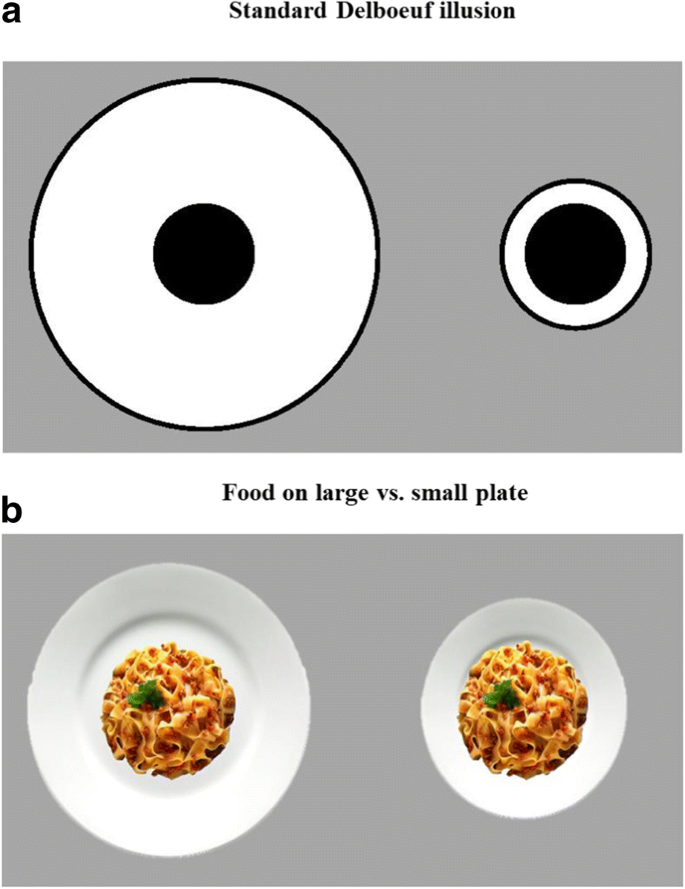
2. The Delboeuf Illusion
This is a classic visual illusion used in neuroscience and nutrition psychology.
Delboeuf illusion
* The same portion looks larger on a small plate
* The same portion looks smaller on a large plate
Your brain judges quantity relative to the plate, not in absolute terms.
Result:
* Small plate → food looks abundant → brain signals “this is enough”
* Large plate → food looks scarce → brain signals “I need more”
3. Expectation Alters Satiety Hormones
Your brain’s expectations influence:
* Ghrelin (hunger hormone)
* Insulin response
*Cephalic phase digestion (digestive prep before eating)
When you expect a meal to be filling:
* Hunger drops faster
* Satisfaction increases
* Cravings afterward decrease
This happens even when calories are identical.
4. Plate Size Changes Bite Behavior
Smaller plates naturally cause:
* Smaller bites
* Slower eating
* More pauses between bites
That gives your gut-brain axis time (about 15–20 minutes) to register fullness.
Large plates encourage:
* Faster eating
* Larger scoops
* Mindless refills
5. Completion Signals Matter
Your brain likes “finished” cues.
Finishing a plate:
* Triggers a psychological completion signal
* Reinforces satiety
* Reduces the urge to keep grazing
With large plates, people often:
* Leave food behind but still feel unsatisfied
* Or refill the plate because it “doesn’t look like enough”
What This Means Practically
Smaller plates work best when:
* The plate looks 70–90% full
* You include protein and fiber
* You sit and eat without screens
They work less well when:
* Eating ultra-processed foods
* Snacking mindlessly
* Drinking calories instead of chewing
How To Use This Without Feeling “Tricked”
You are not fooling yourself, you are aligning with how the brain already works.
Try this:
* Use a 9–10 inch plate instead of 12–14 inches
* Fill half with vegetables
* Quarter with protein
* Quarter with carbs or fat
* Eat slowly and stop at comfortable fullness
This is the same reason lean cultures naturally use smaller dishes without “dieting.”
Bottom line
Smaller plates make you feel fuller because the brain uses visual cues to regulate appetite before the stomach has a say. You eat less, feel satisfied sooner, and are less likely to overeat later.
FAQ Section
* Does eating before bed help or hurt sleep?
It depends on the food and the person. Large, heavy meals close to bedtime often hurt sleep by increasing digestion, heart rate, and reflux. However, a small, balanced snack with protein and carbohydrates can help prevent hunger and support sleep for some people.
* What is the best time to eat dinner for better sleep?
Most research suggests finishing your last full meal 2 to 4 hours before bedtime. This allows digestion to settle and supports the body’s natural sleep rhythms.
* Can certain foods help you fall asleep faster?
Yes. Foods containing carbohydrates and tryptophan-rich proteins (such as oatmeal with milk or yogurt with fruit) may help some people fall asleep faster by supporting serotonin and melatonin pathways.
* Does caffeine really affect sleep if I drink it earlier in the day?
Yes. Studies show caffeine can disrupt sleep even when consumed 6 hours before bedtime. People who are sensitive may need to stop caffeine 8–10 hours before bed.
* Why do I wake up in the middle of the night after eating late?
Late or heavy meals can cause blood sugar fluctuations, reflux, or increased nervous system activity. These effects may trigger awakenings, especially in the second half of the night.
* Is alcohol good or bad for sleep?
Alcohol may make you feel sleepy at first, but it usually reduces sleep quality, increases night awakenings, and disrupts REM sleep later in the night.
* Can improving sleep help me eat better?
Yes. Poor sleep alters hunger hormones and increases cravings for high-calorie foods. Improving sleep often makes healthier eating easier and more automatic.
* How do different cultures stay lean without counting calories?
Many traditionally lean cultures rely on portion control, slower eating, regular meal timing, and whole foods rather than calorie tracking. Smaller portions and consistent mealtimes reduce overeating and late-night digestion, both of which support better sleep quality and metabolic health.
* Does using a smaller plate really make you feel full?
Yes. Using a smaller plate creates a visual illusion that food portions are larger, which can increase feelings of fullness and satisfaction. This effect is linked to how the brain interprets portion size rather than actual stomach volume, helping reduce overeating without conscious restriction.
* How does portion size affect sleep?
Larger portions, especially in the evening, increase digestive workload, raise body temperature, and may trigger reflux or blood sugar swings. Smaller, balanced portions help the body transition into a relaxed state that supports deeper, uninterrupted sleep.
* Why do large dinners make it harder to sleep?
Large meals stimulate digestion, insulin release, and nervous system activity. These processes increase internal arousal at a time when the body should be slowing down, which can delay sleep onset and increase night awakenings.
* Are small plates linked to better sleep or just weight control?
They can support both. Smaller plates reduce the likelihood of overeating at dinner, which lowers digestive stress and discomfort at night. Better digestion and stable blood sugar make it easier to fall asleep and stay asleep.
* Do cultures that eat smaller dinners sleep better?
Many cultures that prioritize lighter evening meals and larger breakfasts or lunches report fewer sleep disruptions. Earlier calorie intake aligns better with circadian rhythms, allowing digestion to slow naturally before bedtime.
* Is it better to eat the biggest meal earlier in the day?
For many people, yes. Eating more calories earlier supports energy levels during the day and reduces the need for heavy evening meals. This pattern is associated with improved sleep quality and better metabolic regulation.
* Can eating too much at night affect melatonin production?
Indirectly, yes. Late, heavy meals can delay melatonin release by increasing body temperature, insulin, and digestive activity. This can shift the body’s natural sleep timing and make it harder to feel sleepy at bedtime.
* Why do slow eaters often feel more satisfied with less food?
It takes time for gut hormones that signal fullness to reach the brain. Slower eating, common in many traditional cultures, allows these signals to register before overeating occurs, leading to smaller portions and less late-night discomfort.
* How does mindful eating relate to sleep quality?
Mindful eating reduces overeating, emotional eating, and late-night snacking. This lowers digestive stress, stabilizes blood sugar, and reduces nighttime awakenings, all of which contribute to better sleep quality.
* Is portion control more important at night than during the day?
Yes. The body is less insulin sensitive and less prepared for heavy digestion at night. Smaller portions in the evening reduce metabolic strain and support natural sleep rhythms.
* Can cultural eating habits reduce nighttime cravings?
Yes. Cultures that eat regular meals, avoid extreme restriction, and emphasize balanced foods tend to experience fewer late-night cravings, which can otherwise disrupt sleep with hunger or overeating.
A Simple “Sleep Nutrition” Checklist
Try this for 10 to 14 nights:
* Keep dinner roughly the same time each night
* Finish your last full meal 2 to 4 hours before bed
*If hungry, have a small balanced snack 30 to 90 minutes before bed
* Stop caffeine at least 6 hours before bed (earlier if needed) JCSM
*Limit alcohol, especially close to bedtime
* Track: time of last meal, time you fell asleep, awakenings, and how rested you feel
After two weeks, most people can identify whether timing, caffeine, or heavy meals are a major factor.
Why Eating Affects Sleep More Than You Think
Sleep is not only shaped by what happens in the bedroom. Eating affects sleep through digestion, blood sugar regulation, hormone signaling, and circadian timing. Large late meals, frequent snacking at night, caffeine, and alcohol can all increase nighttime arousal and sleep fragmentation. On the other hand, balanced meals, appropriate portion sizes, and earlier eating patterns help the body shift into a relaxed state that supports deeper sleep.
Cultures that stay lean without calorie counting often follow habits that naturally improve sleep, such as smaller portions, slower eating, and lighter evening meals. Using tools like smaller plates, mindful eating, and consistent meal timing can reduce overeating and late-night digestion, making it easier to fall asleep and stay asleep.
If sleep has been a struggle, consider looking beyond pillows and supplements. Small changes in how and when you eat may be the missing piece. Once you understand how eating affects sleep, you can build routines that support both better rest and better long-term health.
Recommended Reading
Why Can’t I Fall Asleep Even When I’m Tired?
You can feel exhausted but still unable to fall asleep because sleep is controlled by more than just how tired your body feels. It depends on brain chemistry, hormones, habits, and timing. Here are the most common reasons this happens, in plain language. 1. Your Brain Is Tired, But Your Nervous System Is Still “On” […]
How To Reset Sleep Cycle Checklist
If your sleep schedule is off – whether from staying up late, shift work, travel, stress, or inconsistent habits, you’re not alone. Millions of people struggle with irregular bedtimes, morning grogginess, and trouble falling asleep. The good news is that your sleep-wake rhythm is not permanent. With a bit of structure and consistency, you can […]
Why Can’t I Fall Asleep Even When I’m Tired?
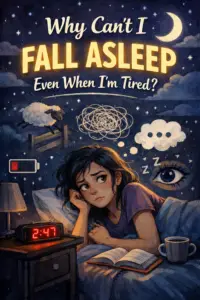
You can feel exhausted but still unable to fall asleep because sleep is controlled by more than just how tired your body feels. It depends on brain chemistry, hormones, habits, and timing. Here are the most common reasons this happens, in plain language.
1. Your Brain Is Tired, But Your Nervous System Is Still “On”
You might be physically exhausted, but mentally alert. Stress, worry, or overthinking keeps your nervous system in a fight-or-flight state, which blocks sleep.
Common signs
* Racing thoughts
* Replay of conversations or to-do lists
* Feeling “wired but tired”
What helps
* Slow breathing (4–6 breaths per minute)
* Writing down thoughts before bed
* A consistent wind-down routine
2. Your Circadian Rhythm Is Out Of Sync
Your body runs on an internal clock. If you go to bed before your body thinks it’s night, you won’t be able to fall asleep, even if you’re exhausted.
Common causes
* Inconsistent bedtimes
* Late-night screen use
* Sleeping in on weekends
* Shifted schedules
What helps
* Wake up at the same time every day
* Morning sunlight exposure
* Dim lights at night
3. Stress Hormones Are Overriding Sleep Hormones
Cortisol (stress hormone) and melatonin (sleep hormone) work in opposition. High stress keeps cortisol elevated, which blocks melatonin.
Triggers
* Emotional stress
* Overtraining
* Undereating
* Late caffeine or alcohol
What helps
* Earlier caffeine cutoff (6–8 hours before bed)
* Gentle evening routines
* Protein + carbs earlier in the evening, not right before bed
4. You’re Physically Tired But Mentally Overstimulated
Scrolling, TV, intense conversations, or problem-solving before bed keeps the brain in “day mode.”
What helps
* No screens 60 minutes before bed (or use blue-light filters)
* Calm activities: reading, stretching, quiet music
* Consistent pre-bed ritual
5. You’ve Trained Your Brain To Associate Bed With Being Awake
If you spend lots of time awake in bed (scrolling, worrying, watching TV), your brain stops linking the bed with sleep.
What helps
* Only use the bed for sleep (and intimacy)
* If awake longer than ~20 minutes, get up and do something calm until sleepy
6. Your Body Is Tired, But Blood Sugar Or Digestion Is Off
Big meals, sugar spikes, or going to bed very hungry can disrupt sleep signals.
What helps
* Avoid heavy meals 2–3 hours before bed
* If needed, a small protein-carb snack (not sugar-heavy)
7. Underlying Sleep Issues
Sometimes the problem isn’t habits, it’s physiology.
Possible contributors
* Anxiety or depression
* Sleep apnea
* Restless legs syndrome
* Hormonal changes
* Chronic pain
If this happens most nights for weeks, it’s worth talking to a healthcare professional.
Simple Summary Of Why You Can’t Fall Asleep
You can’t fall asleep when tired because:
* Your mind is alert
* Your sleep timing is off
*Stress hormones are too high
* Your brain hasn’t “learned” bedtime yet
Sleep is about calm, timing, and consistency, not just exhaustion.
Recommended Reading
How To Reset Sleep Cycle Checklist
If your sleep schedule is off – whether from staying up late, shift work, travel, stress, or inconsistent habits, you’re not alone. Millions of people struggle with irregular bedtimes, morning grogginess, and trouble falling asleep. The good news is that your sleep-wake rhythm is not permanent. With a bit of structure and consistency, you can […]
Utopia Bedding Quilted Fitted Mattress Pad Review
Comfort, Protection, and Value Tested When it comes to getting consistently great sleep, your mattress plays a huge role. But not everyone is ready to replace their mattress, and sometimes all you need is a little extra comfort, softness, and protection. That’s where a well-designed mattress pad can make a remarkable difference. Today we’re taking […]
5 Reasons You Need A Heated Mattress Pad This Winter
(Your Bed Will Thank You!) Tired of shivering through another cold winter night? Imagine slipping into a pre-warmed, luxuriously cozy bed that melts away the day’s chill the moment you lie down. A heated mattress pad isn’t just a winter luxury; it’s a smart investment in your comfort, sleep quality, and even your energy bill. […]
Reset Sleep Cycle Framework
A structured sleep reset works by stabilizing your wake time first, then gradually narrowing bedtime variability while reinforcing daily timing cues. This page outlines the phased reset framework used across Better Sleep Advisor.
If you want a deeper explanation of why sleep timing drifts and how to fix it step by step, read the Complete Reset Sleep Cycle Guide.
What This Framework Does
This framework focuses on consistency rather than drastic change. The goal is to reduce timing swings, strengthen daily rhythm cues, and rebuild predictable sleep patterns over 7 to 14 days.
- Anchor wake time first
- Shift bedtime gradually
- Use light exposure strategically
- Limit weekend variability
- Reinforce repeatable routines
The Phased Sleep Reset Framework
Phase 1: Anchor Wake Time
- Choose a realistic wake time you can maintain daily
- Get bright light within 30 minutes of waking
- Avoid repeated snoozing
- Hydrate and move lightly after waking
This phase is the most important. If only one phase is followed consistently, make it this one.
Phase 2: Reduce Bedtime Variability
- Shift bedtime by 15 to 30 minutes every few days
- Avoid drastic schedule changes
- Go to bed when sleepy, not just when the clock says so
- Keep naps short if used
Phase 3: Strengthen Morning Cues
- Expose yourself to daylight early
- Do light movement or stretching
- Keep morning routine consistent
- Avoid staying in a dark room for extended periods
Phase 4: Stabilize Evening Routine
- Dim lights 60 to 90 minutes before bed
- Reduce stimulating activities
- Follow a consistent wind down routine
- Keep your sleep environment cool and dark
Phase 5: Maintain and Prevent Drift
- Keep wake time stable even after improvement
- Avoid large weekend sleep-ins
- Watch for slow schedule drift
- Correct small shifts early
If you prefer a step-by-step format you can follow daily, use the sleep cycle reset checklist alongside this framework.
Typical Reset Timeline
| Day Range | Primary Focus |
|---|---|
| Days 1–3 | Stabilize wake time and increase morning light exposure |
| Days 4–7 | Gradually narrow bedtime variability |
| Days 8–14 | Reinforce routines and prevent drift |
Common Reset Mistakes
- Changing bedtime by hours at once: Large shifts often backfire and increase alertness.
- Sleeping in drastically on weekends: Extended weekend sleep can undo weekday progress.
- Using long naps to compensate: Long daytime naps reduce nighttime sleep pressure.
- Stopping after only a few days: Most resets require at least one to two weeks of steady effort.
How This Connects To Your Sleep System
This reset framework works best when combined with supportive routines and tracking tools:
Key Takeaway
A sleep reset is not about forcing sleep. It is about building predictable timing cues. Anchor wake time first, make small adjustments, and stay consistent long enough for your rhythm to stabilize.
Important Note
This content is for general educational purposes only and is not intended to diagnose or treat medical sleep conditions. If you experience persistent or severe sleep problems, consult a qualified healthcare professional.
Utopia Bedding Quilted Fitted Mattress Pad Review
Comfort, Protection, and Value Tested

When it comes to getting consistently great sleep, your mattress plays a huge role. But not everyone is ready to replace their mattress, and sometimes all you need is a little extra comfort, softness, and protection. That’s where a well-designed mattress pad can make a remarkable difference. Today we’re taking a detailed look at the Utopia Bedding Quilted Fitted Mattress Pad, one of Amazon’s best-selling budget mattress pads with thousands of positive reviews.
This review covers everything you need to know: comfort, materials, durability, fit, pros and cons, and who this mattress pad is best suited for. By the end, you’ll know exactly whether this product deserves a spot on your bed or if you should consider another option.
Overview of the Utopia Bedding Quilted Fitted Mattress Pad
The Utopia Bedding Quilted Mattress Pad is a lightweight, soft, fiber-filled mattress pad designed to enhance comfort and protect your mattress from daily wear. Unlike thick foam toppers, this pad focuses on adding a quilted cushioning layer without drastically altering the firmness of your bed.
Key features from the product listing include:
* Quilted fiberfill design for added softness
* Smooth brushed microfiber surface
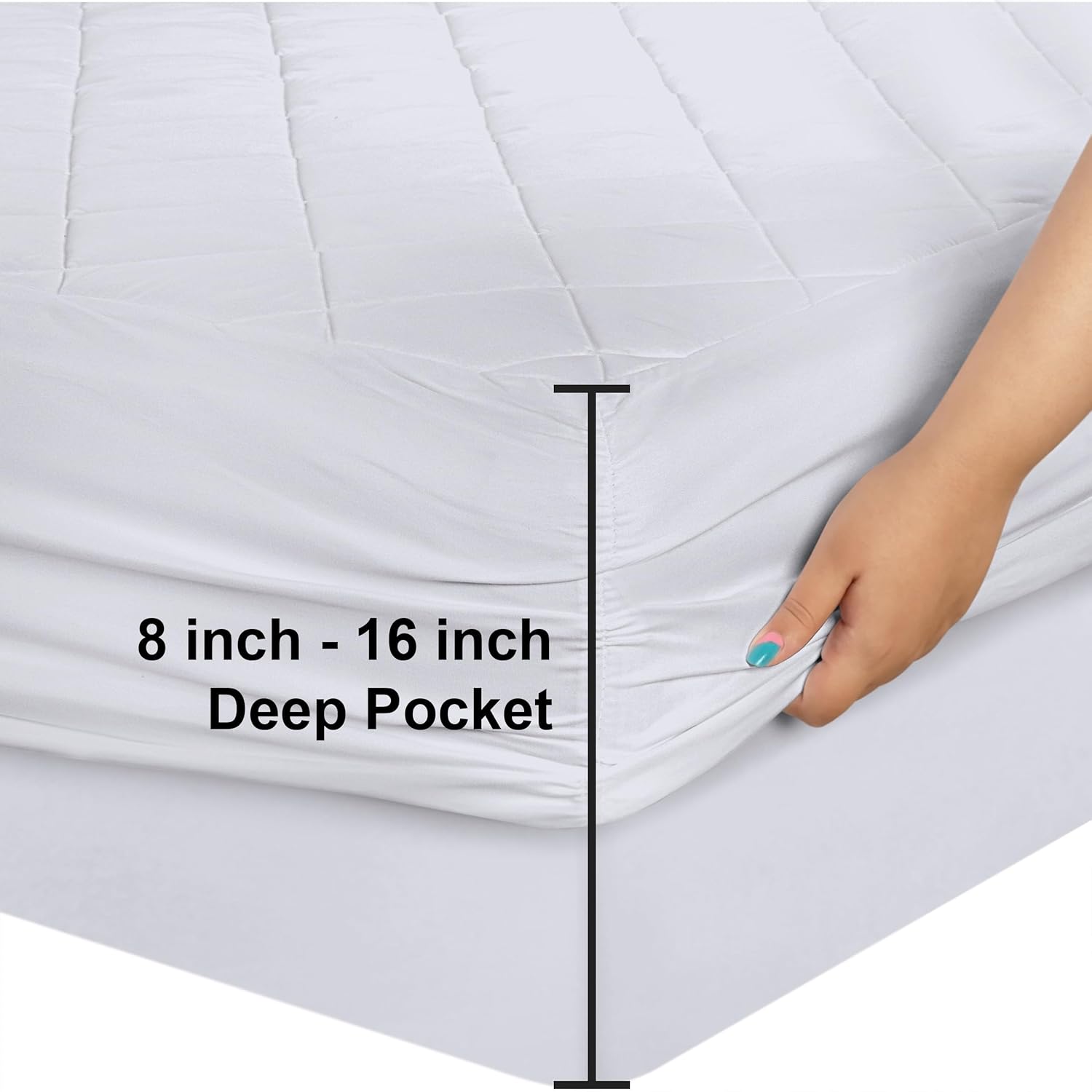
* Fits mattresses up to approximately 16 inches deep
* Stretchable fitted-sheet style skirt for secure placement
* Machine washable and dryer-friendly
* Available in multiple sizes
* Not waterproof
This product is positioned as a budget-friendly comfort upgrade rather than a heavy-duty protector or luxury topper. It’s ideal for refreshing an older mattress or adding extra softness to a firm bed.
Build Quality and Materials
The mattress pad is made primarily from polyester microfiber, a material known for being soft, lightweight, and easy to maintain. The quilted design helps keep the fiberfill layer evenly distributed across the surface, offering a smooth and cushioned feel.
Surface Material
The top fabric is brushed microfiber, which feels soft and gentle on the skin. It doesn’t have the crispness of cotton, but it provides a smooth, comfortable sleeping surface.
Filling
Inside the quilting is a plush microfiber fiberfill. This fill adds a nice amount of loft, giving your mattress a slightly more padded and cloud-like feel without the height or density of foam.
Elastic Skirt
One of the standout features is the elastic skirt designed to fit mattresses up to around 16 inches deep. Many customers note that it stays in place extremely well, even for people who move a lot during the night.
Breathability
Because this pad uses microfiber (not cotton or bamboo), breathability is moderate. If you’re a hot sleeper, you may find natural fabrics more cooling. However, for most sleepers, the airflow is adequate.
Comfort and Performance
This mattress pad shines most when it comes to comfort. The quilted fiberfill provides a noticeably softer sleeping surface, especially helpful for firm mattresses that could use a little extra cushioning.
Added Softness Without Bulk
It does not dramatically change the overall support of your mattress, it’s not a memory foam topper but it does add a comfortable layer that can reduce minor pressure points and create a more “cozy” feel.
Noise and Movement
The pad is quiet and doesn’t make crinkling or rustling sounds, which is important for light sleepers. Because the quilting is stitched in a tight pattern, the fill stays balanced rather than shifting into lumps.
Fit and Stability
Thanks to the deep pockets and strong elastic, the pad stays securely in place throughout the night. This is especially helpful for pillow-top or hybrid mattresses that many pads struggle to grip properly.
Protection Level
It’s important to note that this mattress pad is not waterproof, so it will not protect against spills or fluids. It does, however, protect against sweat, dust, skin oils, and general wear.
Ease of Care
One of the biggest advantages of this mattress pad is how easy it is to clean. It’s machine washable and safe for the dryer (low heat recommended). This makes it ideal for anyone who wants simple, low-maintenance bedding.
Frequent washing doesn’t seem to cause major issues with shrinking, the elastic skirt keeps everything in place even after multiple cycles.
Over time, the loft may compress slightly, which is normal for microfiber pads. Fluffing it in the dryer can help restore some of the fullness.
Durability: What To Expect Long-Term
Because this is a budget-level product, expectations should be realistic. Users generally find that it holds up well for several months to a few years with proper care. The stitching is surprisingly good for the price, and the skirt’s elasticity stays intact much longer than expected.
However, microfiber fill can flatten over time, especially for heavier sleepers or those who sleep in the same position nightly. While it won’t last as long as high-end luxury pads, it offers excellent longevity for its price point.
Who Is This Mattress Pad Best For?
The Utopia Bedding Quilted Fitted Mattress Pad works well for a wide range of sleepers, but it’s especially ideal for:
1. Anyone Wanting a Softer Sleeping Surface
If your mattress feels too firm, this pad adds a layer of plush comfort without drastically altering the overall support level.
2. Budget-Conscious Shoppers
This pad delivers impressive quality and comfort for a very affordable price. It’s a great value purchase.
3. Guest Rooms and Rentals
It’s inexpensive, easy to wash, and improves comfort instantly, perfect for Airbnb, cottages, or spare bedrooms.
4. People Who Want Extra Mattress Protection
Although not waterproof, it protects your mattress from general debris, skin oils, and early wear.
5. Mattresses Up to 16 Inches Deep
Many mattress pads struggle with thicker mattresses, but this one fits securely thanks to its deep elastic skirt.
Who Should Consider a Different Product?
While this mattress pad works well for most sleepers, it may not be the best choice if:
You need cooling features
Hot sleepers may benefit more from cotton, bamboo, or gel-infused toppers.
You need spill protection
Because it’s not waterproof, a separate protector is needed for liquid resistance.
You want a major change in firmness
This pad softens your bed a little but doesn’t provide the support of foam or latex toppers.
You want a luxury feel
For higher-end loft, down alternative or premium bamboo mattress pads may be better options.
Pros and Cons
Pros
* Very affordable
* Soft and comfortable quilting
* Deep fitted skirt fits most mattresses
* Stays securely in place
* Machine washable and dryer-safe
* Great value for everyday comfort
* Good for guest rooms or rentals
Cons
* Not waterproof
* Microfiber may sleep warmer than cotton
* Doesn’t significantly change mattress firmness
* Fill can flatten over time
* Not a replacement for a premium topper
Final Verdict: Is the Utopia Bedding Quilted Mattress Pad Worth It?
Yes, the Utopia Bedding Quilted Fitted Mattress Pad is a strong buy for anyone looking to quickly and affordably improve the comfort of their mattress. It adds a soft layer of cushioning, fits securely on deep mattresses, and is extremely easy to maintain.
While it doesn’t offer cooling technology, spill protection, or major firmness changes, it delivers excellent value for its price. For everyday sleepers, guest beds, or anyone wanting a cozy upgrade without spending much, it’s one of the best budget-friendly mattress pads available on Amazon.
If you want to enhance comfort and extend the life of your mattress without replacing it, this pad is a practical and cost-effective choice.

| Feature | Utopia Bedding Quilted Fitted Mattress Pad | Linenspa Premium Mattress Protector | Sleep Innovations Cradling Cloud Mattress Pad/Topper |
|---|---|---|---|
| Purpose | Adds softness + basic protection (non-waterproof) | Top-only waterproof protector (very light/no cushioning) | “Topper” style pad adds significant cushioning and loft |
| Materials / Construction | Brushed microfiber surface + fiberfill quilted; skirt fits up to ~16″ deep mattress. | Polyester top + polyurethane waterproof backing; secure fit up to ~14-18″ depth. | Quilted pillow-top style with thick padding; higher price range; more change in feel |
| Mattress Depth Fit | Up to ~16″ deep mattress. | Up to ~14-18″ depending on version. | Typically thicker mattresses supported, but check specific spec |
| Comfort / Loft | Moderate extra cushioning adds softness but not dramatically alters support | Very minimal change in feel – mostly protection only | High cushioning – more like a mattress layer than pad |
| Protection Level (Spills, Liquids) | Not waterproof. Protects from light wear but not heavy spills. | 100% waterproof top layer; strong for spills/dust mites/allergens. | Varies by model; may provide some protection but the focus is on comfort |
| Breathability / Sleep-Heat | Good value but microfiber fill may retain more heat than natural fabrics; review scored cooling at ~42/100. | Thin profile with waterproof membrane; some trade-off in breathability due to backing | Depending on fill and cover, may retain more heat due to thickness |
| Value / Price Tier | Budget-friendly – strong value for comfort upgrade | Very affordable protection option | Higher cost – premium feel / thick cushioning |
| Best Use Case | When you want to add softness on a budget to your mattress but don’t need full spill protection | When you want strong protection (water, allergens) but minimal change in feel | When you want a major feel upgrade (soft, plush) to your mattress and are willing to spend more |
| Trade-Offs | No waterproof barrier; some heat retention; doesn’t change mattress support dramatically | Doesn’t add much comfort/softness; purely a protective layer | More expensive; thicker feel may alter bed height/sheet fit; may trap more heat |
How to interpret the chart
* If your primary goal is just making your mattress feel more comfortable (softer surface) and you don’t need full spill protection, the Utopia Bedding Pad is a smart pick.
* If your primary goal is protecting the mattress (spills, kids, allergies) and you don’t care about added softness, then the Linenspa Protector is more appropriate.
* If you want both comfort upgrade + significant cushioning (almost like a pillow-top) and are okay spending more and accepting potential heat/height trade-offs, the Sleep Innovations option is the premium route.
Upgrade Your Mattress Comfort
The Utopia Bedding Quilted Fitted Mattress Pad is an affordable way to add softness, freshness, and extra comfort to any mattress.
✔ Soft quilted feel
✔ Fits up to 16-inch mattresses
✔ Machine washable
✔ Great value

Recommended Reading
(Your Bed Will Thank You!) Tired of shivering through another cold winter night? Imagine slipping into a pre-warmed, luxuriously cozy bed that melts away the day’s chill the moment you lie down. A heated mattress pad isn’t just a winter luxury; it’s a smart investment in your comfort, sleep quality, and even your energy bill. […]
Weighted blankets often provide a significant boost to sleep quality for many individuals by utilizing deep pressure stimulation, a therapeutic technique that calms the nervous system. This gentle, consistent pressure can mimic a comforting hug, reducing anxiety, promoting relaxation, and helping users fall asleep faster and stay asleep longer, though individual experiences can vary. Understanding […]
When it comes to improving your sleep quality, most people focus on bedtime routines, comfortable pillows, or the right mattress. But there’s one simple and often overlooked factor that can dramatically improve your rest — your body temperature. And one of the easiest ways to regulate it? Sleeping in the nude. It might sound unconventional, […]
What Sleep Animal Are You?
(Take a Guess – Then See Your Type Below!) Have you ever wondered why you sleep the way you do? Why some people crash the moment their head hits the pillow… while others lie awake planning tomorrow… or suddenly get a burst of energy at midnight? Believe it or not, your sleep style often mirrors […]