How To Maintain A Consistent Sleep Schedule Long Term
Resetting your sleep schedule is one step. Maintaining it long term is what protects your sleep quality.
Many people successfully shift their schedule earlier or correct a delay — but a few weeks later, bedtime begins drifting again. Weekend sleep-ins creep in. Wake times vary. Gradually, the rhythm weakens.
The key to long-term sleep stability is protecting your wake time anchor and managing small timing shifts before they grow.
Quick Answer
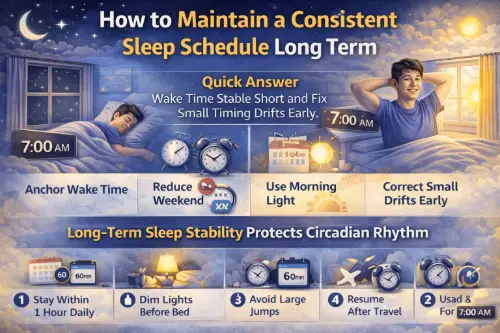
To maintain a consistent sleep schedule long term, wake up at the same time daily, manage weekend variability, use morning light exposure, and correct small timing drifts early. Stability protects circadian rhythm strength.
Why Sleep Schedules Drift Over Time
Sleep timing rarely shifts dramatically overnight. It drifts gradually.
Common causes include:
- Sleeping in on weekends
- Staying up later on Friday and Saturday
- Travel or temporary stress
- Reduced morning light exposure
- Irregular evening routines
Small shifts compound across weeks.
The Most Important Rule: Protect Your Wake Time
Wake time is the foundation of circadian rhythm stability.
Even if bedtime varies slightly, consistent wake time helps:
- Regulate melatonin release
- Improve morning alertness
- Stabilize bedtime naturally
- Reduce sleep onset difficulty
Keep wake time within about 60 minutes daily whenever possible.
How To Prevent Weekend Schedule Drift
Weekend schedule shifts are one of the most common causes of rhythm disruption.
To reduce drift:
- Keep wake time within 60 minutes of weekday timing
- Go to bed slightly earlier if extra rest is needed
- Avoid sleeping in several hours later
Large weekend shifts often lead to Sunday night sleep difficulty.
Learn more here: What Is Social Jet Lag?
Use Morning Light Strategically
Morning light exposure strengthens circadian rhythm timing.
Try to:
- Get daylight within 30 minutes of waking
- Open curtains immediately
- Step outside briefly if possible
Light tells your body that the day has begun and reinforces stable timing.
Correct Small Drifts Early
If your bedtime shifts later by about 30 to 60 minutes for a few nights, correct it early. Adjust bedtime in 15 to 30 minute steps until you are back on track. Fixing small drift now is much easier than doing a full reset later.
Read the Reset Sleep Cycle Guide
Maintain A Consistent Evening Routine
A predictable wind-down routine signals your brain that sleep is approaching.
Helpful habits include:
- Dimming lights 60–90 minutes before bed
- Limiting stimulating screen exposure
- Following a calming nightly pattern
Routine consistency reduces bedtime unpredictability.
What To Do After Travel Or Disruption
Occasional disruption is normal.
If your schedule shifts due to travel or a late night:
- Resume your regular wake time immediately
- Prioritize morning light exposure
- Avoid long daytime naps
- Use gradual bedtime adjustments if needed
For recovery after a late night, see: How to Fix a Sleep Schedule After Staying Up All Night
How Long Does It Take To Re-Stabilize?
Minor drift often corrects within 3–5 days.
More significant schedule disruption may require 7–14 days of consistent timing.
You can review timeline details here: How Long Does It Take to Reset Your Sleep Cycle?
Frequently Asked Questions
How strict do I need to be with my sleep schedule?
Perfection is not required. Keeping wake time within about one hour daily maintains rhythm stability.
Is it okay to sleep in occasionally?
Occasional variation is normal, but repeated large shifts can weaken circadian rhythm strength.
What is the most important part of maintaining a sleep schedule?
Consistent wake time is the strongest long-term stabilizer.
Key Takeaway
Maintaining a consistent sleep schedule long term depends on protecting your wake time, limiting weekend variability, and correcting small drifts early. Stability strengthens sleep quality over time.
Important Note
This article provides general educational information about sleep timing and circadian rhythm stability. It is not intended to diagnose or treat medical sleep conditions. If you experience persistent or severe sleep concerns, consult a qualified healthcare professional.
Optional Resource: Sleep Blueprint Guide
Leave a Reply
You must be logged in to post a comment.