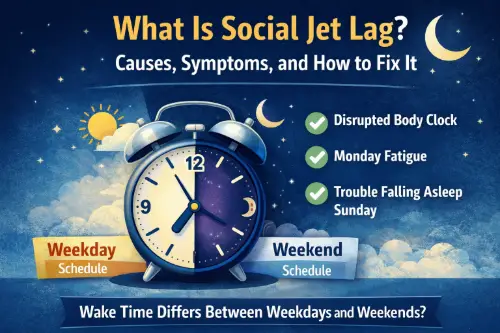
What Is Social Jet Lag? (And How It Affects Your Sleep)
If you sleep one schedule during the week and a completely different one on weekends, you may be experiencing something called social jet lag.
Social jet lag happens when your sleep timing shifts back and forth due to social habits — not travel. Even though you’re not changing time zones, your body clock experiences a similar disruption.
Over time, this pattern can make it harder to fall asleep on Sunday night, wake up on Monday morning, and maintain consistent energy throughout the week.
Quick Answer
Social jet lag occurs when your weekend sleep schedule differs significantly from your weekday schedule. Large shifts in wake time can disrupt your circadian rhythm, making it harder to maintain consistent sleep timing.
Why Is It Called “Social” Jet Lag?
Traditional jet lag happens when you travel across time zones. Your internal clock remains aligned with your old location while your environment has changed.
Social jet lag works similarly — but instead of travel, the shift is caused by lifestyle habits.
For example:
- Waking at 6:30 AM during the week
- Sleeping until 10:00 AM on weekends
- Going to bed later on Friday and Saturday
That 3 to 4 hour difference acts like traveling across time zones twice every week.
This pattern often overlaps with broader inconsistent sleep schedule effects that gradually weaken rhythm stability.
How Social Jet Lag Affects Your Body
Your circadian rhythm thrives on consistency. When wake time varies widely:
- Melatonin timing shifts
- Morning alertness decreases
- Bedtime becomes less predictable
- Monday mornings feel harder
- Sunday night sleep often becomes restless
Even small repeated shifts can accumulate over time.
Common Signs Of Social Jet Lag
You might be experiencing social jet lag if:
- You struggle to fall asleep Sunday night
- Monday mornings feel especially difficult
- Your bedtime drifts later each weekend
- You feel more alert late at night
- Your sleep schedule feels different every few days
This pattern often develops gradually.
How Much Schedule Difference Is Too Much?
A small variation is normal. Most sleep experts suggest keeping weekend wake time within about 60 minutes of your weekday schedule.
When the difference grows to 2–4 hours, your body clock begins to shift noticeably.
The larger the difference, the stronger the “mini jet lag” effect.
How To Reduce Social Jet Lag
1. Stabilize Your Wake Time
Try to wake within 60 minutes of your weekday schedule on weekends.
This is the most powerful correction step.
2. Avoid Large Weekend Sleep-Ins
If you need extra rest, consider:
- Going to bed slightly earlier
- Taking a short afternoon nap (20–30 minutes)
Instead of sleeping several hours later.
3. Maintain Morning Light Exposure
Light shortly after waking helps reinforce circadian rhythm timing, even on weekends.
4. Use Gradual Corrections
If your schedule has drifted significantly, follow a structured reset plan rather than making drastic shifts.
You can review the: Reset Sleep Cycle Guide
Or follow the phased: Sleep Reset Framework
How Long Does It Take To Recover From Social Jet Lag?
If weekend shifts are mild, recovery often occurs within a few days of consistent wake timing.
If shifts are large and repeated for months, correction may take 1 to 2 weeks of steady routine.
For more detail, read: How Long Does It Take to Reset Your Sleep Cycle?
Is Social Jet Lag Dangerous?
Social jet lag itself is not a disease, but long-term circadian inconsistency may contribute to:
- Reduced sleep quality
- Daytime fatigue
- Mood variability
- Difficulty maintaining consistent routines
Maintaining stable timing supports overall rhythm health.
Frequently Asked Questions
Is social jet lag the same as insomnia?
No. Insomnia involves difficulty falling or staying asleep despite opportunity. Social jet lag results from inconsistent sleep timing.
How many hours difference causes social jet lag?
Differences of 2 hours or more between weekday and weekend wake times often produce noticeable effects.
Can social jet lag affect energy levels?
Yes. Frequent timing shifts can reduce morning alertness and create Monday fatigue.
Key Takeaway
Social jet lag happens when weekend sleep timing differs significantly from weekday schedules. Even without travel, repeated shifts can disrupt your internal clock. Keeping wake time consistent is one of the simplest ways to protect sleep stability.
Important Note
This article provides general educational information about sleep timing. It is not intended to diagnose or treat medical sleep conditions. If you experience persistent or severe sleep concerns, consult a qualified healthcare professional.
Optional Resource: Sleep Blueprint Guide