Circadian Rhythm Explained: How Your Internal Clock Controls Sleep
Your body runs on a roughly 24-hour internal timing system called the circadian rhythm.
This biological clock influences when you feel alert, when you feel sleepy, how your hormones fluctuate, and how your sleep timing stabilizes.
Understanding circadian rhythm is one of the most important steps in improving sleep consistency, resetting a disrupted schedule, and preventing long-term timing drift.
Quick Explanation
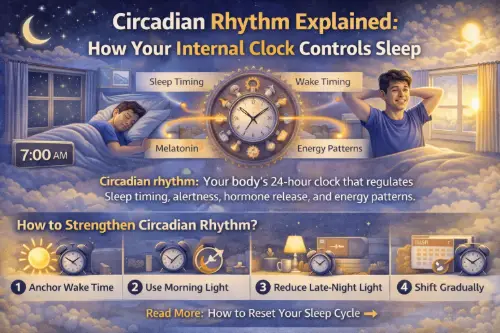
The circadian rhythm is your body’s internal 24-hour clock that regulates sleep timing, alertness, hormone release, and energy patterns. It responds strongly to light exposure and wake time consistency.
What Does The Circadian Rhythm Control?
Your circadian rhythm influences:
- Sleep and wake timing
- Melatonin release
- Cortisol timing
- Body temperature cycles
- Hunger patterns
- Energy fluctuations
When this system is stable, sleep feels predictable.
When it becomes misaligned, bedtime and wake time feel inconsistent.
How The Circadian Rhythm Works
Your internal clock is influenced by environmental cues, called “zeitgebers,” which help synchronize timing.
The most powerful cues include:
1. Light Exposure
Morning light shifts your rhythm earlier.
Late-night light shifts it later.
Light is the strongest timing signal your brain responds to.
2. Wake Time
Consistent wake time anchors your internal clock.
Changing wake time frequently weakens rhythm stability.
Learn more here: Best Wake-Up Time for Better Sleep
3. Bedtime Consistency
Bedtime matters, but wake time has a stronger influence on rhythm alignment.
If bedtime varies but wake time stays stable, rhythm usually stabilizes faster.
4. Routine and Activity
Meal timing, movement, and daily habits reinforce your rhythm patterns.
What Happens When Circadian Rhythm Is Disrupted?
Circadian disruption can occur from:
- Late-night screen exposure
- Weekend sleep-ins
- Shifted wake times
- Staying up all night
- Travel across time zones
When rhythm timing shifts, you may experience:
- Difficulty falling asleep
- Feeling wired at night
- Morning grogginess
- Energy crashes
- Sunday night insomnia
For example: Why You Feel More Awake at Night Than in the Morning
Circadian Rhythm vs Sleep Stages
- Circadian rhythm controls when you sleep.
- Sleep stages control what happens during sleep.
- You can have healthy sleep stages but poor timing — or strong timing but short duration.
- Sleep timing stability is the foundation.
How Circadian Rhythm Drifts Over Time
Timing drift usually happens gradually.
Common patterns include:
- Sleeping in later on weekends
- Going to bed later each night
- Reduced morning light exposure
- Irregular daily schedules
This drift is often called social jet lag.
Learn more here: What Is Social Jet Lag?
How To Strengthen Your Circadian Rhythm
The goal is not perfection. It is consistency.
1. Anchor Your Wake Time
Wake up at the same time daily, including weekends when possible.
2. Use Morning Light
Expose yourself to natural light within 30 minutes of waking.
3. Reduce Late-Night Light
Dim lights 60–90 minutes before bed.
4. Shift Timing Gradually
If correcting drift, adjust bedtime in 15–30 minute increments.
If your timing feels off, you can follow a structured plan in the reset sleep cycle guide to gradually realign your rhythm.
How Long Does It Take To Realign Circadian Rhythm?
Mild timing drift may correct within 3–5 days.
More significant disruption often requires 7–14 days of consistent timing cues.
Full breakdown here: How Long Does It Take to Reset Your Sleep Cycle?
Circadian Rhythm and Delayed Sleep Patterns
When your rhythm shifts later, you may feel:
- Alert late at night
- Tired in the morning
- Motivated at bedtime
- Low energy early in the day
This is often described as a delayed sleep schedule.
Learn how to fix it: How to Fix a Delayed Sleep Schedule
Maintaining Long-Term Stability
Once your rhythm stabilizes, maintenance requires:
- Protecting wake time
- Reducing weekend variability
- Correcting small drift early
For long-term strategies: How to Maintain a Consistent Sleep Schedule
Frequently Asked Questions
Is circadian rhythm the same as your sleep cycle?
No. Circadian rhythm controls daily timing, while sleep cycles refer to the stages of sleep that occur during the night.
Can you reset your circadian rhythm?
Yes. Consistent wake time, morning light exposure, and gradual bedtime adjustments can realign circadian timing.
What causes circadian rhythm disruption?
Common causes include inconsistent wake times, late-night light exposure, weekend schedule shifts, and travel.
Key Takeaway
Circadian rhythm is your internal timing system that regulates when you feel alert and when you feel sleepy. Stabilizing wake time, using morning light, and reducing large schedule shifts can strengthen rhythm alignment and improve sleep predictability.
Important Note
This article provides general educational information about sleep timing and circadian rhythm. It is not intended to diagnose or treat medical sleep conditions. If you experience persistent or severe sleep concerns, consult a qualified healthcare professional.
Optional Resource: Sleep Blueprint Guide
Leave a Reply
You must be logged in to post a comment.