Why You Feel More Awake At Night Than In The Morning
If you feel tired all day but suddenly more alert at night, you’re not imagining it. Many people experience a pattern where energy rises late in the evening and mornings feel difficult.
This usually isn’t about motivation or discipline. It’s often related to how your internal clock is timed.
Your body follows a circadian rhythm — a roughly 24-hour cycle that controls alertness, melatonin release, and sleep timing. When that rhythm shifts later, you may feel most awake at night instead of in the morning.
Quick Answer
You feel more awake at night than in the morning when your circadian rhythm is delayed. Late wake times, nighttime light exposure, and inconsistent sleep schedules can shift your internal clock later, increasing nighttime alertness.
What Is A Delayed Circadian Rhythm?
Your circadian rhythm regulates:
- Sleepiness
- Alertness
- Hormone release
- Body temperature
- Energy patterns
When this rhythm is aligned, you feel sleepy at night and alert in the morning.
When it shifts later, your natural sleep window moves deeper into the night.
This can create a pattern like:
- Groggy mornings
- Low midday energy
- Second wind at 9–11 PM
- Feeling wired at bedtime
Why Does This Happen?
Several factors can shift your rhythm later.
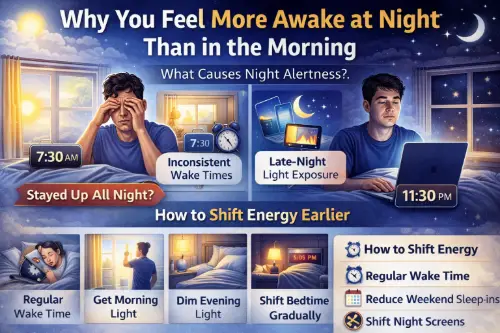
1. Inconsistent Wake Times
Sleeping in on weekends or varying wake time during the week gradually pushes your internal clock later.
2. Late-Night Light Exposure
Bright screens and indoor lighting at night suppress melatonin, the hormone that promotes sleep.
Even small amounts of light close to bedtime can delay sleep timing.
3. Reduced Morning Light
Morning light anchors your circadian rhythm earlier. If you wake in darkness or remain indoors without bright light, your rhythm may drift later.
4. Irregular Bedtimes
Going to bed at different times each night weakens timing signals and makes rhythm less predictable.
5. Stress and Overstimulation
Late-night work, intense content, or overthinking can increase alertness close to bedtime.
This is commonly part of a delayed pattern that can be corrected using strategies in how to fix a delayed sleep schedule.
Is This The Same As Being A “Night Owl”?
Some people naturally prefer later timing, but extreme nighttime alertness combined with morning difficulty is often rhythm drift rather than fixed personality.
Most sleep timing patterns can shift earlier with consistent correction.
How To Shift Your Energy Earlier
If you want to feel more awake in the morning and less wired at night, focus on timing cues.
1. Anchor Your Wake Time
Wake at the same time daily, including weekends.
Wake time consistency is more powerful than bedtime.
2. Get Bright Morning Light
Expose yourself to daylight within 30 minutes of waking.
This strengthens your rhythm’s daytime signal.
3. Dim Lights in the Evening
Reduce brightness 60–90 minutes before bed.
Lower light tells your brain that night is approaching.
4. Avoid Late Stimulation
Limit intense screen use, heavy exercise, or emotionally stimulating content close to bedtime.
5. Shift Bedtime Gradually
Move bedtime earlier by 15–30 minutes every few days.
Avoid drastic changes.
For a structured approach, see: Reset Sleep Cycle Guide
How Long Does It Take To Shift Earlier?
Mild delays may improve within 5–7 days.
More significant timing drift may require 1–2 weeks of consistent wake anchoring and light management.
For full timeline details, read: How Long Does It Take to Reset Your Sleep Cycle?
When To Consider Additional Support
If you consistently cannot fall asleep until very late for months or years, and early wake times feel nearly impossible, you may benefit from speaking with a qualified healthcare professional for evaluation.
Frequently Asked Questions
Why do I get a burst of energy at night?
Late-night alertness often happens when your circadian rhythm is shifted later than your preferred schedule.
Why am I tired all day but awake at bedtime?
Your body clock may be signaling alertness at night due to inconsistent timing cues.
Can you change from a night person to a morning person?
Gradual timing adjustments and consistent light exposure can shift energy patterns earlier for most people.
Key Takeaway
Feeling more awake at night than in the morning usually reflects a delayed circadian rhythm. By anchoring wake time, using morning light, and reducing evening stimulation, you can gradually shift your energy earlier and restore balance.
Important Note
This article provides general educational information about sleep timing and circadian rhythm. It is not intended to diagnose or treat medical sleep conditions. If you experience persistent or severe sleep concerns, consult a qualified healthcare professional.
Optional Resource: Sleep Blueprint Guide
Leave a Reply
You must be logged in to post a comment.