What Is A Good Sleep Score? (And How To Improve It Naturally)
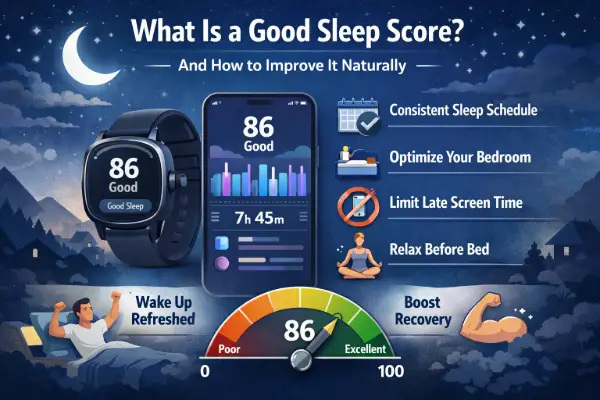
A good sleep score is a simple way sleep apps and wearables summarize how well you slept. While exact formulas vary by brand, the ranges are very similar.
Click here to discover your sleep score
What Is A Good Sleep Score?
Most sleep trackers use a 0–100 scale:
* 90–100 (Excellent): Restorative sleep, strong recovery
*80–89 (Good): Solid sleep with minor disruptions
*70–79 (Fair): Adequate, but room for improvement
*Below 70 (Poor): Sleep debt likely building
As a general goal, 80+ most nights is considered healthy and sustainable.
What Goes Into A Sleep Score?
Most systems weigh these factors:
1. Total sleep time
Adults typically score best with 7–9 hours
2. Sleep consistency
Similar bed and wake times daily
3. Sleep stages
*Deep sleep for physical recovery
*REM sleep for memory, mood, and learning
4. Sleep efficiency
Time asleep vs time in bed
5. Interruptions
Awakenings, restlessness, movement
6. Heart rate and breathing
Lower, stable values usually raise scores
How To Get A Better Sleep Score
1. Lock In a Consistent Schedule
Go to bed and wake up at the same time, even on weekends. This is one of the biggest score boosters.
2. Get Morning Light
Natural light within 30–60 minutes of waking helps set your circadian rhythm and improves sleep later that night.
3. Control Evening Light
Reduce bright lights and screens 1–2 hours before bed. This helps melatonin rise naturally.
4. Keep the Bedroom Sleep-Optimized
*Cool temperature (around 18–20°C / 65–68°F)
*Dark room
*Quiet or steady background noise
5. Time Food and Caffeine Properly
*Avoid caffeine after early afternoon
*Finish large meals at least 2–3 hours before bed
6. Create a Wind-Down Routine
Consistent pre-bed habits signal your brain that sleep is coming. Examples include stretching, reading, breathing exercises, or a warm shower.
7. Stay Active During the Day
Regular movement improves deep sleep and sleep efficiency. Avoid intense workouts right before bed.
8. Manage Stress Before Bed
Mental arousal lowers scores fast. Journaling, slow breathing, or mindfulness can reduce nighttime awakenings.
9. Limit Alcohol for Sleep Quality
Alcohol often lowers REM sleep and increases awakenings, even if total sleep time looks fine.
What Matters More Than The Number
A single low sleep score is not a problem. Patterns matter more than perfection.
Focus on:
* Average score over weeks
* How you feel during the day
*Consistency over chasing 100
A steady 80–90 range with good daytime energy is a strong sign your sleep is working for you.
Sleep Stage Breakdown
Here is a clear, practical breakdown of each sleep stage, how much you typically need, and what each one does for your body and brain. This lines up with how most sleep trackers score sleep.
The Main Types Of Sleep
Adult sleep happens in repeating cycles (about 90 minutes each). Across the night, you move through light sleep, deep sleep, and REM sleep multiple times.
1. Light Sleep (Stages N1 + N2)
Typical amount:
45–55% of total sleep
About 3.5–5 hours in an 8-hour night
What it does:
* Acts as the transition between wakefulness and deeper sleep
* Slows heart rate and breathing
* Lowers body temperature
* Prepares your brain and body for deep and REM sleep
Why it matters:
Light sleep is not “bad sleep.” It makes up the largest portion of the night and is essential for stability and continuity of sleep cycles.
Too little light sleep:
Rare and usually not an issue
Too much light sleep:
Can indicate frequent awakenings, stress, alcohol, caffeine, pain, or poor sleep environment
2. Deep Sleep (Stage N3)
Typical amount:
13–23% of total sleep
About 1–2 hours per night
What it does:
* Physical recovery and muscle repair
* Growth hormone release
* Immune system strengthening
* Tissue repair and inflammation control
Why it matters:
Deep sleep is the most physically restorative stage. This is when your body does most of its repair work.
Too little deep sleep may cause:
* Feeling physically drained
* Poor workout recovery
* More aches, pain, or frequent illness
Factors that reduce deep sleep:
* Late caffeine
* Alcohol
* Stress
* Irregular sleep schedule
* Sleeping too warm
Deep sleep is concentrated more in the first half of the night, which is why going to bed late can reduce it.
3. REM Sleep (Rapid Eye Movement)
Typical amount:
20–25% of total sleep
About 1.5–2 hours per night
What it does:
* Memory consolidation
* Learning and skill development
* Emotional regulation
* Creativity and problem-solving
Why it matters:
REM sleep keeps your brain sharp and emotionally balanced. Dreams happen mostly during REM.
Too little REM sleep may cause:
* Brain fog
* Poor focus
* Mood swings
* Increased anxiety or irritability
Factors that reduce REM sleep:
* Alcohol (biggest one)
* Short sleep duration
* Frequent awakenings
* Late bedtime with early wake-up
REM sleep happens more in the second half of the night, so cutting sleep short usually sacrifices REM first.
4. Awake Time (Brief Awakenings)
Typical amount:
Less than 5–10% of the night
What it means:
Short awakenings are normal and often not remembered. Sleep trackers pick up movement or heart rate changes.
When it becomes a problem:
* Long or frequent awakenings
* Difficulty falling back asleep
* Feeling unrefreshed despite enough hours
Common causes include stress, alcohol, overheating, noise, light, and late meals.
Ideal Sleep Stage Breakdown (Adults)
For most healthy adults:
* Light sleep: 45–55%
* Deep sleep: 13–23%
* REM sleep: 20–25%
* Awake: Under 10%
These are ranges, not strict targets. Night-to-night variation is normal.
How Sleep Stages Change With Age
* Deep sleep declines gradually after your 30’s
* REM stays relatively stable
* Light sleep increases slightly
* Total sleep efficiency can drop if routines become inconsistent
This is normal and not automatically a problem if energy and focus are good.
Big Picture Rule
Do not chase perfect percentages.
What matters most:
* Enough total sleep
* Consistent timing
* Feeling alert, focused, and physically recovered during the day
If your sleep stages stay roughly in range and your sleep score averages 80+, your sleep is doing its job.
Recommended Reading
Sleep debt is one of the most misunderstood concepts in sleep health. Many people assume that missing sleep during the week can simply be “caught up” on the weekend. While extra rest can help you feel better short term, true sleep debt works differently and can quietly affect your energy, mood, metabolism, and long-term health. […]
What To Eat, When To Eat, and What To Avoid For Better Rest Most people think of sleep problems as an issue of stress, screens, or bad sleep habits. But one of the most overlooked factors is how eating affects sleep. What you eat, how much you eat, and when you eat can all influence […]
You can feel exhausted but still unable to fall asleep because sleep is controlled by more than just how tired your body feels. It depends on brain chemistry, hormones, habits, and timing. Here are the most common reasons this happens, in plain language. 1. Your Brain Is Tired, But Your Nervous System Is Still “On” […]
How To Reset Sleep Cycle Checklist
If your sleep schedule is off – whether from staying up late, shift work, travel, stress, or inconsistent habits, you’re not alone. Millions of people struggle with irregular bedtimes, morning grogginess, and trouble falling asleep. The good news is that your sleep-wake rhythm is not permanent. With a bit of structure and consistency, you can […]
Optional Resource: Sleep Blueprint Guide
Leave a Reply
You must be logged in to post a comment.