Sleep Debt Explained: What It Is, Why It Matters, And How To Address It
Last updated: February 16, 2026
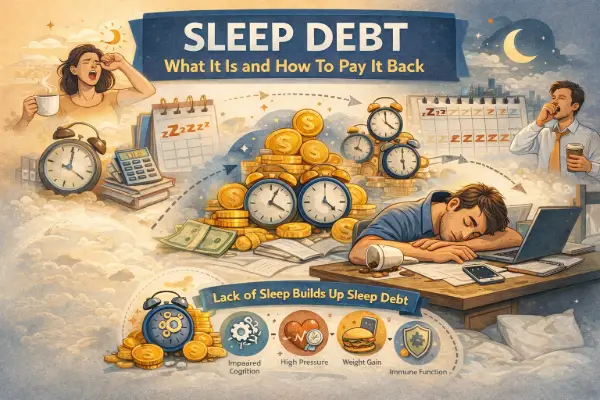
Sleep debt is the gap between the amount of sleep your body tends to function best with and the amount you actually get over time. Like financial debt, it can build quietly. One short night may not feel dramatic, but repeated short nights or inconsistent sleep timing can add up and make sleep feel less restorative.
This guide explains what sleep debt is, how it commonly accumulates, and how to approach it using practical habit-based steps. It also connects you to the core tools on Better Sleep Advisor so you can assess patterns and build more stable routines.
What Is Sleep Debt?
Sleep debt is the cumulative effect of sleeping less than you need across multiple days or weeks. It is not about “perfect” sleep every night. It is about repeated gaps that become a pattern.
- Short-term sleep debt: a few nights of reduced sleep
- Long-term sleep debt: ongoing patterns of insufficient sleep and irregular timing
Sleep debt is often driven by habits and schedules, not a single isolated event. That’s why tools like a 7-day tracker can be so helpful for seeing the pattern clearly.
Why Sleep Debt Matters
When sleep debt accumulates, many people notice changes in how they feel and function during the day. This is not about diagnosing a condition. It is about understanding how patterns can affect energy, mood, and consistency.
| Area | Common Impact of Ongoing Sleep Debt |
|---|---|
| Daytime alertness | Lower energy or increased sleepiness |
| Mood | More irritability or emotional reactivity |
| Focus | Harder to concentrate or retain information |
| Sleep timing | Bedtime drift or inconsistent wind-down |
How Sleep Debt Builds Over Time
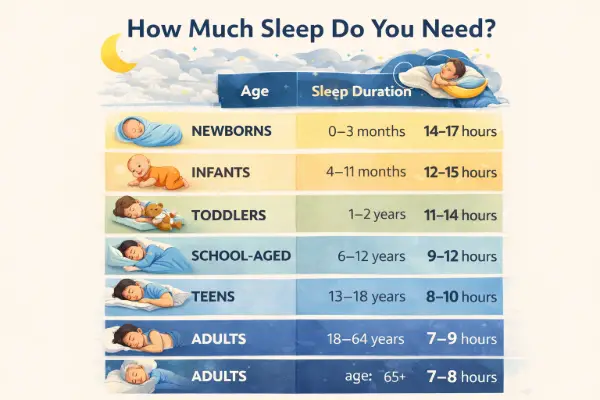
Sleep debt is easiest to understand when you see the math. If your body does best with roughly 8 hours, but you repeatedly get less than that, your “gap” adds up.
| Day | Target Sleep | Sleep You Got | Running Debt |
|---|---|---|---|
| Day 1 | 8 hours | 6 hours | 2 hours |
| Day 2 | 8 hours | 5 hours | 5 hours |
| Day 3 | 8 hours | 7 hours | 6 hours |
Even when you “catch up” later, large swings in timing can still create instability. That is why timing consistency matters alongside total hours.
Acute vs. Ongoing Sleep Debt
Not all sleep debt looks the same. Understanding the difference between short-term disruption and ongoing pattern instability helps you respond appropriately.
Acute Sleep Debt
Acute sleep debt usually follows a few nights of reduced sleep. This may happen due to travel, stress, deadlines, or temporary schedule changes.
- Typically lasts a few days
- Often improves with several consistent nights
- Less about long-term rhythm disruption
Ongoing (Chronic) Sleep Debt
Ongoing sleep debt develops when reduced sleep or inconsistent timing becomes a regular pattern over weeks or months.
- Bedtimes vary widely
- Wake times shift significantly between weekdays and weekends
- Short sleep becomes the norm rather than the exception
In many cases, the issue is not just total hours, but inconsistent timing. Stabilizing rhythm often produces more noticeable improvements than simply trying to sleep longer on isolated nights.
| Habit Pattern | How It Contributes to Sleep Debt |
|---|---|
| Short sleep nights | Creates an ongoing sleep shortfall |
| Inconsistent schedule | Disrupts circadian rhythm |
| Late-night screen use | Delays natural sleep signals |
| Weekend catch-up sleep | Can worsen weekday fatigue |
| High stress levels | Reduces sleep quality |
Common Sleep Debt Patterns
Sleep debt often comes from predictable schedule patterns rather than one obvious cause. Here are a few common ones:
- Weekday short sleep + weekend catch-up (sleeping in can shift timing)
- Inconsistent bedtime window (bedtime varies by 1–3 hours)
- Late-night stimulation (screens, work, stress carryover)
- Long naps that reduce sleep drive (harder to fall asleep later)
If you are unsure which pattern applies to you, try tracking your sleep consistency for a week. Seeing the timing on paper often reveals the main issue quickly.
Quick Sleep Debt Self-Check
This quick reflection helps you assess patterns. It is not a medical assessment
Check any statements that apply to you based on the last 7 days.
What this means:
If you checked two or more boxes, your recent sleep habits may be contributing
to short-term fatigue or inconsistency. This does not indicate a diagnosis,
but it can be a helpful signal to pay closer attention to sleep patterns and routines.
Example Sleep Debt Scenarios
| Scenario | What It Looks Like | Best Next Step |
|---|---|---|
| Weekday short sleep | 6–6.5 hours on workdays, longer on weekends | Track timing and narrow wake-time swings |
| Bedtime drift | Sleep and wake times move later each week | Use a gradual reset plan |
| Overstimulation at night | Late screens/work cause delayed wind-down | Build an evening routine and checklist |
How Long Does Sleep Debt Take To Recover?
Sleep recovery is usually gradual. Many people notice improvement when they stabilize timing first and then gently increase sleep opportunity over multiple nights.
- After a few short nights: recovery may take several consistent nights
- After weeks of reduced sleep: recovery may take longer and benefits from consistent timing
The goal is not perfection. The goal is reducing large swings and giving your body a stable pattern to follow.
How To Address Sleep Debt (Practical Steps)
If sleep debt is part of your pattern, here is a simple sequence that works well with the Better Sleep Advisor system:
- Assess your baseline habits using the Sleep Score Self-Check.
- Track timing variability using the Sleep Consistency Tracker.
- Stabilize your morning anchors with the Morning Routine Guide and Morning Routine Checklist.
- Build an evening wind-down structure using the Night Routine Guide and Night Routine Checklist.
- Avoid extreme weekend swings (try keeping wake time within a smaller window when possible).
- Make small changes for 7–14 days before deciding what’s working.
If your sleep schedule has drifted significantly and you want a step-by-step re-alignment approach, use the Sleep Cycle Reset Checklist.
Practical Sleep Pattern Reset Approach
If sleep debt has built gradually, recovery works best the same way: gradually. Rather than trying to fix everything at once, focus on stabilizing core timing habits first.
Step 1: Anchor Your Wake Time
Choose a realistic wake time and keep it consistent, even on weekends when possible. Wake time acts as the strongest timing signal for your internal rhythm.
Step 2: Reduce Large Timing Swings
Avoid shifting bedtime or wake time by multiple hours from one day to the next. Narrow the variability window first.
Step 3: Strengthen Morning Cues
Reinforce wakefulness with light exposure, hydration, and movement. A stable morning improves nighttime consistency.
Step 4: Build a Predictable Wind-Down
Create a simple evening routine that lowers stimulation before bed. Consistency matters more than complexity.
Step 5: Increase Sleep Opportunity Gradually
If you have been consistently sleeping less than you need, extend sleep opportunity slowly rather than dramatically shifting your schedule overnight.
Small, steady adjustments tend to produce more stable long-term improvements than extreme changes.
7-Day Sleep Stabilization Mini Plan
If you suspect ongoing sleep debt, use this simple 7-day structure to reset patterns without drastic changes.
| Day Range | Primary Focus |
|---|---|
| Days 1–2 | Set a consistent wake time and begin tracking sleep timing |
| Days 3–4 | Strengthen morning light and reduce evening stimulation |
| Days 5–6 | Narrow bedtime variability and limit weekend drift |
| Day 7 | Review patterns and adjust gradually |
For deeper insight, combine this mini plan with the Sleep Consistency Tracker and the Sleep Score Self-Check.
Common Mistakes When Trying To “Catch Up”
- Oversleeping on weekends and shifting wake time dramatically
- Trying to fix everything at once instead of making one change
- Changing bedtime by multiple hours overnight
- Relying on caffeine late in the day to compensate for fatigue
If your schedule feels inconsistent, a better approach is to monitor your sleep schedule over 7 days and adjust gradually.
Myths About Sleep Debt
“I function fine on 5 hours.”
Performance tests almost always show impairment, even if you feel okay.
“I can catch up on weekends.”
Weekends help, but they rarely erase long-term debt completely.
“More caffeine solves sleep debt.”
Caffeine masks symptoms without fixing the underlying problem.
“Lying in bed longer counts as sleep.”
Time in bed is not the same as restorative sleep.
Sleep Debt FAQs
1. What is sleep debt?
Sleep debt is the cumulative gap between the amount of sleep your body typically needs and the amount you actually get over time. Even small nightly shortfalls can add up when they occur repeatedly.
2. How quickly does sleep debt build up?
Sleep debt can begin building after just one or two nights of reduced sleep. Losing 1–2 hours per night for several consecutive days may create noticeable fatigue and reduced alertness. The more consistent the short sleep, the faster the debt accumulates.
3. Can you fully catch up on sleep debt?
You can reduce sleep debt, but fully correcting long-standing patterns usually requires consistent, adequate sleep over multiple days or weeks. Sleeping longer for one or two nights may help temporarily, but stable timing and routine habits are typically more effective for long-term improvement.
4. Is sleeping in on weekends enough to fix sleep debt?
Sleeping in on weekends may reduce short-term fatigue, but large shifts in wake time can disrupt your internal rhythm. When weekend sleep schedules differ significantly from weekday schedules, it can make Monday transitions more difficult and reduce overall consistency.
5. How long does recovery from sleep debt take?
Recovery time depends on how long the pattern has been present. A few nights of short sleep may improve within several consistent days. Ongoing sleep debt that has built over weeks may require a longer period of stabilized timing and adequate sleep opportunity.
6. Are naps or caffeine effective ways to fix sleep debt?
Short naps and caffeine can temporarily reduce feelings of sleepiness, but they do not replace consistent nighttime sleep. While they may improve alertness in the moment, long-term recovery usually depends on restoring stable sleep timing and sufficient total sleep.
How This Fits Into Your Full Sleep System
Sleep debt is not only about total hours. Patterns matter. The Better Sleep Advisor system helps you build consistency through:
- Sleep Score Self-Check (awareness)
- Sleep Consistency Tracker (pattern tracking)
- Morning Routine Guide + Checklist (morning anchors)
- Night Routine Guide + Checklist (evening structure)
- Sleep Cycle Reset Checklist (gradual timing reset)
Key Takeaway
Sleep debt builds when sleep duration and timing become consistently misaligned with what your body needs. The most reliable approach is gradual adjustment, stable routines, and tracking patterns over time.
Start small. Focus on consistency. Build gradually.
Important Note
This guide provides educational information for general sleep awareness. It is not intended to diagnose or treat medical sleep conditions. If you experience persistent or severe sleep concerns, consult a qualified healthcare professional.

Optional Resource: Sleep Blueprint Guide
Leave a Reply
You must be logged in to post a comment.