Sleep Consistency Tracker: 7-Day Sleep Pattern Log
Last updated: February 12, 2026
What Is Sleep Consistency?
Sleep consistency refers to how regularly you go to bed and wake up at similar times each day. While total sleep duration often gets most of the attention, timing patterns can play an equally important role in how predictable and steady your rest feels.
When bedtimes and wake times shift significantly from day to day, sleep can feel less stable, even if you are getting enough hours overall. Small variations are normal, but larger swings between weekdays and weekends can make it harder to maintain a steady rhythm.
The 7-day sleep consistency tracker below is designed for general sleep awareness and habit tracking. By recording your schedule for one week, you can identify whether your sleep timing is consistent or highly variable and decide if small adjustments may help support more predictable rest.
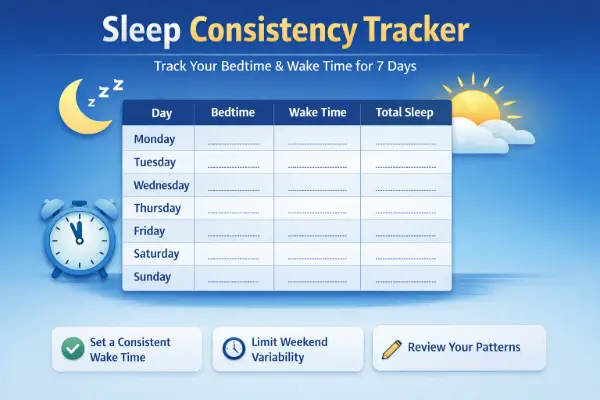
7-Day Sleep Consistency Tracker
For the next 7 days, record your bedtime and wake time as accurately as possible. You are looking for patterns, not perfection. Small variations are normal. Larger swings may indicate inconsistency.
| Day | Bedtime | Wake Time | Total Sleep (hrs) | Felt Rested? |
|---|---|---|---|---|
| Day 1 | __________ | __________ | __________ | ☐ |
| Day 2 | __________ | __________ | __________ | ☐ |
| Day 3 | __________ | __________ | __________ | ☐ |
| Day 4 | __________ | __________ | __________ | ☐ |
| Day 5 | __________ | __________ | __________ | ☐ |
| Day 6 | __________ | __________ | __________ | ☐ |
| Day 7 | __________ | __________ | __________ | ☐ |
This tracker is designed as a simple worksheet. You can write your entries on paper, in a notebook, or in your phone notes app while reviewing the structure above.
Tip: After 7 days, review how much your bed and wake times vary. Consistency within a 30–60 minute range is generally easier for many people to maintain than large swings between weekdays and weekends.
Note: Using the tracker regularly over multiple weeks can reveal deeper patterns.
Pattern Recognition: What To Look For After 7 Days
After completing the 7-day log, review your entries and look for timing patterns rather than focusing only on total hours.
Consider the following questions:
* Do your bedtimes vary by more than 1–2 hours across the week?
* Are your wake-up times consistent, or do they shift significantly?
* Do weekends look very different from weekdays?
* Is your total sleep similar each night, but the timing changes?
* On days when you felt more rested, was your sleep timing more predictable?
Small variations are normal. However, large swings in bedtime or wake time can make sleep feel less stable, even if total sleep duration appears adequate.
You may notice that your energy feels more predictable on days when your sleep timing is similar to previous nights. Patterns like this can help guide small adjustments rather than drastic changes.
The goal is not perfection. The goal is awareness.
Sleep Duration vs Sleep Consistency
Both total sleep hours and timing consistency influence how predictable your rest may feel. This table is intended for general awareness and reflection, not diagnosis.
| Sleep Duration (Hours) | Sleep Timing Consistency | Common Experience |
|---|---|---|
| 7–9 hours | High (within ~30–60 min daily) | More predictable energy and clearer sleep cues |
| 7–9 hours | Low (varies 1–2+ hrs daily) | Energy may feel inconsistent despite adequate hours |
| 6–7 hours | High | Stable rhythm, but possible mild fatigue |
| 6–7 hours | Low | Greater variability in alertness and sleepiness |
| Under 6 hours | High | Predictable schedule, but reduced total sleep may affect energy |
| Under 6 hours | Low | Irregular rhythm and reduced sleep may compound fatigue |
Key Takeaway
Sleep consistency is about timing, not perfection. Even when total sleep hours are similar, large swings in bedtime and wake time can make rest feel less predictable.
* Aim for a consistent wake-up time first.
* Try to keep bed and wake times within about 30–60 minutes daily.
* Small adjustments are often easier to maintain than major schedule shifts.
Focus on patterns over single nights. Gradual consistency tends to be more sustainable than drastic changes.
How To Improve Sleep Consistency (Step-by-Step)
If your 7-day tracker shows large swings in timing, focus on small, repeatable adjustments. The goal is not perfection — it’s building a schedule you can maintain most days.
Step 1: Anchor Your Wake-Up Time
Choose a realistic wake-up time you can maintain most days of the week. A consistent wake time often provides more stability than focusing on bedtime first.
* Select a wake time that fits both workdays and weekends.
* Avoid large weekend sleep-ins if possible.
* Use light exposure in the morning to reinforce timing.
Step 2: Adjust Bedtime Gradually
If your bedtime varies significantly, shift it slowly rather than making drastic changes.
* Move bedtime earlier or later in 15–30 minute increments.
* Focus on wind-down cues instead of watching the clock.
* Keep pre-sleep activities calm and predictable.
Step 3: Narrow the Weekday–Weekend Gap
Large timing differences between weekdays and weekends can make sleep feel less stable.
* Aim to keep bed and wake times within 1 hour of your weekday schedule.
* If you stay up later occasionally, try to return to your usual timing the next day.
* Consistency over time matters more than one perfect night.
Step 4: Use Routines as Anchors
Simple routines help signal that sleep timing is approaching.
* Create a short evening wind-down routine.
* Keep your bedroom environment consistent.
* Limit stimulating activities close to bedtime.
Step 5: Monitor Patterns, Not Individual Nights
One late night does not undo progress. Look at trends across multiple days instead of reacting to a single shift. Small, steady improvements in timing are often easier to maintain than dramatic schedule overhauls.
Useful next steps based on your tracker results:
* Sleep Score Calculator (a quick self-check)
* Night Routine Guide (routine builder)
* Sleep Debt Explained (how patterns build over time)
Important Note
This sleep consistency tracker is designed for general sleep awareness and habit tracking. It does not diagnose or treat medical sleep conditions. If you experience persistent or severe sleep problems, consult a qualified healthcare professional.