Night Routine Guide: Build Consistency Before Bed
Build Your Night Routine For Better Sleep
Your evening routine sets the stage for predictable sleep timing. Just as your morning routine reinforces wakefulness, a structured night routine helps signal winding down and supports easier transitions into rest. This guide outlines foundational evening habits designed to help you build consistency, relax your nervous system, and prepare your body and mind for steady sleep.
Understanding The Evening Sleep Connection
Your body operates on a 24-hour rhythm influenced by light, activity, food timing, and stress levels. Evening habits either reinforce calm transition cues or introduce stimulation that delays them.
Strong evening signals may include:
* Reduced light exposure
* Gradual decrease in stimulation
* Consistent bedtime timing
* Relaxation practices that calm the nervous system
When evenings are unpredictable or overstimulating, the transition into sleep may feel delayed or inconsistent.
Who This Night Routine Guide Is For
This guide may be helpful if you:
* Want more consistent sleep habits
* Struggle to wind down at night
* Feel mentally or physically stimulated before bed
* Prefer simple, flexible routines
This guide is not intended for:
* Diagnosing sleep disorders
* Treating medical sleep conditions
* Replacing professional medical advice
Quick Comparison: Structured vs. Chaotic Evenings
| Factor | Structured Night Routine | Chaotic Evening |
|---|---|---|
| Timing Cues | Wind-Down Flow | Irregular or missing cues |
| Light Exposure | Dim and warm lighting | Bright or stimulating light |
| Mental Stimulation | Calm and gradual | High stimulation before bed |
| Sleep Onset | More predictable timing | Variable or delayed timing |
The 7 Pillars Of A Consistent Evening Routine
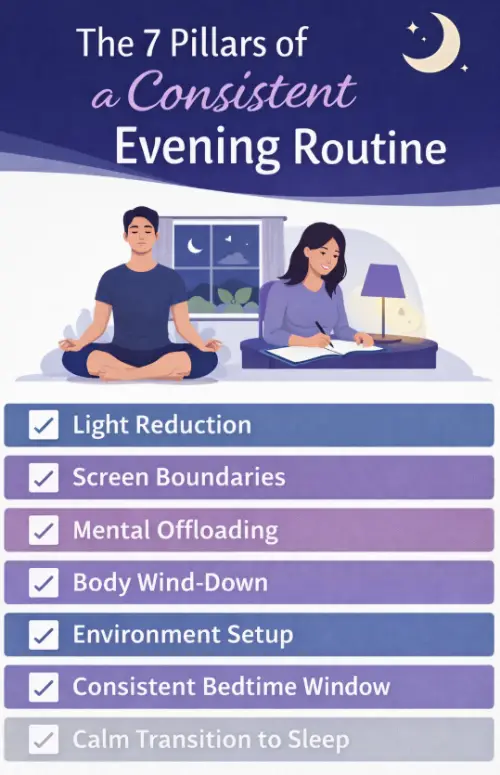
1. Consistent Bedtime Window
Choose a realistic bedtime range and aim to stay within it most nights. Large swings between weekdays and weekends can make sleep timing feel less predictable.
* Select a consistent bedtime range
* Avoid drastic weekend shifts
* Adjust gradually if needed
2. Lower Evening Light
Gradually reducing brightness helps signal that the day is slowing down.
* Use lamps instead of overhead lights
* Dim lights 60–90 minutes before bed
* Prefer warmer light tones
3. Reduce Late Screen Use
Digital devices introduce light and mental engagement. Scaling back before bed can support a smoother transition into rest.
* End screen use 60–90 minutes before bed when possible
* Lower brightness settings
* Avoid highly engaging content late at night
4. Gentle Physical Wind-Down
Light movement can help ease physical tension from the day.
* Light stretching
* Slow breathing
* Short relaxed walk
5. Evening Eating Awareness
Large meals very close to bedtime may create discomfort for some people.
* Finish heavier meals earlier
* Limit late-night snacking
* Keep fluids moderate before bed
6. Repeating Calm Ritual
Simple repeated actions can become familiar cues that signal winding down.
* Read a physical book
* Warm shower
* Soft music
7. Light Reflection
A short reflection period may help clear mental clutter before bed.
* Write tomorrow’s top 3 tasks
* Brief journaling
* Note one positive from the day
Sample Night Routine Snapshot
This example demonstrates how stacking small cues in sequence reinforces consistent timing.
| Time | Action | Purpose |
| 8:30 PM | Dim lights | Signal wind-down |
| 8:40 PM | Light stretch | Release tension |
| 9:00 PM | Quiet activity | Reduce stimulation |
| 9:30 PM | Bedtime | Consistent sleep cue |
The sequence matters more than exact timing. Repeating a similar order nightly helps your body anticipate rest.
Consistency: The Evening Multiplier
Each pillar becomes more effective when practiced consistently. A predictable sequence creates clearer signals than occasional intense effort.
Consistency supports:
* More stable sleep timing
* Reduced evening overstimulation
* Smoother transitions into rest
Focus on small, repeatable behaviors rather than dramatic overhauls.
Common Evening Routine Pitfalls
* Large bedtime shifts between weekdays and weekends
* Bright overhead lighting late at night
* Highly stimulating content before bed
* Inconsistent wind-down timing
Night Routine Quick Checklist
☐ Dim lights 60–90 minutes before bed
☐ Reduce screen exposure
☐ Light stretch or calm activity
☐ Prepare for tomorrow
☐ Maintain consistent bedtime
How This Connects To Your Full Sleep System
Your night routine works alongside:
* Sleep Consistency Tracker
* Morning Routine Guide
* Sleep Score Self-Check
* Night Routine Checklist
* Start Here
When morning and evening timing reinforce each other, maintaining rhythm often becomes easier.
Key Takeaway
Your nights are shaped by your evenings.
Consistent bedtime timing, reduced light exposure, gentle wind-down, and small relaxation rituals all reinforce predictable sleep cues.
Start simple. Repeat consistently. Let patterns build gradually.
Important Note
This guide provides educational information for general sleep awareness. It does not diagnose or treat medical sleep conditions. If you experience persistent or severe sleep concerns, consult a qualified healthcare professional.
Optional Resource: Sleep Blueprint Guide

Leave a Reply
You must be logged in to post a comment.