Morning Routine Guide: How Your Mornings Shape Your Sleep
Last updated: February 12, 2026
While many people focus on bedtime rituals, restorative sleep often begins much earlier. The way you structure your mornings influences your internal clock, daily energy stability, and how easily your body transitions into rest at night.
Small adjustments: light exposure, movement, nutrition, hydration, caffeine timing, and consistency – work together to reinforce predictable sleep patterns.
This guide breaks down the key morning pillars that support better sleep timing and rhythm.
Understanding The Morning-Night Connection
Your body operates on a circadian rhythm – an internal timing system that regulates sleep-wake cycles, hormones, and daily alertness.
Morning signals are especially powerful.
• Light exposure sets timing cues
• Food and hydration stabilize energy
• Movement reinforces wakefulness
• Stress levels influence evening relaxation
When mornings are chaotic or inconsistent, sleep timing often becomes unpredictable later in the day.
Quick Comparison: Structured vs. Inconsistent Mornings
| Factor | Structured Morning | Inconsistent Morning |
|---|---|---|
| Circadian Rhythm Cues | Clear wake signals, more predictable timing | Mixed signals, less predictable timing |
| Daily Energy | Steadier alertness across the day | Fluctuating energy and alertness |
| Evening Wind-Down | Easier transition toward rest | Harder to fully unwind |
The 7 Pillars Of A Sleep-Supportive Morning

1. Early Light Exposure
Morning light is one of the strongest timing cues for your internal clock.
Natural light exposure helps:
• Signal the body that it’s time to be awake
• Reinforce wakefulness
• Anchor your circadian rhythm
How to apply it:
• Go outside for 10–30 minutes
• Open curtains immediately
• Pair light with coffee or a short walk
Natural light is preferable, but consistent indoor light is better than none.
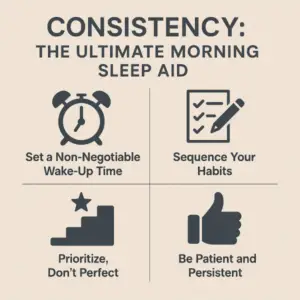
2. Consistent Wake-Up Time
Wake time acts as the anchor for your entire schedule.
Large swings between weekdays and weekends can create “social jet lag,” making bedtime timing inconsistent.
Best practice:
• Wake at the same time daily when possible
• Adjust gradually in 15–30 minute increments
• Prioritize consistency over perfection
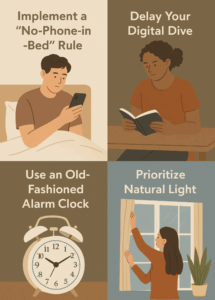
3. Limit Early Morning Screen Exposure
For many people, the first instinct after waking is to reach for a phone, tablet, or laptop. Emails, notifications, and social media can quickly become the first stimulus of the day.
However, early screen exposure may compete with natural light cues that help reinforce your wake time.
Your internal clock responds strongly to light. When digital screens are the first light source your eyes encounter, especially in a dark room, it can blur the distinction between artificial and natural timing signals.
The goal is not to eliminate screens entirely, but to prioritize natural wake cues first.
Screen-Free Morning Practices
• Keep your phone out of reach of the bed
• Delay screen use 30–60 minutes after waking
• Use a separate alarm clock instead of your phone
• Open curtains or step outside before checking notifications
• Set gentle boundaries around early work messages
By prioritizing natural light and calm wake-up cues before digital stimulation, you create clearer timing signals for your day. Over time, this can support more stable morning energy and smoother evening wind-down.

4. Morning Movement
Physical activity reinforces wake signals and supports rhythm stability.
This does not require intensity.
Options:
• Short stretch
• Brief walk
• Light mobility
• Full workout (earlier in day preferred)
If exercising intensely, aim to finish vigorous workouts at least 3–4 hours before bedtime.

5. Balanced Fuel
Your first meal influences energy stability throughout the day.
A balanced breakfast may include:
• Protein (eggs, yogurt, smoothie)
• Complex carbohydrates (oats, whole-grain toast, fruit)
• Healthy fats (nuts, avocado, olive oil)
Avoid large sugar spikes that may contribute to energy crashes later.

6. Caffeine Timing
Caffeine can support alertness but requires strategic timing.
Consider:
• Waiting 60–90 minutes after waking before first cup
• Avoiding caffeine within 8–10 hours of bedtime
• Accounting for hidden sources (tea, chocolate, sodas)
Because caffeine has a long half-life, afternoon intake can affect nighttime sleep even if you don’t feel overstimulated.

7. Hydration
Rehydrating after waking supports energy, circulation, and comfort.
Practical tips:
• Drink 16–20 oz of water in the morning
• Keep water by your bed
• Reduce fluids later in the evening
Stable hydration during the day may reduce discomfort at night.
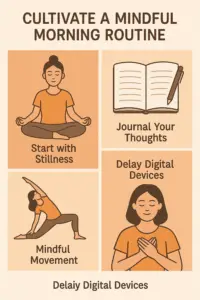
Mindful Mornings and Stress Regulation
Immediate digital overload or rushing can activate your stress response early.
Calm morning practices can help stabilize mental tone for the day.
Examples:
* 5–10 minutes of breathing or meditation
* Brief journaling
* Gratitude reflection
* Delaying phone use 30–60 minutes
Small periods of intentional calm may reduce mental overstimulation later at night.
Consistency: The Multiplier
Each habit works better when performed consistently.
When wake time, light exposure, movement, and meals occur at similar times daily, your internal rhythm becomes more predictable.
Consistency supports:
* More stable hormone timing
* Predictable energy levels
* Smoother evening wind-down
Even partial consistency can improve stability over time.
Making Morning Habits Sustainable
Long-term success depends on realistic implementation.
* Start Small
Choose one or two habits first.
* Use Habit Stacking
Attach new habits to existing ones.
* Prepare the Night Before
Lay out clothes, prep breakfast, set water by bed.
* Stay Flexible
Missing one morning does not undo progress.
* Track Progress
Use a simple calendar or tracker to build momentum.
Optional – Sleep Tracking Apps
If you want additional insight, you may explore sleep tracking apps that monitor sleep timing and patterns.
| App | Platform | Tracks Sleep | Smart Alarm | Snore Detection | Free Limits | Best For |
|---|---|---|---|---|---|---|
| Sleep Cycle | iOS, Android | Yes | Yes | Yes | Ads, limited insights | Gentle wake-up |
| Sleep as Android | Android | Yes | Yes | Yes (mic) | Limited stats | Android users |
| Pillow | iOS | Yes | Yes | Yes | Apple Watch needed | iOS users |
| Sleep Monitor | Android | Basic | Yes | Yes | Ads, limited history | Simple UI |
| SnoreLab | iOS, Android | No | No | Yes | No long-term trends | Snoring focus |
| SleepScore | iOS, Android | Yes | No | No | Limited insights | Science-based |
| PrimeNap | Android | Yes | Yes | No | Limited vs Pro | Lightweight use |
✅ Takeaway: Your nights are shaped by your mornings. By stacking light, movement, fuel, hydration, mindfulness, and consistency into your first hours, you can transform your sleep cycle for deeper, more restorative rest.
How This Connects To The Full Sleep System
Your morning routine works alongside:
* Morning Routine Checklist
* Sleep Consistency Tracker
* Night Routine Guide
* Sleep Score Self-Check
* Start Here
When morning and evening timing align, maintaining rhythm often becomes easier.
Mini Sleep Consistency Snapshot
Here’s a simple example of how a structured morning might look when consistency is the goal. The exact times will vary for each person, but the sequence matters more than perfection.
| Time | Action | Purpose |
|---|---|---|
| 7:00 AM | Wake up | Anchor circadian rhythm |
| 7:05 AM | Light exposure (outdoors or bright room) | Reinforce wake signals |
| 7:10 AM | Hydration | Support energy and circulation |
| 7:20 AM | Light movement or stretch | Reinforce alertness |
| 7:45 AM | Balanced breakfast | Stabilize daily energy |
This example shows how stacking small, repeatable actions creates clearer timing cues. When wake time, light, movement, and meals occur in a predictable order, your body begins to anticipate both alertness and rest more efficiently.
Even if your schedule differs, maintaining a consistent sequence can support more stable energy during the day and a smoother transition into sleep at night.
Key Takeaway
Your nights are influenced by your mornings.
Light exposure, wake time consistency, movement, balanced fuel, hydration, caffeine timing, and stress regulation all reinforce your internal rhythm.
Start small. Build gradually. Focus on patterns, not perfection.
Optional Tools That Support Morning Consistency
* Sunrise Alarm Clock
* Fitness Tracker
* Blue Light Glasses
Important Note
This guide provides educational information for general sleep awareness. It does not diagnose or treat medical sleep conditions. If you experience persistent or severe sleep concerns, consult a qualified healthcare professional.
Optional Resource: Sleep Blueprint Guide
Leave a Reply
You must be logged in to post a comment.