How To Fix A Sleep Schedule After Staying Up All Night
If you stayed up all night — whether from work, stress, travel, or just a late binge session — you’re probably wondering how to fix your sleep schedule quickly.
The good news: one bad night does not permanently damage your sleep rhythm.
The key is correcting timing cues the next day without overcorrecting.
Quick Answer
To fix your sleep schedule after staying up all night, wake up at your target time the next morning, get morning light exposure, avoid long daytime naps, and go to bed at a reasonable hour — not extremely early. Consistency over the next few days restores your rhythm.
Why Pulling an All-Nighter Disrupts Your Rhythm
Your circadian rhythm depends heavily on wake time consistency and light exposure.
When you stay awake all night:
- Your internal clock becomes misaligned
- Sleep pressure builds excessively
- Light exposure timing shifts
- Your bedtime may drift later the next day
But your rhythm is resilient. It responds quickly to consistent cues.
Step-by-Step: How To Fix Your Sleep Schedule
1. Do Not Sleep All Day
If possible, stay awake until your normal bedtime.
If you must nap, limit it to 20–30 minutes before 2 PM.
Long naps reduce nighttime sleep pressure and make it harder to fall asleep later.
2. Wake Up at Your Target Time the Next Day
Even if you fall asleep late, wake up at your chosen wake time.
This re-anchors your circadian rhythm quickly.
Wake time is more powerful than bedtime for schedule correction.
3. Get Morning Light Exposure
Expose yourself to bright light within 30 minutes of waking.
Natural daylight is best.
Morning light helps reset melatonin timing and shift your internal clock back into alignment.
4. Avoid Going to Bed Extremely Early
You may feel exhausted in the afternoon or early evening.
Avoid going to bed several hours earlier than usual.
Instead, aim for your normal bedtime or slightly earlier (30–60 minutes).
This prevents over-shifting your rhythm.
5. Avoid Heavy Caffeine Late in the Day
Using caffeine to push through the day is common, but avoid it after early afternoon.
Late caffeine delays sleep onset and prolongs recovery.
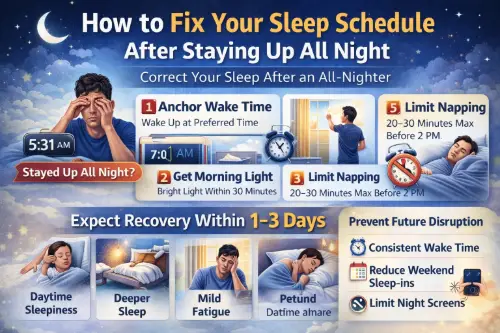
What To Expect The Next Few Days
After staying up all night, you may experience:
- Increased sleepiness
- Slightly earlier bedtime
- Deeper sleep the first night
- Mild fatigue for 1–2 days
Most people stabilize within 1–3 days if they maintain consistent wake time and light exposure.
If your schedule was already drifting before the all-nighter, recovery may take slightly longer.
For deeper correction strategies, see: Reset Sleep Cycle Guide
Is Staying Up All Night A Good Way To Reset Sleep?
Some people intentionally stay up all night to “force” a reset.
While this can temporarily shift timing, it often leads to:
- Rebound fatigue
- Inconsistent follow-through
- Weekend oversleep
- Another delay cycle
Gradual correction is more stable long term.
How Long Does It Take To Fully Recover?
If your schedule was stable before the all-nighter, recovery usually takes 1 to 3 days.
If your sleep timing was already inconsistent, it may take 5 to 7 days of steady correction.
For a full timeline breakdown, read: How Long Does It Take to Reset Your Sleep Cycle?
Preventing Future Schedule Disruption
To reduce the impact of future late nights:
- Maintain consistent wake time
- Limit weekend sleep-ins
- Reduce late-night screen exposure
- Use structured reset phases if drift occurs
You can follow the phased method here: Reset Sleep Cycle Framework
Or use the daily tool: Sleep Cycle Reset Checklist
Frequently Asked Questions
Can one all-nighter ruin your sleep schedule?
One all-nighter usually does not cause permanent disruption. Consistent wake time over the next few days typically restores rhythm.
Should I sleep all day after staying up all night?
Sleeping all day often delays bedtime further. Short naps are acceptable, but long daytime sleep may prolong recovery.
Is it better to stay awake or sleep a few hours?
If you can get a short block of sleep without oversleeping, it may help. However, consistency the next day is more important than total sleep that night.
Key Takeaway
Staying up all night does not permanently damage your sleep rhythm. Anchor your wake time, use morning light exposure, avoid long naps, and return to consistent timing. Most people recover within a few days.
Important Note
This article provides general educational information about sleep timing and schedule recovery. It is not intended to diagnose or treat medical sleep conditions. If you experience persistent or severe sleep concerns, consult a qualified healthcare professional.
Optional Resource: Sleep Blueprint Guide
Leave a Reply
You must be logged in to post a comment.