How To Choose The Right Pillow For Your Sleep Style
Tired of waking up with a stiff neck or restless nights? Your pillow might be the problem, but finding the right one doesn’t have to be a nightmare.
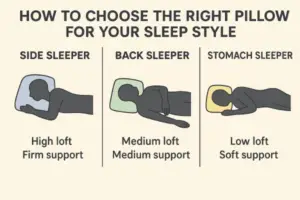
This guide cuts through the confusion and shows you how to match the perfect pillow to your sleep style, whether you’re a side, back, or stomach sleeper. With the right choice, you’ll support spinal alignment, maximize comfort, and unlock deep, restorative rest.

Why Your Pillow Is More Than Just a Headrest
Most people see a pillow as little more than a soft landing pad. But here’s the truth: your pillow is the unsung hero of healthy sleep.
* Your spine follows a natural “S” curve.
* A pillow’s job is to fill the gap between your head and shoulders so your neck stays in a neutral position.
* When your pillow is too high, flat, or the wrong shape, it forces your neck into awkward angles.
The Consequences of a Bad Pillow
* Neck stiffness
* Tension headaches
* Shoulder and upper back pain
* Poor sleep quality and frequent wake-ups
A well-chosen pillow isn’t just about short-term comfort. It’s an investment in long-term spinal health and deeper, more restorative sleep.
Step 1: Identify Your Primary Sleep Position
Your sleep position is the #1 factor in pillow choice. Even though most people shift around at night, you likely have a dominant style.
How to Identify Yours
* Observe yourself → How do you wake up?
* Ask your partner → They’ll notice patterns you miss
* Check comfort zone → The position you naturally fall asleep in often dominates
Pillow Guidelines by Position
| Sleep Position | Pillow Needs | Why It Works |
|---|---|---|
| Back Sleepers | Medium loft, medium firmness | Supports neck curve without pushing head forward |
| Side Sleepers | High loft, firmer pillow | Fills gap between head and shoulders for straight alignment |
| Stomach Sleepers | Thin, soft pillow (or none) | Minimizes neck twist and strain |
Step 2: Understand Pillow Loft
Loft = pillow height when lying flat. It directly determines whether your spine stays aligned.
* Back Sleepers → Medium loft to keep chin level
* Side Sleepers → High loft to fill the shoulder gap
* Stomach Sleepers → Low loft or no pillow to reduce strain
👉 Tip: Mattress firmness changes the loft you need. Softer mattresses allow you to sink in more (so you may need less loft), while firmer ones often require slightly more.
Step 3: Match Firmness to Your Needs
Firmness = how much resistance a pillow gives under weight.
* Back Sleepers → Medium firmness (gentle support)
* Side Sleepers → Firmer pillows that don’t collapse under head pressure
* Stomach Sleepers → Very soft, compressible pillows
⚖️ Think of loft + firmness as a team: if one fails, the other can’t keep your spine aligned.
Step 4: Choose the Right Fill Material
Different fills change loft, firmness, breathability, and durability.
Here’s a comparison table you can drop directly into your article:
| Fill Material | Pros | Cons | Best For |
|---|---|---|---|
| Down & Feather | Soft, moldable, breathable, luxury feel | Lacks support, expensive, not hypoallergenic | Stomach & back sleepers who like softness |
| Memory Foam (Solid) | Pressure relief, contours well, durable | Retains heat, can feel too firm, off-gassing | Side & back sleepers needing consistent support |
| Memory Foam (Shredded) | Adjustable loft, moldable, more breathable | Can clump, still retains heat | All sleepers who want adjustability |
| Latex (Solid) | Durable, hypoallergenic, buoyant support | Expensive, heavy, less contouring | Side & back sleepers, allergy-sensitive |
| Latex (Shredded) | Adjustable, breathable, supportive | Heavy, needs fluffing | All positions, eco-friendly buyers |
| Polyester (Fiberfill) | Cheap, lightweight, hypoallergenic | Flattens fast, traps heat | Budget use, guest pillows |
| Buckwheat Hulls | Very firm, adjustable, breathable | Heavy, noisy, not soft | Side sleepers needing firm support |
| Kapok | Soft, moldable, natural, vegan | Less supportive, compresses | Stomach & back sleepers seeking natural down alternative |
Step 5: Address Specific Needs
Now, let’s consider those unique factors that might influence your pillow choice beyond just your sleep position, whether you’re battling chronic pain, sensitive to allergens, or constantly flipping to the “cool side” of the pillow. Your pillow can be a powerful tool in addressing these specific challenges.
Neck, Shoulder, or Upper Back Pain
If you’re waking up with a stiff neck, a dull ache in your shoulders, or even radiating upper back pain, your pillow might be more than just an accessory – it could be a key player in your discomfort. A pillow that fails to support your spinal alignment can exacerbate existing pain or even create new issues.
* Neck pain → Medium loft/firmness with contouring (memory foam/latex)
* Shoulder pain (side sleepers) → Higher loft + firm support
* Upper back pain → Ensure neutral neck support to relax back muscles
Allergies or Sensitivities
Your pillow can become a breeding ground for common allergens like dust mites, mold, and pet dander, leading to nighttime sniffles, itchy eyes, and exacerbated asthma symptoms. Choosing the right material and maintaining good pillow hygiene can make a significant difference.
* Best materials → Latex, memory foam, buckwheat
* Use allergen-proof pillow protectors
* Wash pillowcases weekly in hot water
Sleeping Hot
Waking up in a sweat is a sure-fire way to disrupt restorative sleep. Some pillow materials are notorious for trapping heat, while others excel at promoting airflow and dissipating warmth.
* Best materials → Latex, buckwheat, shredded foam
* Look for gel-infused foams or breathable covers (cotton, bamboo)
Materials for Cooler Sleep:
* Latex: Its open-cell structure (especially Talalay latex or those with pin-cores for ventilation) allows for excellent airflow, making it one of the coolest foam options.
* Buckwheat Hulls: The loose, irregular shape of the hulls creates natural air channels throughout the pillow, providing exceptional breathability and heat dissipation. They are often considered one of the coolest pillow fills.
* Shredded Foams (Memory Foam, Latex): Compared to solid blocks, shredded versions allow for more air circulation between the pieces, reducing heat retention.
* Down/Feather: High-quality down and feather can be quite breathable due to their natural loft and lightweight structure, though some blends can still feel warm.
* Gel-Infused Memory Foam: Many memory foam pillows now incorporate gel particles or layers designed to draw heat away from the body.
* Open-Cell Memory Foam: Some newer memory foams are engineered with a more open cell structure to improve airflow and reduce heat retention.
* Breathable Covers: The pillowcase and outer cover material also play a role. Look for natural, breathable fabrics like cotton, bamboo, or Tencel, which wick away moisture and allow for better airflow than synthetic blends.
By considering these specific needs, you can further refine your pillow choice, transforming your sleep environment into one that truly supports your overall health and comfort, night after night.
Step 6: Test Before You Buy
The Golden Rule: Don’t Just Squeeze It – Lie On It!
1. Replicate your sleep position on a mattress
2. Check alignment (chin level for back, straight line head-to-tailbone for side)
3. Ask for feedback or check in a mirror
Also check:
* Pressure points (ears, back of head)
* Moldability (does it cradle or push back?)
* Breathability (warm vs. cool touch)
👉 Many brands offer 30–100 night sleep trials. Use them!

Step 7: Know When It’s Time to Upgrade
Even the best pillows wear out. Signs it’s time:
* Lumps or Flat Spots: If it has noticeable lumps, or a permanent crater where your head rests, it’s lost its structural integrity. Even vigorous fluffing won’t restore its original shape or support.
* Persistent Flatness: If your pillow struggles to regain any loft, even after a good shake, it’s a clear sign its filling has broken down. A flat pillow offers no support, leaving your neck in an unsupported or awkward position.
* Discoloration and Stains: Yellowing from sweat, body oils, and saliva is common over time. While a pillow protector can mitigate this, deep-set stains that persist even after washing (if washable) indicate a buildup of unsanitary elements and a material breakdown.
* Tears or Thinning Fabric: If the outer fabric is ripped, worn thin, or the stuffing is starting to peek through, it’s definitely past its prime.
Performance Problems & Pain Signals
* Waking Up with Pain: This is perhaps the most critical sign. If you consistently wake up with neck stiffness, shoulder pain, upper back aches, or tension headaches, your pillow is likely failing to provide adequate support and alignment.
* Constant Fluffing: Do you find yourself constantly punching, folding, or fluffing your pillow throughout the night just to get a modicum of comfort or height? This means it’s no longer doing its job independently.
* Sleeping Hot: Over time, some pillow fills can compress and lose their breathability, leading to increased heat retention. If you find yourself consistently overheating at night, your old pillow might be contributing.
* Allergies Worsening: As pillows age, they accumulate dust mites, dead skin cells, mold, and other allergens. If your nighttime sniffles, itchy eyes, or asthma symptoms are flaring up, an old, allergen-laden pillow could be a major culprit.
Quick Fold Test
* Fold in half → If it doesn’t spring back, replace it
* Down pillow sagging over your arm = time to upgrade
General Lifespan
* Polyester → 6 months–2 years
* Down & Feather → 1–3 years
* Memory Foam → 2–3 years (up to 5)
* Latex → 2–4 years (sometimes 5+)
* Buckwheat → 3–5 years
Don’t underestimate the power of a fresh, supportive pillow. Replacing an old, worn-out one is a simple yet incredibly effective step towards improving your sleep quality, alleviating pain, and safeguarding your long-term spinal health. If your current pillow is exhibiting any of these symptoms, it’s time to revisit the steps for choosing your perfect sleep partner.
Your Perfect Pillow: The Path to Restful Sleep
You’ve journeyed through the intricate world of pillows, uncovering the hidden power they hold over your sleep quality and overall well-being. What started as a simple “cozy landing pad” has revealed itself to be a critical component of your spinal alignment, a guardian against pain, and a key to unlocking truly restorative sleep.
Remember, the quest for your perfect pillow isn’t about finding the most expensive or trendiest option; it’s about finding the one that perfectly complements your unique body and sleep style. We’ve armed you with the essential knowledge:
Your Sleep Position is Paramount: Whether you’re a back, side, or stomach sleeper, your dominant position dictates the fundamental requirements for your pillow.
Loft and Firmness are Your Guides: These two factors work in tandem to ensure your head and neck are kept in neutral alignment with your spine, preventing uncomfortable angles and strain.
Material Matters: From the plush comfort of down to the robust support of memory foam or latex, and the customizable nature of buckwheat, the fill material determines how a pillow performs, breathes, and lasts.
Personal Needs Count: Allergies, pain points, and temperature preferences are not minor details; they’re crucial considerations that can significantly impact your comfort and health.
Testing is Key: Don’t just squeeze – lie down and observe! And whenever possible, take advantage of home sleep trials to ensure a perfect match.
Know When to Let Go: An old, worn-out pillow is a detriment, not a friend. Recognizing the signs it’s time for a replacement is just as important as choosing a new one.
* Sleep position first (back, side, stomach)
* Loft + firmness together for spinal alignment
* Fill material matters for durability, cooling, and feel
* Account for pain, allergies, and heat
*Test thoroughly and replace when worn out
Investing in the right pillow is one of the simplest but most effective steps toward better sleep. The right one supports your spine, reduces pain, and helps you wake up refreshed instead of sore.
✅ Takeaway: Your pillow isn’t just comfort — it’s a tool for spinal health, pain prevention, and deep rest. By finding the right balance of loft, firmness, and fill, you’ll set yourself up for the healthiest, most restorative sleep possible.

Recommended Reading
Cool & Comfortable: Long Hair Sleeping Tips for Hot Weather
Sleeping with long hair in the summer can be tricky, and long hair sleeping in hot weather often leads to sweaty strands, tangles, and restless nights. The heat and humidity can make it difficult to get comfortable, but the right bedtime routine can make all the difference. With a few smart adjustments, you can keep […]
Should You Shower Before Bed? Science Says Yes (or No)
Is a Shower Before Bed Good for You? Unpacking the Science & Benefits Ever wondered if your nightly shower ritual is truly beneficial? This post cuts through the myths to reveal the science behind showering before bed, exploring its surprising advantages for sleep quality, skin health, and overall well-being. Discover how a well-timed shower can […]
Optional Resource: Sleep Blueprint Guide
Leave a Reply
You must be logged in to post a comment.