Sleep Cycle Reset Checklist (Printable + Clickable)
Last updated: February 16, 2026
If your sleep schedule has drifted later or become inconsistent, the Sleep Cycle Reset Checklist gives you a simple way to reset timing gradually. You can use it as a “printable-style” checklist or click the boxes directly on this page as you work through it.
This checklist is designed to support sleep awareness and habit-building. For the full guide and deeper explanations, see the Sleep Cycle Reset Guide.
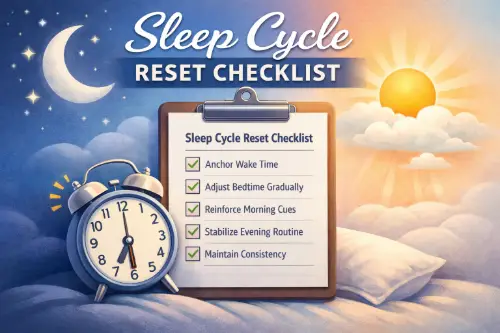
How To Use The Sleep Cycle Reset Checklist
- Pick a target wake time you can maintain daily for 7–14 days.
- Move gradually (15–30 minutes at a time), not all at once.
- Check off items daily and focus on consistency over perfection.
- Track your timing using the Sleep Consistency Tracker.
What To Expect During The First Week
The first few days of a sleep reset can feel slightly uncomfortable. This is normal. Your body clock responds to consistent timing cues, but it does not adjust instantly.
During the first week, you may notice:
- Mild daytime sleepiness as your schedule shifts
- Feeling alert at your old bedtime
- Waking up before your alarm
- Temporary difficulty falling asleep earlier
These changes usually improve as your wake time stabilizes and your body adapts to consistent light exposure and routine cues. Focus on maintaining your wake time anchor, even if the previous night was not perfect.
Most people begin noticing clearer morning energy and more predictable sleep timing within 7 to 14 days of steady consistency.
If you’d like to understand the structure behind this plan, review the phased reset method that outlines how each step fits into a complete sleep timing framework.
The Complete Sleep Cycle Reset Checklist
Tip: Click the checkbox items below. Your selections will stay checked until you refresh or leave the page.
Phase 1: Anchor Your Wake Time
Get light exposure within 30 minutes of waking (outside is ideal)
Get out of bed at your wake time (avoid repeated snoozing)
Hydrate shortly after waking
Do 5–10 minutes of light movement (stretch, walk, mobility)
Phase 2: Narrow Bedtime Variability (Gradual)
Adjust bedtime by 15–30 minutes every few days if needed
Avoid dramatic schedule jumps (multiple hours at once)
Go to bed when sleepy (not just because the clock says so)
Phase 3: Strengthen Morning Cues
Eat your first meal at a consistent time (or keep your first intake consistent)
Get a short outdoor walk or daylight exposure daily
Phase 4: Stabilize Your Evening Routine
Reduce stimulating activities (work, news, intense content)
Use a consistent wind-down routine (same order most nights)
Keep the bedroom cool, dark, and quiet
Phase 5: Maintain Consistency
Avoid large weekend sleep-ins (try to keep wake time within a smaller range)
Review your timing weekly and adjust gradually
Next Step: Use the Reset With Your Sleep System
- Read the full Sleep Cycle Reset Guide
- Track your timing with the Sleep Consistency Tracker
- Strengthen mornings with the Morning Routine Guide
- Stabilize evenings with the Night Routine Guide
Important Note
This sleep cycle reset checklist provides educational information for general sleep awareness. It is not intended to diagnose or treat medical sleep conditions. If you experience persistent or severe sleep concerns, consult a qualified healthcare professional.
Morning Routine Checklist: Build Consistent Wake-Up Habits
☀️ Morning Routine Checklist
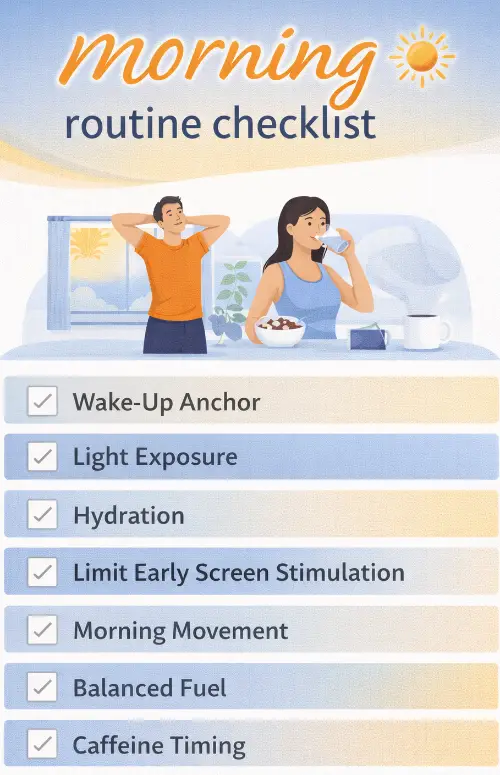
Use this as a flexible structure, not a strict schedule. Start with a few items, repeat them consistently, and adjust based on your lifestyle and wake time.
✅ How To Use This Checklist
* Start with 3–4 habits, not all of them
* Focus on consistency over perfection
* Build gradually as habits become automatic
* Pair new habits with existing routines (habit stacking)
* Use this alongside your evening routine for stronger rhythm stability
Continue Building Your Sleep System
* Morning Routine Guide
* Night Routine Guide
* Sleep Consistency Tracker
* Sleep Score Self-Check
* Start Here
⚠️ Friendly Reminder
This checklist provides general educational guidance for building consistent daily habits. It is not intended to diagnose or treat medical sleep conditions. If you experience persistent or severe sleep concerns, consult a qualified healthcare professional.
Night Routine Checklist: A Simple Guide To Consistent Evenings
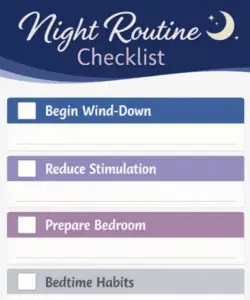
🌙 Night Routine Checklist
Use this night routine checklist as a flexible guide, not a strict rulebook. Pick a few items to start, repeat them consistently, and add more only if they feel helpful.
✅ Tips For Using This Night Routine Checklist
* Start with 3–5 items, not everything at once
* Consistency matters more than checklist length
* Your routine should feel calming, not forced
* Adjust the timing and steps to match your lifestyle
Continue Building Your Sleep System
* Night Routine Guide
* Sleep Consistency Tracker
* Morning Routine Guide
* Start Here
⚠️ Friendly Reminder
This night routine checklist is for general educational purposes and wellness support. It is not intended to diagnose or treat medical sleep conditions, and it does not replace professional medical advice. If you experience persistent or severe sleep concerns, consult a qualified healthcare professional.
Night Routine Guide: Build Consistency Before Bed
Build Your Night Routine For Better Sleep
Your evening routine sets the stage for predictable sleep timing. Just as your morning routine reinforces wakefulness, a structured night routine helps signal winding down and supports easier transitions into rest. This guide outlines foundational evening habits designed to help you build consistency, relax your nervous system, and prepare your body and mind for steady sleep.
Understanding The Evening Sleep Connection
Your body operates on a 24-hour rhythm influenced by light, activity, food timing, and stress levels. Evening habits either reinforce calm transition cues or introduce stimulation that delays them.
Strong evening signals may include:
* Reduced light exposure
* Gradual decrease in stimulation
* Consistent bedtime timing
* Relaxation practices that calm the nervous system
When evenings are unpredictable or overstimulating, the transition into sleep may feel delayed or inconsistent.
Who This Night Routine Guide Is For
This guide may be helpful if you:
* Want more consistent sleep habits
* Struggle to wind down at night
* Feel mentally or physically stimulated before bed
* Prefer simple, flexible routines
This guide is not intended for:
* Diagnosing sleep disorders
* Treating medical sleep conditions
* Replacing professional medical advice
Quick Comparison: Structured vs. Chaotic Evenings
| Factor | Structured Night Routine | Chaotic Evening |
|---|---|---|
| Timing Cues | Wind-Down Flow | Irregular or missing cues |
| Light Exposure | Dim and warm lighting | Bright or stimulating light |
| Mental Stimulation | Calm and gradual | High stimulation before bed |
| Sleep Onset | More predictable timing | Variable or delayed timing |
The 7 Pillars Of A Consistent Evening Routine
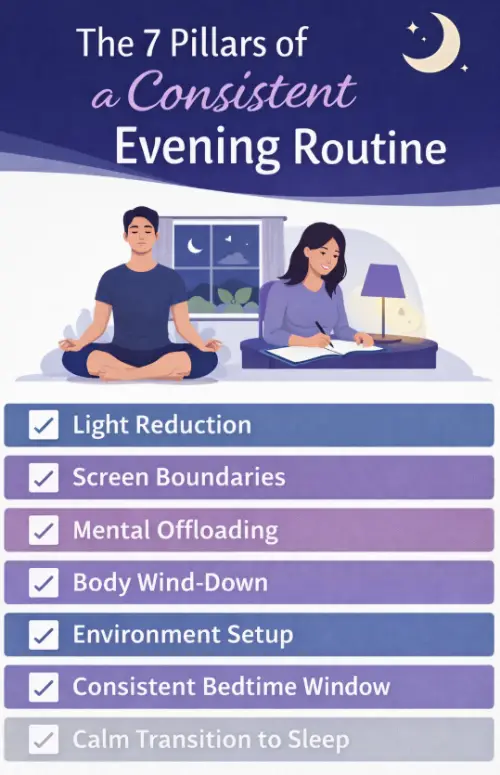
1. Consistent Bedtime Window
Choose a realistic bedtime range and aim to stay within it most nights. Large swings between weekdays and weekends can make sleep timing feel less predictable.
* Select a consistent bedtime range
* Avoid drastic weekend shifts
* Adjust gradually if needed
2. Lower Evening Light
Gradually reducing brightness helps signal that the day is slowing down.
* Use lamps instead of overhead lights
* Dim lights 60–90 minutes before bed
* Prefer warmer light tones
3. Reduce Late Screen Use
Digital devices introduce light and mental engagement. Scaling back before bed can support a smoother transition into rest.
* End screen use 60–90 minutes before bed when possible
* Lower brightness settings
* Avoid highly engaging content late at night
4. Gentle Physical Wind-Down
Light movement can help ease physical tension from the day.
* Light stretching
* Slow breathing
* Short relaxed walk
5. Evening Eating Awareness
Large meals very close to bedtime may create discomfort for some people.
* Finish heavier meals earlier
* Limit late-night snacking
* Keep fluids moderate before bed
6. Repeating Calm Ritual
Simple repeated actions can become familiar cues that signal winding down.
* Read a physical book
* Warm shower
* Soft music
7. Light Reflection
A short reflection period may help clear mental clutter before bed.
* Write tomorrow’s top 3 tasks
* Brief journaling
* Note one positive from the day
Sample Night Routine Snapshot
This example demonstrates how stacking small cues in sequence reinforces consistent timing.
| Time | Action | Purpose |
| 8:30 PM | Dim lights | Signal wind-down |
| 8:40 PM | Light stretch | Release tension |
| 9:00 PM | Quiet activity | Reduce stimulation |
| 9:30 PM | Bedtime | Consistent sleep cue |
The sequence matters more than exact timing. Repeating a similar order nightly helps your body anticipate rest.
Consistency: The Evening Multiplier
Each pillar becomes more effective when practiced consistently. A predictable sequence creates clearer signals than occasional intense effort.
Consistency supports:
* More stable sleep timing
* Reduced evening overstimulation
* Smoother transitions into rest
Focus on small, repeatable behaviors rather than dramatic overhauls.
Common Evening Routine Pitfalls
* Large bedtime shifts between weekdays and weekends
* Bright overhead lighting late at night
* Highly stimulating content before bed
* Inconsistent wind-down timing
Night Routine Quick Checklist
☐ Dim lights 60–90 minutes before bed
☐ Reduce screen exposure
☐ Light stretch or calm activity
☐ Prepare for tomorrow
☐ Maintain consistent bedtime
How This Connects To Your Full Sleep System
Your night routine works alongside:
* Sleep Consistency Tracker
* Morning Routine Guide
* Sleep Score Self-Check
* Night Routine Checklist
* Start Here
When morning and evening timing reinforce each other, maintaining rhythm often becomes easier.
Key Takeaway
Your nights are shaped by your evenings.
Consistent bedtime timing, reduced light exposure, gentle wind-down, and small relaxation rituals all reinforce predictable sleep cues.
Start simple. Repeat consistently. Let patterns build gradually.
Important Note
This guide provides educational information for general sleep awareness. It does not diagnose or treat medical sleep conditions. If you experience persistent or severe sleep concerns, consult a qualified healthcare professional.
What Is A Good Sleep Score? (And How To Improve It Naturally)
A good sleep score is a simple way sleep apps and wearables summarize how well you slept. While exact formulas vary by brand, the ranges are very similar.
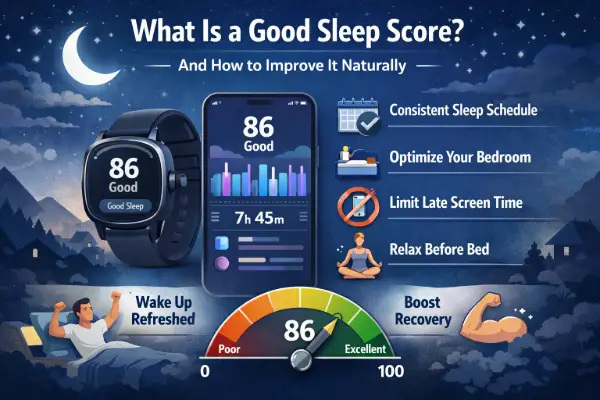
Click here to discover your sleep score
What Is A Good Sleep Score?
Most sleep trackers use a 0–100 scale:
* 90–100 (Excellent): Restorative sleep, strong recovery
*80–89 (Good): Solid sleep with minor disruptions
*70–79 (Fair): Adequate, but room for improvement
*Below 70 (Poor): Sleep debt likely building
As a general goal, 80+ most nights is considered healthy and sustainable.
What Goes Into A Sleep Score?
Most systems weigh these factors:
1. Total sleep time
Adults typically score best with 7–9 hours
2. Sleep consistency
Similar bed and wake times daily
3. Sleep stages
*Deep sleep for physical recovery
*REM sleep for memory, mood, and learning
4. Sleep efficiency
Time asleep vs time in bed
5. Interruptions
Awakenings, restlessness, movement
6. Heart rate and breathing
Lower, stable values usually raise scores
How To Get A Better Sleep Score
1. Lock In a Consistent Schedule
Go to bed and wake up at the same time, even on weekends. This is one of the biggest score boosters.
2. Get Morning Light
Natural light within 30–60 minutes of waking helps set your circadian rhythm and improves sleep later that night.
3. Control Evening Light
Reduce bright lights and screens 1–2 hours before bed. This helps melatonin rise naturally.
4. Keep the Bedroom Sleep-Optimized
*Cool temperature (around 18–20°C / 65–68°F)
*Dark room
*Quiet or steady background noise
5. Time Food and Caffeine Properly
*Avoid caffeine after early afternoon
*Finish large meals at least 2–3 hours before bed
6. Create a Wind-Down Routine
Consistent pre-bed habits signal your brain that sleep is coming. Examples include stretching, reading, breathing exercises, or a warm shower.
7. Stay Active During the Day
Regular movement improves deep sleep and sleep efficiency. Avoid intense workouts right before bed.
8. Manage Stress Before Bed
Mental arousal lowers scores fast. Journaling, slow breathing, or mindfulness can reduce nighttime awakenings.
9. Limit Alcohol for Sleep Quality
Alcohol often lowers REM sleep and increases awakenings, even if total sleep time looks fine.
What Matters More Than The Number
A single low sleep score is not a problem. Patterns matter more than perfection.
Focus on:
* Average score over weeks
* How you feel during the day
*Consistency over chasing 100
A steady 80–90 range with good daytime energy is a strong sign your sleep is working for you.
Sleep Stage Breakdown
Here is a clear, practical breakdown of each sleep stage, how much you typically need, and what each one does for your body and brain. This lines up with how most sleep trackers score sleep.
The Main Types Of Sleep
Adult sleep happens in repeating cycles (about 90 minutes each). Across the night, you move through light sleep, deep sleep, and REM sleep multiple times.
1. Light Sleep (Stages N1 + N2)
Typical amount:
45–55% of total sleep
About 3.5–5 hours in an 8-hour night
What it does:
* Acts as the transition between wakefulness and deeper sleep
* Slows heart rate and breathing
* Lowers body temperature
* Prepares your brain and body for deep and REM sleep
Why it matters:
Light sleep is not “bad sleep.” It makes up the largest portion of the night and is essential for stability and continuity of sleep cycles.
Too little light sleep:
Rare and usually not an issue
Too much light sleep:
Can indicate frequent awakenings, stress, alcohol, caffeine, pain, or poor sleep environment
2. Deep Sleep (Stage N3)
Typical amount:
13–23% of total sleep
About 1–2 hours per night
What it does:
* Physical recovery and muscle repair
* Growth hormone release
* Immune system strengthening
* Tissue repair and inflammation control
Why it matters:
Deep sleep is the most physically restorative stage. This is when your body does most of its repair work.
Too little deep sleep may cause:
* Feeling physically drained
* Poor workout recovery
* More aches, pain, or frequent illness
Factors that reduce deep sleep:
* Late caffeine
* Alcohol
* Stress
* Irregular sleep schedule
* Sleeping too warm
Deep sleep is concentrated more in the first half of the night, which is why going to bed late can reduce it.
3. REM Sleep (Rapid Eye Movement)
Typical amount:
20–25% of total sleep
About 1.5–2 hours per night
What it does:
* Memory consolidation
* Learning and skill development
* Emotional regulation
* Creativity and problem-solving
Why it matters:
REM sleep keeps your brain sharp and emotionally balanced. Dreams happen mostly during REM.
Too little REM sleep may cause:
* Brain fog
* Poor focus
* Mood swings
* Increased anxiety or irritability
Factors that reduce REM sleep:
* Alcohol (biggest one)
* Short sleep duration
* Frequent awakenings
* Late bedtime with early wake-up
REM sleep happens more in the second half of the night, so cutting sleep short usually sacrifices REM first.
4. Awake Time (Brief Awakenings)
Typical amount:
Less than 5–10% of the night
What it means:
Short awakenings are normal and often not remembered. Sleep trackers pick up movement or heart rate changes.
When it becomes a problem:
* Long or frequent awakenings
* Difficulty falling back asleep
* Feeling unrefreshed despite enough hours
Common causes include stress, alcohol, overheating, noise, light, and late meals.
Ideal Sleep Stage Breakdown (Adults)
For most healthy adults:
* Light sleep: 45–55%
* Deep sleep: 13–23%
* REM sleep: 20–25%
* Awake: Under 10%
These are ranges, not strict targets. Night-to-night variation is normal.
How Sleep Stages Change With Age
* Deep sleep declines gradually after your 30’s
* REM stays relatively stable
* Light sleep increases slightly
* Total sleep efficiency can drop if routines become inconsistent
This is normal and not automatically a problem if energy and focus are good.
Big Picture Rule
Do not chase perfect percentages.
What matters most:
* Enough total sleep
* Consistent timing
* Feeling alert, focused, and physically recovered during the day
If your sleep stages stay roughly in range and your sleep score averages 80+, your sleep is doing its job.

Recommended Reading
Sleep debt is one of the most misunderstood concepts in sleep health. Many people assume that missing sleep during the week can simply be “caught up” on the weekend. While extra rest can help you feel better short term, true sleep debt works differently and can quietly affect your energy, mood, metabolism, and long-term health. […]
What To Eat, When To Eat, and What To Avoid For Better Rest Most people think of sleep problems as an issue of stress, screens, or bad sleep habits. But one of the most overlooked factors is how eating affects sleep. What you eat, how much you eat, and when you eat can all influence […]
You can feel exhausted but still unable to fall asleep because sleep is controlled by more than just how tired your body feels. It depends on brain chemistry, hormones, habits, and timing. Here are the most common reasons this happens, in plain language. 1. Your Brain Is Tired, But Your Nervous System Is Still “On” […]
How To Reset Sleep Cycle Checklist
If your sleep schedule is off – whether from staying up late, shift work, travel, stress, or inconsistent habits, you’re not alone. Millions of people struggle with irregular bedtimes, morning grogginess, and trouble falling asleep. The good news is that your sleep-wake rhythm is not permanent. With a bit of structure and consistency, you can […]