Avoid Caffeine & Alcohol Before Bed
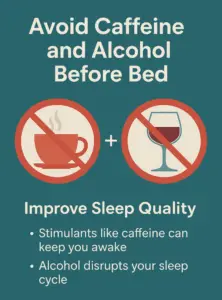
To improve your sleep quality, it’s essential to avoid caffeine and alcohol before bed, since both can interfere with falling asleep and staying asleep.
Why You Should Avoid Caffeine and Alcohol Late in the Day for Better Sleep
When it comes to improving sleep quality, many people focus on bedtime routines, sleep environments, and stress reduction. But one of the most overlooked factors is what you drink, specifically, caffeine and alcohol. While both beverages are common in daily life, consuming them too close to bedtime can seriously disrupt your ability to fall asleep, stay asleep, and experience deep, restorative rest.
In this article, we’ll explore how caffeine and alcohol affect sleep, why timing matters, and what you can do to enjoy them without sacrificing your nightly rest.
How Caffeine Affects Sleep
Caffeine is the world’s most widely consumed stimulant, found in coffee, tea, energy drinks, soda, and even chocolate. It works by blocking adenosine, a neurotransmitter that builds up throughout the day and makes you feel sleepy.
Key Effects of Caffeine on Sleep
1. Delays Sleep Onset – Caffeine keeps your brain alert, making it harder to fall asleep.
2. Reduces Sleep Duration – Even if you do fall asleep, caffeine shortens total sleep time.
3. Disrupts Sleep Stages – Research shows caffeine reduces deep slow-wave sleep, which is critical for physical restoration.
4. Increases Nighttime Awakenings – You may toss, turn, or wake more frequently without realizing why.
The Half-Life of Caffeine
Caffeine has a half-life of 5–6 hours, which means if you drink a cup of coffee at 4 p.m., half of that caffeine is still in your system at 9 or 10 p.m. For sensitive individuals, the effects can last even longer.
How Alcohol Affects Sleep
Alcohol has the opposite short-term effect of caffeine, it acts as a depressant and makes you feel drowsy. Many people even believe a “nightcap” helps them sleep. But the reality is more complicated.
Key Effects of Alcohol on Sleep
1. Speeds Up Sleep Onset – Alcohol can help you fall asleep quickly, but this effect is misleading.
2. Disrupts REM Sleep – Alcohol suppresses REM (rapid eye movement) sleep, which is vital for memory, learning, and emotional health.
3. Causes Fragmented Sleep – As your body metabolizes alcohol, sleep becomes lighter, leading to frequent awakenings.
4. Increases Snoring & Sleep Apnea – Alcohol relaxes throat muscles, worsening breathing problems during sleep.
Caffeine blocks adenosine (a sleep-promoting chemical) for hours, while alcohol disrupts REM sleep and causes nighttime waking.
🔗 American Academy of Sleep Medicine – Caffeine & Sleep
🔗 National Institutes of Health – Alcohol and Sleep
The Rebound Effect
Alcohol’s sedative effects wear off within a few hours, causing your body to experience a “rebound” effect – light, restless sleep that leaves you groggy in the morning.
Why Timing Matters
The negative effects of caffeine and alcohol depend not only on how much you consume but also when you consume it.
* Caffeine: Drinking coffee, tea, or soda within 6–8 hours of bedtime increases the risk of disrupted sleep. For many people, cutting caffeine after 2 p.m. is recommended.
* Alcohol: Even moderate alcohol use 3–4 hours before bedtime can impair sleep quality. A glass of wine with dinner is less disruptive than late-night cocktails.
Common Scenarios Where People Struggle
* The Afternoon Pick-Me-Up – Grabbing a latte at 4 p.m. to power through work may leave you lying awake at midnight.
* Social Drinking at Night – Evening beers with friends may help you relax initially but often result in restless, fragmented sleep.
* “Nightcap” Routine – A glass of whiskey or wine before bed may help you drift off, but you’ll likely wake up at 3 a.m. feeling restless.
Better Alternatives to Caffeine and Alcohol at Night
If you’re looking for something relaxing in the evening without harming your sleep, try these options:
1. Herbal Teas – Chamomile, peppermint, valerian root, or lemon balm can promote relaxation.
2. Golden Milk (Turmeric Latte) – A warm drink made with turmeric, milk (or almond milk), and spices.
3. Warm Water with Honey – Simple, soothing, and hydrating.
4. Decaf Coffee or Tea – If you crave the taste without the stimulant.
5. Non-Alcoholic Mocktails – Refreshing without the sleep-disrupting effects.
Tips for Managing Caffeine
1. Set a Cutoff Time – Avoid caffeine at least 6 hours before bedtime (earlier if you’re sensitive).
2. Watch Hidden Sources – Chocolate, energy drinks, pre-workout supplements, and even some medications contain caffeine.
3. Opt for Smaller Doses – If you love coffee, try one cup in the morning instead of three spread throughout the day.
4. Switch to Green Tea – Provides a gentler caffeine boost plus calming amino acids like L-theanine.
Tips for Managing Alcohol
1. Limit Evening Intake – If you drink, have it with dinner rather than late at night.
2. Hydrate Well – Alcohol dehydrates, which worsens sleep quality. Drink water alongside alcoholic beverages.
3. Avoid Using Alcohol as a Sleep Aid – While it may help you fall asleep faster, it robs you of deep, restorative rest.
4. Choose Alcohol-Free Days – Especially if you notice your sleep feels better without it.
A Sample Daily Timeline for Better Sleep
* Morning (7–9 a.m.) – Enjoy your coffee or tea. Early caffeine aligns with your circadian rhythm.
*Afternoon (12–2 p.m.) – Last call for caffeine. After this, switch to water or herbal tea.
*Evening (6–7 p.m.) – If drinking alcohol, do so with dinner. Avoid nightcaps.
*Night (8–10 p.m.) – Hydrate, sip herbal tea, read a book, or journal to wind down.
The Long-Term Benefits of Avoiding Caffeine and Alcohol Late
By adjusting when you consume caffeine and alcohol, you’ll notice:
* Faster Sleep Onset – Less tossing and turning at bedtime.
*Deeper, More Restorative Sleep – More time in slow-wave and REM stages.
*Fewer Nighttime Awakenings – Less fragmented, higher-quality rest.
*Improved Mood and Focus – Better sleep supports emotional regulation and productivity.
*Better Overall Health – Reduced risk of insomnia, anxiety, and chronic conditions linked to poor sleep.
Common Myths About Caffeine & Alcohol and Sleep
* “I can drink coffee at night and still sleep fine.” – Even if you fall asleep, caffeine reduces deep sleep, leaving you less refreshed.
* “Alcohol helps me sleep better.” – Alcohol may knock you out quickly, but it disrupts REM sleep, leading to poor quality rest.
* “Decaf means no caffeine.” – Decaf coffee still contains small amounts of caffeine (usually 2–5 mg per cup).
Final Thoughts
Sleep is a delicate balance, and what you consume plays a bigger role than you might think. By avoiding caffeine and alcohol late in the day, you give your body the chance to naturally wind down, fall asleep faster, and enjoy deeper, more restorative rest.
You don’t have to give them up completely, just time your intake wisely. Have your coffee in the morning, enjoy a glass of wine with dinner if you like, and save the evenings for calming, non-caffeinated, non-alcoholic drinks.
Better sleep is often just one smart choice away and cutting back on late-night caffeine and alcohol may be the easiest one you can make.
Recommended Reading
A consistent sleep schedule is one of the most effective ways to improve your rest, boost your energy, and support long-term health. Why Going to Bed and Waking Up at the Same Time Every Day Is the Key to Better Sleep When it comes to improving your sleep, most people immediately think about buying a […]
Reading Before Bed: Does It Help or Hinder Your Sleep?
Many of us cherish reading before bed. The ritual of curling up with a book feels cozy, comforting, and timeless. But when it comes to sleep, the truth is nuanced: while a calming physical book can be a powerful tool for relaxation, digital screens, stimulating genres, and poor timing can actually sabotage your rest. This […]
Melatonin: What You Need to Know Before You Try It
Considering melatonin for a better night’s sleep? You’re not alone. Millions of people worldwide reach for melatonin as their first step toward fixing sleep struggles. It’s widely available over the counter, often marketed as a “natural” solution, and many swear by its effects. But here’s the truth: while melatonin can be a valuable sleep tool, […]
Optional Resource: Sleep Blueprint Guide
Leave a Reply
You must be logged in to post a comment.